
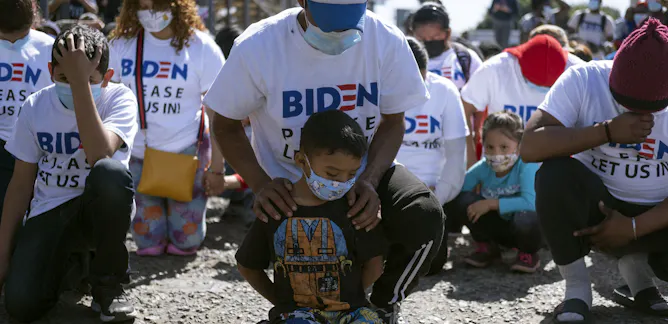
Research suggests that reminding Americans – Democrats and Republicans – of their family history creates empathy for immigrants and more favorable views toward immigration.
University of Wisconsin-Madison

The University of Wisconsin–Madison is a public, land-grant institution that offers a complete spectrum of studies through 13 schools and colleges. With more than 49,000 students from every U.S. state and 116 countries, UW–Madison is the flagship campus of Wisconsin’s state university system. UW–Madison is a formidable research engine, ranking eighth among U.S. universities as measured by dollars spent on research. Faculty, staff, and students are motivated by a tradition known as the Wisconsin Idea that the boundaries of the university are the boundaries of the state and beyond.
Links
Articles
Ndulu has left big shoes to fill. Tanzania now has to focus on creating an environment where citizens with his foresight, ability, and expertise can thrive.

With the COVID-19 pandemic making inequalities worse, has the time come to make sure all interns are paid?

The type and amount of misinformation closely tracks tensions in US-China relations. Effectively countering the misinformation comes down to who does the debunking.
Jan. 11 marks the birthday of conservationist Aldo Leopold (1887-1948), who called for thinking about land as a living community to protect, not a resource to exploit.
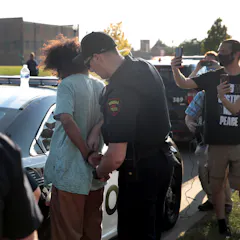
New research on Wisconsin’s changing demographics suggests that racial integration and political polarization were a combustible combination in Kenosha, where violence erupted in August.
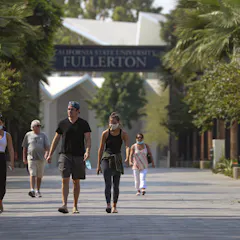
Researchers tracked over 1,600 community college students over five years to learn what helped them get into a four-year college once they completed their two-year degrees.
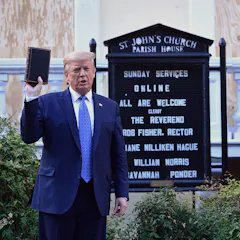
Trump uses more religious terms in his set-piece addresses than any other president in the last 100 years.
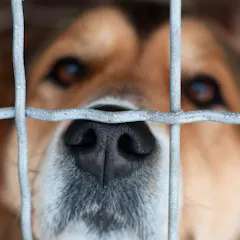
We enjoy and appreciate animals and are disturbed by violence against them. But we also perpetrate this violence, and that needs to change.

Framing cats as responsible for declines in biodiversity is based on faulty scientific logic and fails to account for the real culprit – human activity.
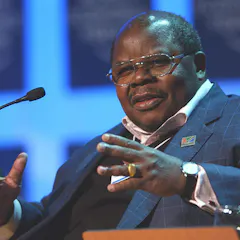
Mkapa, who penned an autobiography, had an impressive record in building state institutions. But his reign was marked by killings and political suppression.
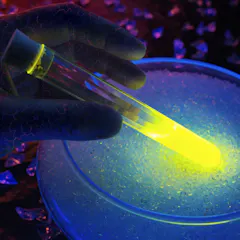
When you ask Americans what the word ‘science’ brings to mind, a majority respond ‘hope.’ Using this built-in brand can help communicate important science messages.
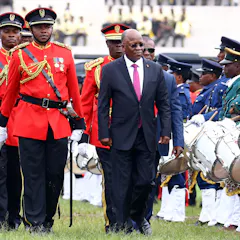
The president’s handling of the pandemic has been one of the more eccentric on the continent.
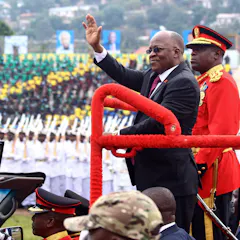
His COVID-19 response has thrown the negative aspects of his presidency into sharp relief.

A new survey shows that people with advanced degrees make more money starting out on the same jobs as those with just bachelor’s degrees. But there’s more to the story, two sociologists note.
Internships send an important signal to employers about how ready a college graduate is for the world of work. But for many students, taking an unpaid or poorly paid internship is not practical.

African American students are taking on significantly more debt than white students to earn advanced degrees. Is it worth it?
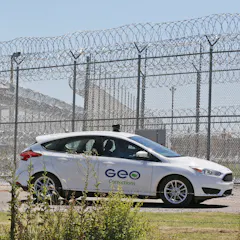
Private prisons have long been a topic of controversy in the U.S. A professor of sociology explains what they are and why they matter.
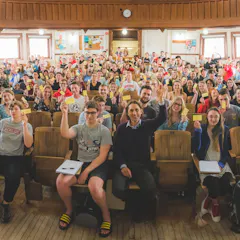
A science researcher’s work gets twisted by a conservative news site; he considers this his wake-up call to educate as many students as possible about the importance of science to our world.

Citizens of Wisconsin were widely opposed to former governor Scott Walker’s attempts to make higher education serve the business community. Doug Ford and Ontario citizens should take note.
Authors
-

Associate Professor of Rhetoric, Politics and Culture, University of Wisconsin-Madison
-
Postdoctoral research fellow, University of Wisconsin-Madison
-
Meteorologist and Research Program Manager, University of Wisconsin-Madison
-
Legal Director, State Democracy Research Initiative, University of Wisconsin-Madison
-
Professor of Pediatrics and Human Development & Family Studies, University of Wisconsin-Madison
-
Professor of Medicine, University of Wisconsin-Madison
-
Professor of Plant and Agroecosystem Sciences, University of Wisconsin-Madison
-
Associate Professor of Cell and Regenerative Biology, University of Wisconsin-Madison
-
Researcher, Nelson Institute for Environmental Studies, University of Wisconsin-Madison
-
Distinguished Teaching Faculty of Civil Society & Community Studies, Director of Global Health and Human Ecology, University of Wisconsin-Madison
-
Associate Professor of Rhetoric, Politics and Culture, University of Wisconsin-Madison
-
Research Coordinator, Urban and Regional Food System Program, University of Wisconsin-Madison
-
Research Fellow, University of Wisconsin-Madison
-
Dean of the School of Human Ecology, Professor of Consumer Science, University of Wisconsin-Madison
-
Professor of Education Law, Policy and Practice, University of Wisconsin-Madison