
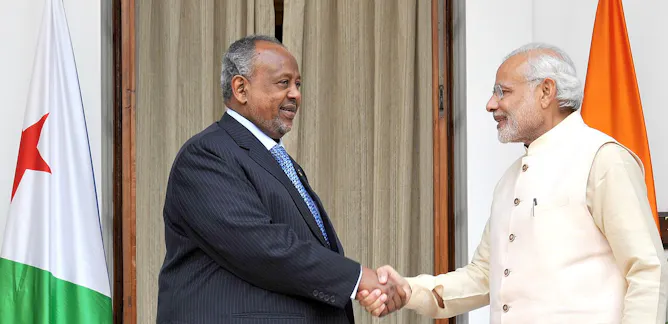
Over the past decade, India has come to see the Horn of Africa as a primary theatre of influence.
University of Trieste

The University of Trieste (Italian: Università degli Studi di Trieste, or UniTS) is a public research university in Trieste in northeast Italy. The university consists of 10 departments, boasts a wide and almost complete range of university courses and has about 15,000 students and 1,000 professors. It was founded in 1924. Trieste is the centre of many research facilities, with which the university is connected by cooperation agreements. Among them, there are the International School for Advanced Studies, the International Centre for Theoretical Physics, the National Institute of Oceanography, the International Centre for Genetic Engineering and Biotechnology, the Elettra Sincrotrone Trieste Facility, the Trieste sections of the Italian National Institute for Nuclear Physics (INFN) and Italian National Institute for Astrophysics (INAF), and many others, building up the so-called “sistema Trieste” (Trieste System).
The 2014 Times Higher Education World University Rankings ranked it second among Italian universities. In 2019, U.S. News & World Report placed it at #67 among the top 100 universities in the world for Space Science. In the 2018 Round University Ranking of world universities, it stands at #99 for Life Sciences in the world.
Links
Articles
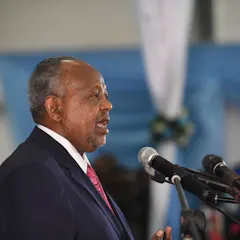
Djibouti est une république présidentielle dotée d'un système multipartite, mais le pouvoir politique y est fortement centralisé.
La présence de Téhéran dans la Corne de l'Afrique et la mer Rouge est sélective et opportuniste.
Tehran’s presence in the Horn of Africa and the Red Sea is selective and opportunistic.
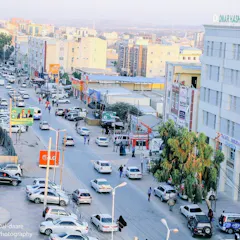
Somaliland’s growing strategic relevance masks its unresolved internal divisions.
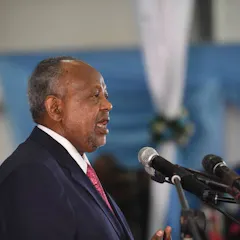
Djibouti est une république présidentielle dotée d'un système multipartite, mais le pouvoir politique est fortement centralisé.
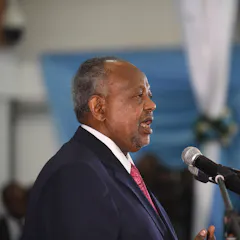
Djibouti is a presidential republic with a multiparty system, but political authority is highly centralised.
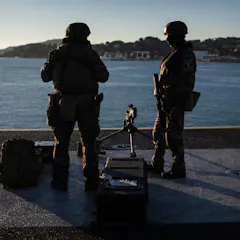
The Red Sea region has become a showcase of the new alliances shaping global power and influence.

Sudan’s war has triggered a massive displacement crisis, with more than 14 million people forced to flee their homes.
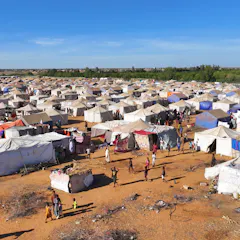
Sudan’s conflict didn’t break out because of the UAE and Saudi Arabia – but local actors felt able to go to war because of external support.
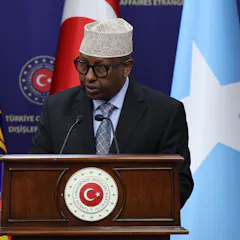
The Red Sea region holds geopolitical importance and has become an arena where local and global interests play out.

Turkey’s investment in Somalia is driven by regional and domestic security considerations.
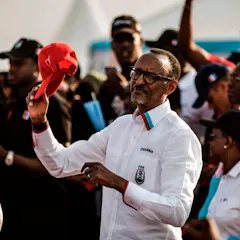
Only Paul Kagame will decide when he exits Rwanda’s political stage.

Kigali wants to be seen as a reliable security provider at home and abroad.
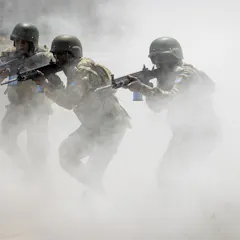
The persistence of the Al-Shabaab terror group has convinced Turkey it needs to provide more active military support in Somalia.

For the first time, two populist radical-right partners are teaming up to form a government. So who is the outsider now?
