

Nyana rooiwalensis was large but still young when it died, leaving a skull that was found well preserved.
University of the Witwatersrand

The University of the Witwatersrand, Johannesburg, also known as Wits University, is a leading, internationally-ranked, research-intensive university located in Johannesburg, South Africa, the economic heartland of Africa. Committed to academic and research excellence and social justice, Wits generates high level scarce skills for a globally competitive world, while addressing local social and economic development. At the forefront of a changing society, Wits is a social leader, dedicated to advancing the public good.
Wits is known for its work in deep level mining, science, health sciences, accountancy, law, governance, and the humanities, amongst others. It houses five faculties which comprise 34 schools. Wits offers approximately 3 600 courses to about 32 500 full-time students, of whom about a third are postgraduate and 55% are female. Almost 65% of all doctoral candidates and about half of all enrolments are in the Science, Engineering and Technology fields. Wits has developed about 130 000 graduates in its 93 years of existence. It has a proud record in that about 87% of all publications are in accredited international journals.
Links
Articles

An indirectly elected executive mayor for Johannesburg was quite successful in the first 15 or so years of post-apartheid rule. But not anymore.

The danger is that South Africa is moving further in the direction of politics being pursued by politicians as a form of blatant self-interest.
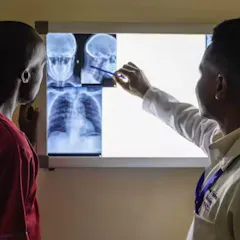
Une grande partie des données génomiques sur lesquelles s’appuient les technologies de santé de pointe provient de populations européennes.
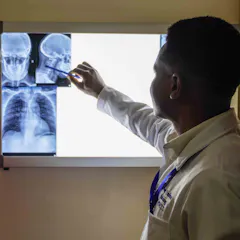
What appears to be an objective assessment of health need may instead reflect who can reach clinics, and which facilities have functioning digital infrastructure.
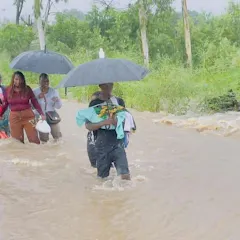
Le changement climatique constitue une menace immédiate pour les communautés et les populations les plus vulnérables de la planète.
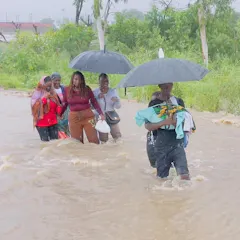
Climate change is an immediate threat to the world’s most vulnerable communities and people.
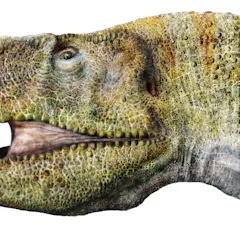
Un squelette de dinosaure vieux de 167 millions d’années va être mis aux enchères le 18 novembre 2026. Ce fossile a une importance capitale pour les paléontologues et pour la science en général.

Poor sleep and poor studying went together. Students who slept worse were more likely to report lower grades and to arrive late for class.
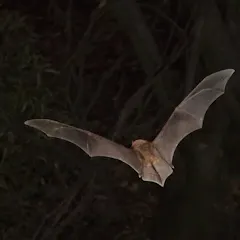
As the climate changes, bats will need both suitable foraging landscapes and caves for roosting.
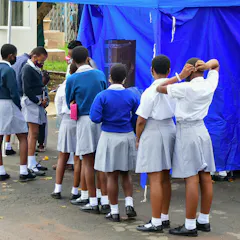
South Africa’s school-based HPV vaccination programme is delivering measurable population-level benefits.

Indigenous knowledge has pushed scientists’ boundaries.

Moving can change the conditions that shape health, so health and social policy must plan for a mobile population.

Even South Africa’s remote sacred springs are not untouched: research found microplastics in all nine tested, including waters used for healing and drinking.

South Africa runs a single waiting list for all transplant recipients, whether from the private or public sector.
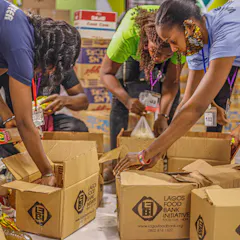
A common reporting structure that combines financial and non-financial information reduces pressures on both donors and NPOs.
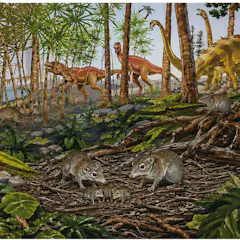
Our mammalian ancestors living 160 million years ago sometimes lived in pairs.

Redistribution must recognise that most workers are in informal employment.
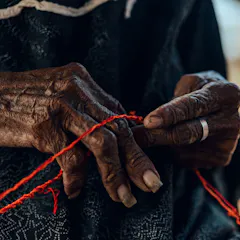
The challenge now is not simply helping people live longer, but ensuring they age well.

Le stockage de l'hydrogène dans des matériaux métalliques constitue une piste prometteuse pour valoriser les minerais africains.
Authors
-

PhD candidate, University of the Witwatersrand
-
Senior Researcher in Public Health, University of the Witwatersrand
-
Data Analyst - Epidemiologist/Biostatistician at Wits RHI, University of the Witwatersrand
-
Honorary researcher, Evolutionary Studies Institute, University of the Witwatersrand
-
Senior Lecturer in Anatomical Sciences, University of the Witwatersrand
-
Associate professor in Vertebrate Palaeontology, University of the Witwatersrand
-
Associate Professor in Physiology, Chairperson of the South African Society for Sleep and Health, Member of the World Sleep Society, University of the Witwatersrand
-
Biodiversity Coordinator, Wilderness, University of the Witwatersrand
-
Reader in Population and Public Health, MRC/Wits Rural Public Health and Health Transitions Research Unit, School of Public Health, University of the Witwatersrand
-
Professor, University of the Witwatersrand
-
Director: International, Wits Planetary Health Research, University of the Witwatersrand
-
Professor School of Architecture and Planning, University of the Witwatersrand
-
Professor of Information Systems, University of the Witwatersrand
-
Professor of Sociology, University of the Witwatersrand
-
Associate Professor and Director: Research at the Wits Reproductive Health and HIV Institute I, University of the Witwatersrand
