

Choosing fruits and vegetables more carefully could help us better get important bioactives from our foods.
University of Reading

The University of Reading is one of the UK’s leading research universities – a global institution that enjoys a world-class reputation for research, teaching and enterprise. The University was established in 1892, received its Royal Charter in 1926, and is now a leading force in British and international higher education. With five campuses across three continents, the University is now home to 1,700 academic and research staff and 19,000 students from more than 150 countries.
The University conducts research across a wide variety of areas and is particularly celebrated as a world leader in areas such as agriculture, biological sciences, built environment, European histories and cultures, meteorology and climate change, and social sciences – including via Henley Business School.
The University is committed to pursuing research excellence between and across academic areas, with more than 50 interdisciplinary research institutes and centres, many of which are recognised as international centres of excellence.
Links
Articles
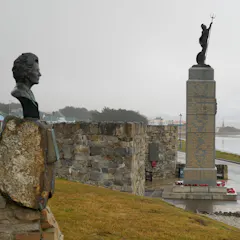
Sovereignty isn’t up for debate, but there might there be other reasons to find a more collaborative approach in the South Atlantic.

The government has laid out its plans for the next parliamentary session.
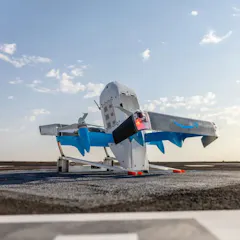
In Darlington, residents have raised worries about noise, privacy and theft over the new drone delivery service.

Um século depois que a semana de cinco dias ajudou a definir o trabalho moderno em diversos países, dados mostram que trabalhar menos pode andar de mãos dadas com a manutenção da produtividade

Reduced working hours could lead to important changes in how society is organised.

A newly discovered fossil suggests octopuses up to 19 metres long may have hunted in Cretaceous seas.

Research suggests there may be ways to reduce the climate impact of flights by addressing the white trails they leave behind.

Books matter because they expose children to a broader and richer vocabulary than everyday conversation.
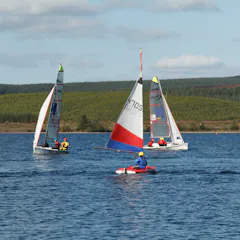
River water is not expected to prove to be less polluted when results are published later this year.
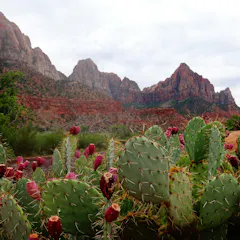
Pourquoi certaines plantes se diversifient-elles plus vite que d’autres ? Les fleurs des cactus livrent un éclairage nouveau sur la question.

Deserts seem unforgiving. However, the fragile flowers of cacti are evolving quickly.

Our research has built pictures of people involved in the events of 1381.

Many philosophers have noticed the similarities between environmental damage and the puzzle of the self-torturer.

Healthy skin depends on balance, not eliminating its microscopic residents.
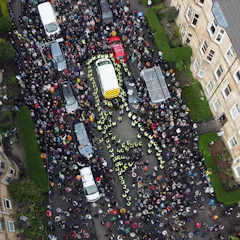
This vital documentary tells the story of a protest over the arrest of two immigrants on the southside of Glasgow in 2021.
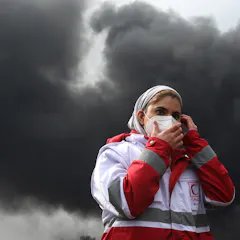
Oil refineries can be legitimate military targets, but only if specific criteria are met.

Owning proven and popular content makes good business sense.
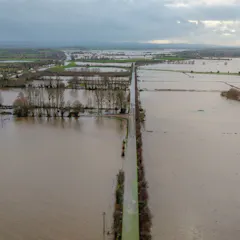
As the UK experiences high levels of rain, Somerset Levels in the south-west of England is trying to cope with extreme flooding and its consequences.

Microscopic mites are part of human biology. Some live harmlessly in our pores but others can trigger allergies, inflammation or infection.
Authors
-

Chair in the History of Finance and Associate Pro-Vice-Chancellor Research, Prosperity and Resilience, Henley Business School, University of Reading
-
Head of School of Mathematical, Physical and Computational Sciences and Professor of Meteorology, University of Reading
-
Associate Professor in Human Geography, University of Reading
-
Visiting Research Fellow Department of History, University of Reading
-
Professor of Climate Science, University of Reading
-
Postdoctoral research associate, University of Reading
-
Professor of Nutrition and Food Science, University of Reading
-
Regius Professor of Meteorology and Climate Science, University of Reading
-
Postdoctoral Research Associate in History, University of Reading
-
Professor of Language and Literacy Development, University of Reading
-
Professor of Energy Economics and Policy, University of Reading
-
Senior Research Fellow in the School of Agriculture, Policy and Development, University of Reading
-
Professor of Environmental and Geographical Sciences, Bournemouth University; University of Reading
-
Associate Professor in Cellular Microbiology, University of Reading
-
Associate Professor in the Department of Language and Cultures, University of Reading