

To reduce the risk of sleep-related deaths the American Academy of Pediatrics recommends that babies sleep on their backs, on a firm surface, without soft bedding.
University of Pretoria

The University is a values-based, research-intensive university that equips its students to succeed in a rapidly changing world by providing students with inquiry-led training and learning opportunities. The University of Pretoria’s long-term Strategic Plan captures the essence of a shared vision, aiming to sustain UP’s quality and relevance as a university that is firmly rooted in Africa, and to harness its existing and future potential for diversity. UP strives to ensure that it is recognised in the global marketplace of knowledge production.
UP has nine faculties and a business school: - Economic and Management Sciences - Education - Engineering, Built Environment and Information Technology - Health Sciences - Humanities - Law - Natural and Agricultural Sciences - Theology - Veterinary Science (the only faculty of its kind in South Africa) - the Gordon Institute of Business Science (GIBS).
The University of Pretoria came into existence in 1908 as the Pretoria branch of the Transvaal University College. The College became a fully-fledged university in 1930 and the colloquial name Tuks, or Tukkies, was derived from the acronym TUC for Transvaal University College. UP’s current facilities portfolio consists of more than 790 buildings and structures spread over 33 sites located on six campuses that cover 1100 hectares of land. In the 106 years of its existence the University has produced more than 230 000 alumni. The University prides itself on producing well-rounded, creative graduates, responsible, productive citizens and future leaders. Great emphasis is placed on student life and support as well as the advancement of sport, art, culture and music.
Links
Articles
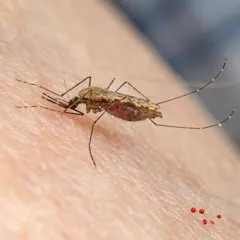
Les progrès scientifiques ont permis d'améliorer la capacité à prévenir, détecter, comprendre et anticiper la transmission du paludisme.

Understanding how to avoid aggression between animals is important when moving them for conservation purposes.
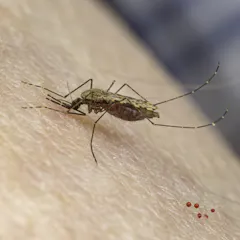
Scientific advances have strengthened the ability to prevent, detect, understand and anticipate malaria transmission. Yet their full potential hasn’t been realised.

African countries shouldn’t simply resign themselves to being bystanders in the face of global economic developments.

Pengakuan terhadap Pillay bukan hanya bentuk apresiasi atas apa yang telah dicapai, tetapi juga pengingat akan hal-hal penting yang tidak boleh sampai hilang.

Argentina shows that economic reform depends less on ideological purity than on institutions, credibility and behavioural context.

Recognising Pillay is an affirmation of what has been achieved, but also about what must not be lost.

Diabetes is manageable. With timely support, people can lead long, healthy lives free from preventable complications.
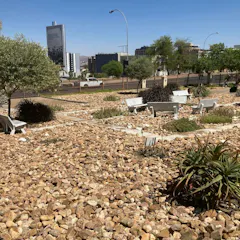
Une nouvelle étude montre comment l'approche « Brown is Beautiful » de Windhoek pourrait tirer parti de son paysage aride pour protéger la ville.

The recovery of Medellín in Colombia depended on a city government that could combine security, investment and capable utilities.

A culture of solving political differences with conflict has led to persistent disagreements about the Ethiopian state.
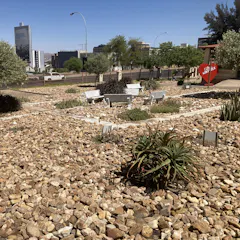
New research shows how Windhoek’s ‘Brown is Beautiful’ approach could use its dry landscape to protect the city from heat, drought and floods.
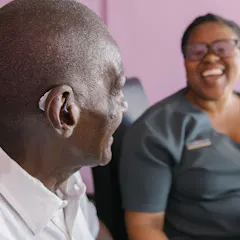
Every dollar invested in hearing care returns about $16. So why are 98% of Africans who need a hearing aid still going without one?
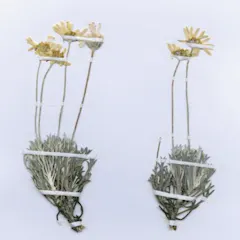
Herbarium cabinets lock away valuable plant data that needs to be mobilised through digitisation.
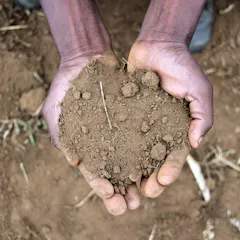
Microbial ecology helps explain how ecosystems respond to environmental pressures.
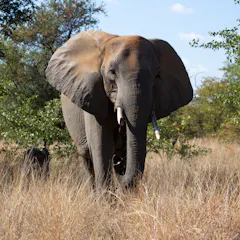
When elephants leave Kruger National Park, they are sometimes killed and their meat is shared with nearby communities. This policy may have unintended consequences.
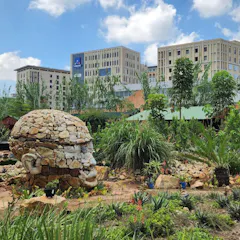
Parks do more than cool cities. They also help people work together to cope with climate change, but only if local communities help design, manage and care for them.

Solar farms can bring jobs, but the story of one South African community shows that rural residents who give up their land need more say in how benefits are shared.
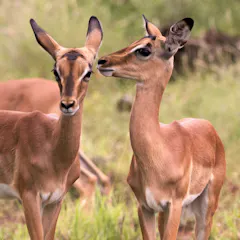
A year-long study found that impala in a South African game reserve need their own space in the dry season, away from tourists, to reduce their stress.
Authors
-

Professor of Mammalian Behavioural Ecology, University of Pretoria
-
Professor, University of Pretoria
-
Professor/Senior Research Fellow, Centre for Advancement and Senior Non-Resident Fellow, Global Development Policy Center, Boston University of Scholarship, University of Pretoria
-
Professor in Audiology in the Department of Speech-Language Pathology and Audiology, University of Pretoria
-
Professor of International Human Rights Law, SARChI Chair in International Constitutional Law, University of Pretoria
-
Senior Lecturer, University of Pretoria
-
Associate lecturer, University of Pretoria
-
Lecturer in Psychology, University of Pretoria
-
Director of the Porter Institute Africa Hub, Gordon Institute of Business Science, University of Pretoria
-
Microbial ecologist, University of Pretoria
-
Associate Professor, Department of Political Sciences, University of Pretoria
-
Chairperson, Diabetes Alliance; Co-founder, Diabetes Research Centre, University of Pretoria
-
Extraordinary Lecturer, University of Pretoria
-
UP ISMC: Project Manager and Coordinator, University of Pretoria
-
Director: UP Institute for Sustainable Malaria Control, University of Pretoria