

Development banks have spent over US$1 billion on factory farming in Africa, locking in high greenhouse gas emissions. Natural farming systems are a better choice.
University of Oxford

The University of Oxford is the oldest university in the English-speaking world. Teaching has taken place at Oxford since 1096. Oxford has the largest volume of world-leading research in the country, rating top in the REF power rankings published by Research Fortnight. Oxford’s research involves more than 70 departments, almost 1,800 academic staff, more than 5,000 research and research support staff, and more than 5,600 graduate research students. The University has 38 independent colleges to which undergraduate and graduate students belong. Oxford has the highest research income from external sponsors of any UK university: £478.3m in 2013/14. The University has pioneered the successful commercial exploitation of academic research and invention, creating more than 100 companies, and files more patents each year than any other UK university.
Links
Articles

The public may not be aware that numbers have fallen, and those who are aware may not consider 200,000 to be particularly low.

No recourse to public funds restrictions mean that families cannot access any benefits regardless of need.

Why climate models miss what matters most: our wellbeing.

The most prominent news creators on social media and video networks are men and YouTube is the most important platform for them.

New technologies could transform the way we mine – and recycle – critical minerals.
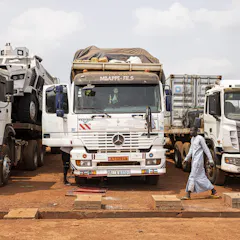
Le manque de toilettes rend les voyages sur les routes africaines peu agréables.

Critical thinking is an essential skill students should be encouraged to develop as part of their science learning. NZ’s draft science curriculum fails the test.
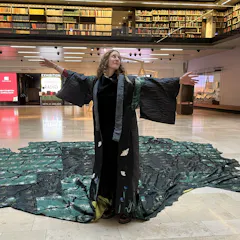
Researchers, educators, young people and artists are collaborating to develop a ‘pedagogy of hope’ for creative climate change education.

Diferente do resto do mundo, onde 75% das emissões de carbono vêm do setor de energia, no Brasil este mesmo percentual vem das emissões de metano do setor agropecuário. O setor de energia é apenas o terceiro emissor
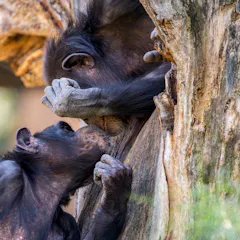
Humans are not the only animal to kiss.
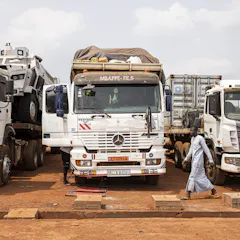
The lack of toilets makes travelling on Africa’s roads a less-than-pleasant experience.

Welcome to the age of competitive decarbonisation.
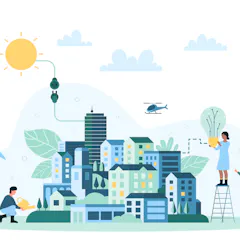
The energy transition is often painted as a jobs killer, but the evidence says otherwise.

In the second episode of Jane Austen’s Paper Trail, we speak to Austen experts about her views on love, and the role of romance in Pride & Prejudice.

As creators of educational, religious and charitable institutions, women of means found ways to circumvent the patriarchal power structures of medieval society.

Nasa has reopened a SpaceX lunar landing contract to competitors.

De nouvelles recherches montrent que les symptômes psychotiques partagent les mêmes altérations cérébrales, remettant en question les diagnostics traditionnels.

It isn’t just social isolation that’s a risk factor for self harm.
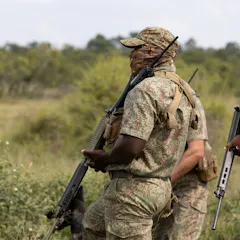
A study of Interpol notifications suggests only a few environmental crimes are being flagged.
Authors
-

Research Fellow in Population Health, University of Oxford
-
Postdoctoral Researcher, Climate Science, University of Oxford
-
DPhil Candidate, Neurodegenerative Disorders, University of Oxford
-
Economist in AI and Work, University of Oxford
-
Emeritus Professor, Department of Physiology, Anatomy and Genetics, University of Oxford
-
Einstein Professor for the Comparative Study of Democracy and Authoritarianism, Humboldt University Berlin, and Director, Centre for East European and International Studies (ZOiS); University of Oxford
-
Leverhulme Early Career Research Fellow, Cognitive Archaeology and Archaeoacoustics, University of Oxford
-
Gallagher Research Fellow in the Environmental Change Institute, University of Oxford
-
Senior Research Fellow, University of Oxford
-
Research Fellow in Business and Human Rights, Bonavero Institute of Human Rights, University of Oxford
-
Supernumerary Fellow, Archaeology, University of Oxford
-
Professor of Politics and Public Policy, University of Oxford
-
DPhil Student in Anthropology, University of Oxford
-
Associate Professor of Natural History, University of Oxford
-
Associate professor, University of Oxford