

Relying on computer modelling can be dangerous: in 1999 NASA lost a space probe because of a silly error in the control software.
University of Oxford

The University of Oxford is the oldest university in the English-speaking world. Teaching has taken place at Oxford since 1096. Oxford has the largest volume of world-leading research in the country, rating top in the REF power rankings published by Research Fortnight. Oxford’s research involves more than 70 departments, almost 1,800 academic staff, more than 5,000 research and research support staff, and more than 5,600 graduate research students. The University has 38 independent colleges to which undergraduate and graduate students belong. Oxford has the highest research income from external sponsors of any UK university: £478.3m in 2013/14. The University has pioneered the successful commercial exploitation of academic research and invention, creating more than 100 companies, and files more patents each year than any other UK university.
Links
Articles

Work is already underway to repair the damage to the ancient city of Palmyra in Syria, but we need to question if technology will take things too far.
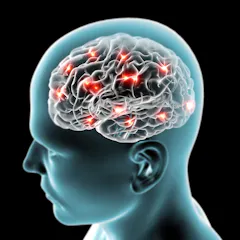
The theory of antimemories could help explain many cognitive problems in the brain such as autism and schizophrenia.
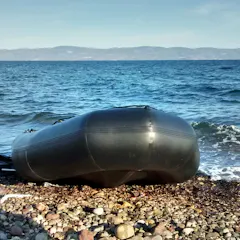
Research with migrants suggests Europe has misunderstood what drives them to make perilous sea crossings – and what would stop them trying.

Immigration is at the heart of the Brexit debate. Here’s what the research says about employment.

The seeds of radicalisation were being sown long before Islamic State came along.
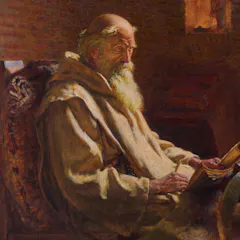
The medieval English scholar was a devoted student of Computus – the calculation of the date of Easter.
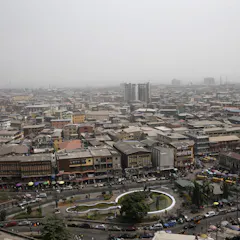
Developing countries, specifically in sub-Saharan Africa, are urbanising without industrialising, a trajectory that leaves them with relatively higher poverty rates and share of slums.

Dietary changes make a big difference to both people and planet.

Big data can reinforce human prejudices but it could also help us break away from discrimination.

The relationship between poetry and doctoring has a strong pedigree, but it has all but dissipated. Here’s why we need it back.

Some economic models tell us that segregation is inevitable. Is it really?

Rule one: don’t lose ‘ownership’ of the issue.

The European Space Agency is exploring what we can learn from animals about long-term deep sleep.
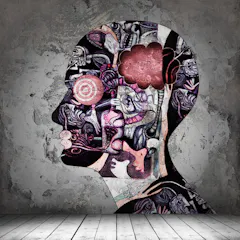
Gene mutation associated with schizophrenia could have implications for other developmental disorders.

It’s a common assumption that library use is plummeting – but that depends on which libraries you look at.

How EU leaders have sidestepped the UN Refugee Convention to make a very difficult problem disappear.
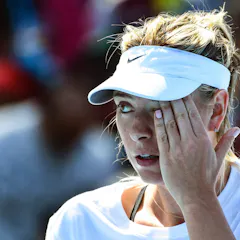
We have an intuitive bias against “artificial” drugs in favour of “natural” drugs, but that distinction is not only false, it is dangerous.

If it’s ok to use research carried out in unethical experiments – as long as we acknowledge they were wrong – is it ok to keep a statue of an infamous imperialist?
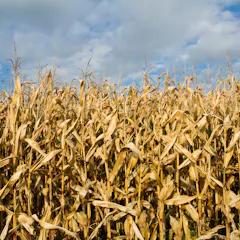
Climate change means the number of overweight and obese people will fall by 2050, but these benefits will be massively outdone by a rise in underweight and malnourished people.
Authors
-

Research Fellow in Population Health, University of Oxford
-
Postdoctoral Researcher, Climate Science, University of Oxford
-
DPhil Candidate, Neurodegenerative Disorders, University of Oxford
-
Economist in AI and Work, University of Oxford
-
Emeritus Professor, Department of Physiology, Anatomy and Genetics, University of Oxford
-
Einstein Professor for the Comparative Study of Democracy and Authoritarianism, Humboldt University Berlin, and Director, Centre for East European and International Studies (ZOiS); University of Oxford
-
Leverhulme Early Career Research Fellow, Cognitive Archaeology and Archaeoacoustics, University of Oxford
-
Senior Research Fellow, University of Oxford
-
Research Fellow in Business and Human Rights, Bonavero Institute of Human Rights, University of Oxford
-
Supernumerary Fellow, Archaeology, University of Oxford
-
DPhil Candidate, Department of Atmospheric Physics, University of Oxford
-
Professor of Politics and Public Policy, University of Oxford
-
DPhil Student in Anthropology, University of Oxford
-
Associate Professor of Natural History, University of Oxford
-
Associate professor, University of Oxford