

This extraordinary individual defied the constraints of her time and gave a remarkable and farseeing account of computation.
University of Oxford

The University of Oxford is the oldest university in the English-speaking world. Teaching has taken place at Oxford since 1096. Oxford has the largest volume of world-leading research in the country, rating top in the REF power rankings published by Research Fortnight. Oxford’s research involves more than 70 departments, almost 1,800 academic staff, more than 5,000 research and research support staff, and more than 5,600 graduate research students. The University has 38 independent colleges to which undergraduate and graduate students belong. Oxford has the highest research income from external sponsors of any UK university: £478.3m in 2013/14. The University has pioneered the successful commercial exploitation of academic research and invention, creating more than 100 companies, and files more patents each year than any other UK university.
Links
Articles

Kampala generates about 60% of Uganda’s GDP. In the coming decade urbanisation is the single largest opportunity to spur economic growth in the coming decade.

British diplomats put their money on the wrong man after the Lancaster House agreement.
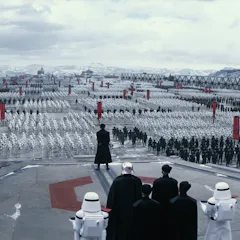
The bad guys in Star Wars: The Force Awakens might be able to destroy multiple planets at once with their Starkiller Base but it’s far from efficient warfare.
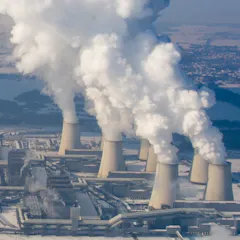
Sometime soon we’ll need to take more carbon out of the atmosphere than we emit – but how?

Asbestos is not a thing of the past, far from it – it’s use is exploding in the developing world and many others are still at risk.

Many literary greats have been religious outsiders, and reading them we can relate to our times. This is particularly the case with Dryden.
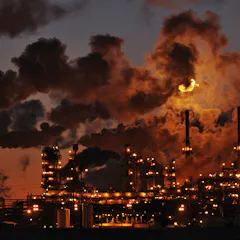
Countries have signed up to the Paris climate deal, but they have not yet promised the necessary cuts to emissions.

The media prefers positive stories to the traditional doom and gloom of climate coverage.
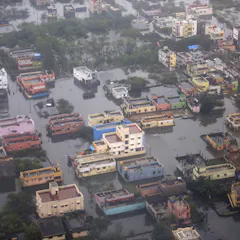
Poor planning can make natural disasters much, much worse.
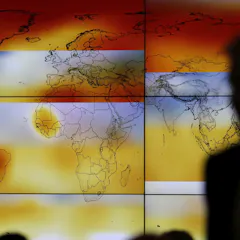
Africa needs to work on adaption strategies if it is to overcome the harmful effects of climate change.

Whatever the outcome of the COP21 Paris climate talks, climate change will result in assets becoming ‘stranded’.

Most of us would think that what’s good for one is good for the team, but is this really the case?

In his 150th anniversary year it seems appropriate that Sibelius and his reception receive a critical re-evaluation.
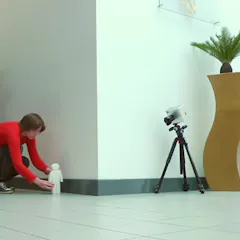
To see around a corner, all you need is a camera that can detect light at 100,000 billionths of a second.
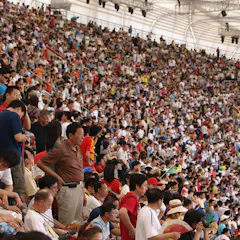
China’s population policy shift has some worried – and at the heart of it is a philosophical dilemma.

There are solar-power sea slugs, so why haven’t humans mastered the art of photosynthesis?

Angela Merkel is entering her first proper war by joining the campaign against Islamic State.
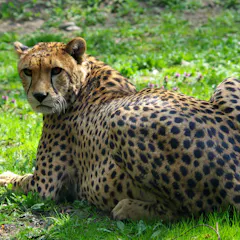
Cheetahs face a number of threats in the Maasai Mara landscape but there are efforts underway to help them overcome these.

Experts from around the world are in the US to discuss the scientific, ethical and governance issues linked to human gene editing. Here are five reasons they shouldn’t ban research in the field.
Authors
-

Research Fellow in Population Health, University of Oxford
-
Postdoctoral Researcher, Climate Science, University of Oxford
-
DPhil Candidate, Neurodegenerative Disorders, University of Oxford
-
Economist in AI and Work, University of Oxford
-
Emeritus Professor, Department of Physiology, Anatomy and Genetics, University of Oxford
-
Einstein Professor for the Comparative Study of Democracy and Authoritarianism, Humboldt University Berlin, and Director, Centre for East European and International Studies (ZOiS); University of Oxford
-
Leverhulme Early Career Research Fellow, Cognitive Archaeology and Archaeoacoustics, University of Oxford
-
Senior Research Fellow, University of Oxford
-
Research Fellow in Business and Human Rights, Bonavero Institute of Human Rights, University of Oxford
-
Supernumerary Fellow, Archaeology, University of Oxford
-
DPhil Candidate, Department of Atmospheric Physics, University of Oxford
-
Professor of Politics and Public Policy, University of Oxford
-
DPhil Student in Anthropology, University of Oxford
-
Associate Professor of Natural History, University of Oxford
-
Associate professor, University of Oxford