

Moving servers into the ocean does not make underlying environmental challenges disappear. And it creates new concerns as well.
University of North Carolina – Greensboro

The University of North Carolina at Greensboro is a challenging, supportive and engaged community where learning is carried forward to Do something bigger altogether. Founded in 1891, UNCG is the largest and most diverse university in the Triad, serving nearly 18,000 students. Standing apart from other universities, the UNCG community is joined together by a shared value: We define excellence not only by the people we attract, but by the meaningful contributions they make.
Enrollment UNCG has more than than 16,300 on-campus students and over 1,400 others in extension programs enrolled for the 2013-14 academic year. Sixty-five percent of resident undergraduate students are female. Twenty-five percent of resident undergraduate students and 13 percent of graduate students are African-American.
Classes & Faculty UNCG offers 79 undergraduate programs in over 100 areas of study, 72 masters programs and 27 doctoral programs. Student/faculty ratio is approximately 17:1. Fifty-three percent of full-time faculty are tenured and 77 percent hold a doctorate or terminal degree in their field.
Academic Calendar Two semesters, August to May, and two summer sessions.
Campus Life UNCG’s picturesque campus includes more than 30 academic buildings and 28 residence halls on more than 200 acres. Opportunities for students include approximately 200 student organizations, 15 intercollegiate athletic teams, intramurals, club sports, recreation center, campus golf course, student newspaper, student literary magazine, student radio station, music and choral groups, drama and dance performance groups, concert and lecture series, film series, internships, outdoor adventures club, fraternities and sororities, community service and field campus for fishing, swimming, and canoeing.
Costs For full-time students living on campus, 2013-14 basic costs (including tuition, fees, and room and board) total approximately $12,848 for in-state students and $26,646 for out-of-state students.
Housing UNCG Housing and Residence Life offers an array of on-campus living options for students, including:
Four residential colleges for students who want to live and enroll in courses with their learning community peers while developing close, meaningful relationships with faculty; Ten living-learning communities for students who want to live and enroll in courses with their learning community peers while participating in related co-curricular programs; and An honors college residence hall and two themed communities. Freshmen are encouraged to live on campus.
Links
Articles

People use cognitive shortcuts to make choices that sometimes have outcomes that don’t serve their own interests or preferences. But to call these choices irrational might be missing the big picture.

La corrupción persiste porque sistemas, normas y diseños institucionales la facilitan. Castigar individuos no basta: hay que rediseñar contextos para hacerla difícil, visible y inaceptable.

Artificial intelligence systems have big environmental costs but are also finding ways to save energy and water, cut emissions and make businesses more efficient.

Social media acted as both a magnifier and accelerator to protests, linking perceived injustice to on-the-ground activism.

The use of 3D-printed guns in criminal and violent activities is likely to continue to increase. And governments and police will continue to have trouble regulating them.

Amid calls to ban certain books from libraries and schools, research shows that students benefit when they have the ability to choose which materials they want to read.

Adopting healthy behaviors and thought patterns around food and nutrition takes time and intentional effort. But it will lead to more lasting change and positive outcomes than quick-fix dieting will.

Cybercriminals target schools because they’re uniquely vulnerable. A cybersecurity expert explores whether a new White House initiative will be enough to deter bad actors.

The essence of bystander intervention is not just about stopping a negative act, but also about fostering an environment where respect, growth and collaboration thrive.

College students who postpone medical care to save money end up paying for it down the line in the form of worse health, a researcher contends.

When CEOs and workplace leaders communicate their personal values and ethics clearly, they inspire individuals to want to work for their organizations.

A recent study found that offering workers a choice of what type of reward they would like for offering good suggestions increased the volume of submissions and their creativity too.

School officials are becoming increasingly wary of TikTok amid concerns that the app poses a risk to student safety and privacy and makes the nation vulnerable to spies.

Gig workers navigate the challenges of solo work by seeking out relationships and cultivating skills to cope with emotional turbulence

Despite a recent crash in value, universities are using cryptocurrencies for a variety of purposes and reasons.
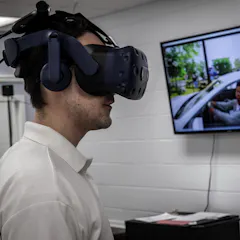
There are benefits to taking college classes in the metaverse, but there are also potential problems.

Sitting in the front row of a lecture hall could become obsolete as more colleges and universities enter the metaverse.

A scholar of digital religion and Buddhism argues that not all Western Buddhism practice is inauthentic. Here’s a way to know what’s real.

For many, the pandemic has disrupted daily habits around eating and fitness – which makes it a prime time to shake up old assumptions about achieving an ideal body.
Authors
-

Professor of Organizational Behavior, University of North Carolina – Greensboro
-
Alejandro Hortal-Sánchez is a Friend of The Conversation.
External collaborator, UNED - Universidad Nacional de Educación a Distancia; University of North Carolina – Greensboro; Institute for Humane Studies; Wake Forest University
-
Professor of Sociology, University of North Carolina – Greensboro
-
Senior Lecturer, University of North Carolina – Greensboro
-
Associate Professor of Management, University of North Carolina – Greensboro
-
Assistant Professor of Biology, University of North Carolina – Greensboro
-
Research Scientist in Geography, Environment, and Sustainability, University of North Carolina – Greensboro
-
Professor of Literacy, University of North Carolina – Greensboro
-
Head and Professor, Religious Studies Department, University of North Carolina – Greensboro
-
Professor of Psychology, University of North Carolina – Greensboro
-
Assistant Professor, Bryan School of Business and Economics, University of North Carolina – Greensboro
-
Professor of Management, University of North Carolina – Greensboro
-
Assistant Professor of Library and Information Science, University of North Carolina – Greensboro
-
Associate Professor Sociology, University of North Carolina – Greensboro