

Corruption in Nigeria’s health sector can be eliminated by the implementation of a few simple strategies.
University of Nigeria

The main campus of the University of Nigeria is located in the heart of Nsukka town. It is a co-educational community that hosts about UNN students undertaking varieties of programmes ranging from the fine arts to the animal sciences. The main campus is home to the faculties of agriculture, arts, biological sciences, engineering, social sciences, education, pharmaceutical sciences, physical sciences, social sciences, and veterinary medicine, school of post graduate studies and institutes and research centres. Having arrays of residential structures, the main campus is structurally arranged in such a way that on one side, there are clusters of hostels sprinkled with places of leisure and relaxation and on the other cluster are beautiful staff residences surrounded with beautiful flower gardens. For lovers of aesthetics, the main campus is not lost to beauty and arts. With earthy tones and green vegetation, the campus also has works of arts placed at strategic points in the university, pleasant to the eyes relaxing to the mind.
Links
Articles
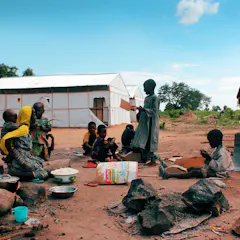
More than 788 health facilities have been destroyed in parts of North-Eastern Nigeria captured by Boko Haram insurgents, crippling health services in the area.
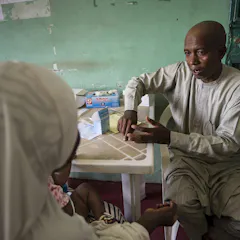
Effectively decentralising HIV and AIDS treatment services helps to improve universal health care. But in Nigeria this approach comes with many challenges.
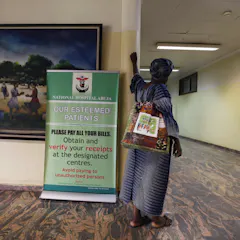
Continued strikes in Nigeria’s health care sector has meant that many patients go without much-needed care.

They not only bear the heaviest burden of malaria on the continent: Nigerians are also paying the most for services related to the disease.

Creating HIV services at primary health-care centres in Nigeria may improve the uptake of antiretrovirals, but it won’t tackle the issue of stigma.
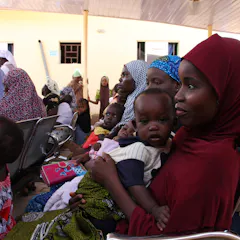
Antiretroviral treatment has been free at Nigeria’s health facilities. But the other costs involved for those living with HIV, such as transport and food, have been problematic.
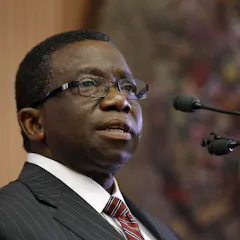
Newly appointed Nigerian Health Minister Isaac Adewole is focused on providing primary healthcare services.
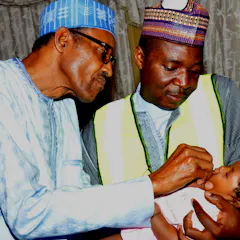
The health system Muhammadu Buhari inherited in Nigeria is not performing at an optimal level. It has poor governance at the primary health care level and weak collaboration and co-ordination.
Authors
-

Lecturer, University of Nigeria
-
Professor of Political Science, University of Nigeria
-
Lecturer in Art and researcher, University of Nigeria
-
Senior Research Fellow, Development Studies, University of Nigeria
-
Research Associate in Statistics, University of Nigeria
-
Senior Lecturer, Department of Political Science, University of Nigeria
-
Research Associate: Department of Physics and Astronomy, University of Nigeria
-
Professor of History and International Studies, University of Nigeria
-
Lecturer, University of Nigeria
-
Professor of Political Science, University of Nigeria
-
Lecturer and Researcher, University of Nigeria
-
Lecturer and Researcher, Department of Political Science, University of Nigeria
-
Professor of Health Economics and Policy and Pharmaco-economics/pharmaco-epidemiology in the Departments of Health Administration & Management and Pharmacology and Therapeutics, College of Medicine, University of Nigeria
-
Research Associate, University of Nigeria
-
Professor of Mechanical Engineering, University of Nigeria