
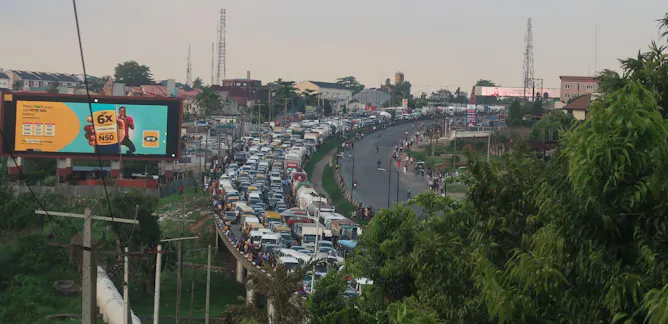
A ban on Lagos’ motorcycle taxis is unpopular, and now the governor who introduced the ban is back to tackle transport problems.
University of Lagos

Founded in 1962, the University of Lagos has, for over five decades, provided qualitative and research-oriented education to Nigerians and all those who have entered its domain in search of knowledge. At its inception, the University of Lagos was empowered to produce a professional workforce that would steer the political, social and economic development of a newly independent country. Over the last fifty years the University has pursued this mission with vigour, excellence and panache. The University has built a legacy of academic excellence and is now acclaimed publicly as “the University of First Choice and the Nation’s Pride”.
Links
Articles
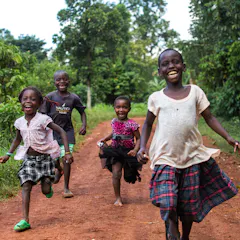
Africa contributes less than 1% of research worldwide on movement behaviours in children. This means that research on movement behaviours has largely excluded over 16% of the world’s population.
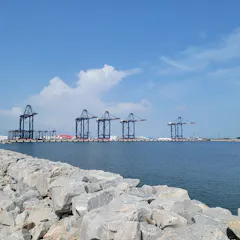
Nigeria’s Lekki Deep Sea Port is also its largest, and will boost the country’s ability to process imports and exports.
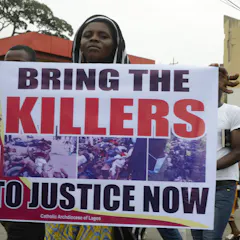
Through articles written by academic experts in the course of the year, The Conversation Africa takes a second look at Nigeria in 2022.
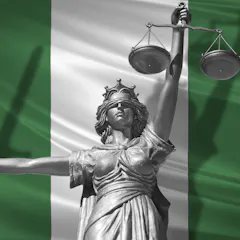
Ignoring any order of the court undermines democracy and the rule of law. No one should be above the law.
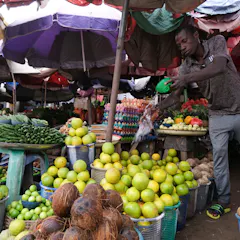
Sometimes the street trader, roadside mechanic or food vendor is the best person to teach students about entrepreneurship.
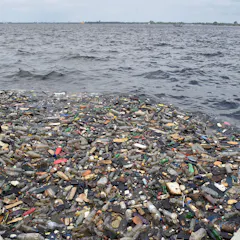
The oceans bordering West African countries are in grave danger from pollution; checking further degradation is crucial for human survival.

Akinlawon Ladipo Mabogunje was Nigeria’s first professor of geography. He has died at 90.
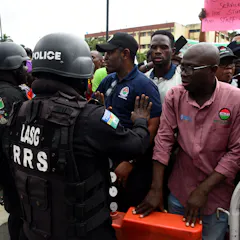
Nigeria’s public university system has lost about 57 months to industrial action since 1999. This has implications for the future workforce.
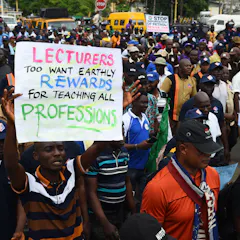
Public universities in Nigeria have been bedevilled by lecturers’ strikes for years. To break the cycle, the union insists the institutions should be adequately funded.

Inflation is perhaps the biggest poverty accelerator in the economy due to its weakening effect on people’s purchasing power.
Media houses fined recently by Nigeria’s Broadcasting Commission for documentaries on terrorism should approach the courts for redress.
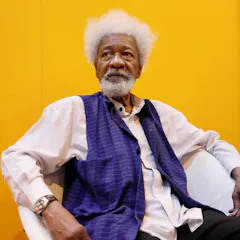
Wole Soyinka’s writing has explored the same themes for decades.
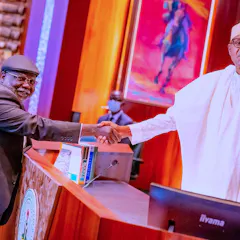
Corruption in the Nigeria judiciary is pervasive and complex.
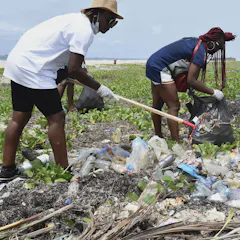
Nigeria generates 2.5 million tonnes of plastic waste yearly. Research and public enlightenment can help address the problem.
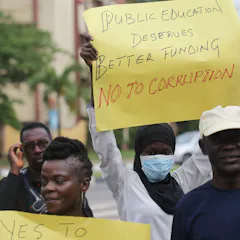
Strikes have had a negative impact on Nigeria but private universities have benefited.

African countries, rich in resources, easily fall prey to aggressive tax planning and tax evasion facilitated by offshore companies.
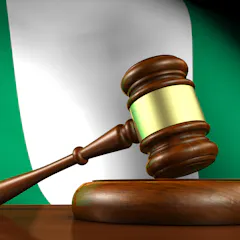
Nigeria needs a new constitution to address its multi-faceted problems.
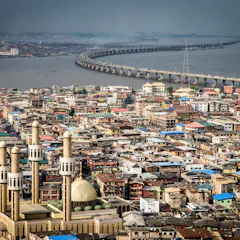
Governing a city like Lagos, with deep-seated socioeconomic inequalities, is not a job for the fainthearted.
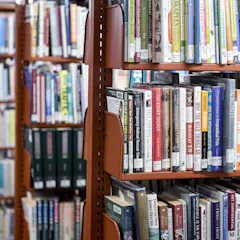
Academics reflect on books on topical issues in Nigeria that they read in 2021.
Authors
-

Lecturer in African and African Diasporan Literature, University of Lagos
-
Associate professor, University of Lagos
-
Professor of Medicine, University of Lagos
-
Distinguished Professor of History and Strategic Studies, University of Lagos
-
Lecturer (Political Science), University of Lagos
-
PhD Candidate, University of Lagos
-
Professor of Genetics, Department of Cell Biology and Genetics, University of Lagos
-
Development historian and transdisciplinary scholar, University of Lagos
-
PhD Candidate, Sustainable Urbanisation, University of Lagos
-
Lecturer, Distance Learning Institute, University of Lagos
-
Professor of Environmental Physiology of Animals, University of Lagos
-
Lecturer, University of Lagos
-
Senior Lecturer, Ecotoxicology and Conservation Unit, Department of Zoology, Faculty of Science, University of Lagos
-
Lecturer in Sociology, University of Lagos, University of Lagos
-
Lecturer in Mass Communications, University of Lagos