

Ask people to describe what they associate with butterflies, and you will probably get an image of a sunny summer’s day, with a beautiful peacock drifting gently on the cooling breeze. Ask the same question…
University of Hull

The University of Hull has been changing the world and changing lives since 1927. In a rapidly altering world, our research is responding to some of the biggest global challenges. Our current work ranges from health to habitats, food to flooding and supply chains to slavery.
We have appeared twice in Universities UK’s list of ‘100 discoveries by British universities that have changed the world’. Once for our globally renowned breakthrough in liquid crystal displays (facilitating the technology for screens on mobile phones, TVs, laptops and tablets); and once for our pioneering work on a bone density scanner for the earlier detection of osteoporosis. Our Wilberforce Institute has also won the Queen’s Anniversary Prize in recognition of its work combatting modern-day slavery.
We’ve been recognised for our academic impact: the University was named in the top 50 UK institutions for research power by Times Higher Education, based on the most recent Research Excellence Framework 2014.
The University’s collaborations are shaping the future. Building on the success of Hull’s reign as City of Culture, in which the University was a Principal Partner, the University is pleased to be bringing the best of British Science to Hull and the Humber in September 2018 by hosting the British Science Festival, giving the opportunity to showcase nationally the region’s significant contribution in this field.
Links
Articles
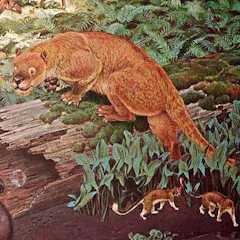
It is often said that humans have caused the Earth to warm at an unprecedented rate. However researchers have discovered another period, some 55m years ago, when massive volcanic eruptions pumped so much…
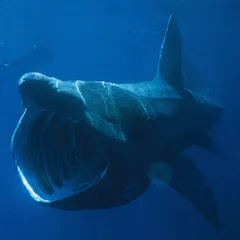
There are at least 268,000 tonnes of plastic floating around in the oceans, according to new research by a global team of scientists. The world generates 288m tonnes of plastic worldwide each year, just…
Computer Weekly has released its Tech Top 50 of current UK leaders in IT: people whose influence affects us all in various ways, or who are developing new technologies to change our lives now, or in the…
The recent death of PD James has – unsurprisingly – received a great deal of attention. What comes across in the many articles, obituaries and interviews are her originality and acute insight, but also…
In the week Gordon Brown announced he will stand down from his Westminster constituency at the May 2015 general election, two central observations come to mind. From the Brown government to its Cameron-Clegg…

If you live in a poorly insulated home, and many of us do, you could spend thousands this winter on energy bills. But our ancestors had many ways to keep snug at little or no cost. Now, thanks to modern…
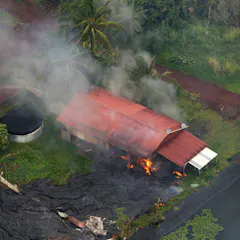
The destruction caused by the lava of Kilauea are grabbing the attention of the international media. Last week, footage showed this eruption claiming its first house in Pahoa and people began to question…
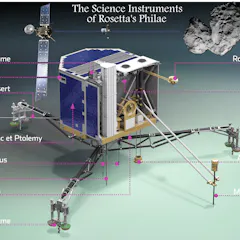
The drama of Philae’s slow fall, bounce and unfortunate slide into hibernation was one of the most thrilling science stories of a generation. But what in its short 60 hours of life on Comet 67P did it…
The history of science is full of episodes when a seemingly ludicrous theory is ridiculed, but then slowly gathers evidence and support to move from the fringes to the heart of the scientific consensus…
Let’s start with a quiz… How many senses do you have? Which of the following are magnetic: a tomato, you, paperclips? What are the primary colours of pigments and paints? What region of the tongue is responsible…
Development of new drugs for treatment of disease is an expensive, time-consuming and labour-intensive effort for both pharmaceutical companies and academics. For the past 15 years, “cost per approval…

The Nobel Prizes in the sciences have been announced to much celebration around the world. And this year, unlike most years, controversies were largely avoided. And yet, the relevance of the Nobel Prize…
Robert Hooke was a pioneer of microscopy, when back in the 17th century he drew stunning images of insects, plant cells and fossils. Since then microscopes that use light to magnify things we can’t see…
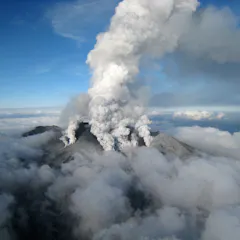
Mount Ontake, Japan’s second-highest volcano, erupted killing at least 31 people on September 27. Since then, there has been feverish speculation about why tourists were on an active volcano and why the…
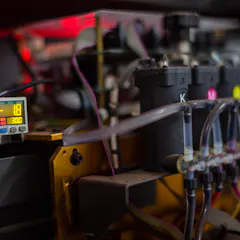
If you stop and think about it for a moment, you will realise what an astonishing feat of precision engineering your colour printer is. It can take the primary colours – cyan, yellow, magenta and black…

With the gay pride season coming to a close, here is a question: have you withdrawn money from a multi-coloured gAyTM this summer? Or have you even tucked into your Burger King Pride Whopper? And if you…
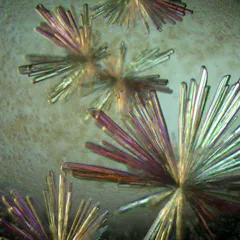
For more than 100 years, scientists have “peered” at atoms in a crystal by analysing the way they scatter X-rays. This process, known as crystallography, reveals the chemical structure of compounds in…
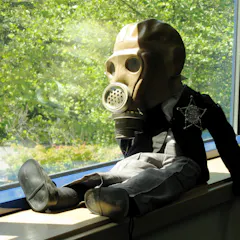
All too often the use of the word “chemicals” in the news, in advertising and in common usage has the implication that they are bad. You never hear about chemicals that fight infections, help crops grow…
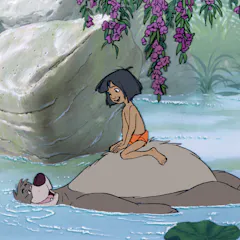
It may seem a little strange to some, but currently there are two rival Jungle Book films planned. Idris Elba is to voice Shere Khan in a Disney remake, potentially along with Scarlett Johansson and Lupita…
Authors
-

PhD Candidate, Energy and Environment Institute, University of Hull
-
Lecturer (Assistant Professor) of Renewable Energy and Carbon Removal, University of Hull
-
Reader in Creative Writing, University of Hull
-
Reader in 20th Century History, University of Hull
-
HUBS Associate Dean (Research and Enterprise) & Professor of Social and Political Thought, University of Hull
-
Lecturer in History, University of Hull
-
Honorary research associate, English literature, University of Hull
-
Senior Lecturer in Zoology, University of Hull
-
Professor of Science Communication and Chemistry, University of Hull
-
Lecturer in Chemical Engineering, University of Hull
-
Lecturer in Criminology, University of Hull
-
Professor of Water Science & Deputy Director of the Energy and Environment Institute, University of Hull
-
Senior Lecturer in Marketing, University of Hull
-
Teaching Fellow at the Centre of Excellence for Data Science, Artificial Intelligence and Modelling, University of Hull
-
Interdisciplinary Doctoral Researcher in English Literature and Indigenous History, University of Hull