

How the immune system learns not to attack a developing fetus and placenta is important to understanding pregnancy and its common complications, like miscarriage.
University of California, San Francisco

The leading university exclusively focused on health, UC San Francisco is driven by the idea that when the best research, the best education and the best patient care converge, great breakthroughs are achieved.
A hallmark of its excellence is UCSF’s spirit of collaboration that is carried through its partnerships across the campus and the world in pursuit of its advancing health worldwide™ mission.
Its faculty include five Nobel laureates, who have made seminal contributions to advance the understanding of cancer, neurodegenartive diseases, aging and stem cell research.
Links
Articles

What kind of evidence does it require to get a widely used chemical banned? A professor of medicine and former state regulator explains how the case for chlorpyrifos as a threat to public health developed.

Frente al aumento de los casos de COVID-19 con la variante delta, las autoridades sanitarias norteamericanas buscan detener la transmisión del virus.

The CDC guidance applies to areas with high coronavirus transmission rates – which on the day of the announcement covered 63% of US counties.

As Los Angeles County again mandates masking indoors – even for the fully vaccinated – local health officials in the U.S. are closely eyeing their own COVID-19 vaccination and infection rates.
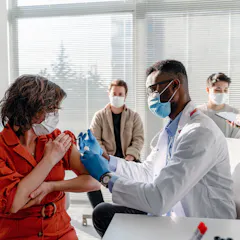
Vaccines have successfully curtailed viral diseases for decades. But as COVID-19 vaccination hesitancy shows, mistrust and misinformation continue to put lives at risk.
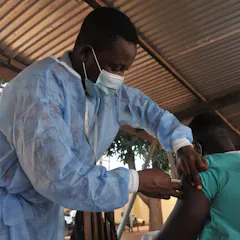
Provider burnout is expensive for the health system given its associations with low quality of care, absenteeism, and high workforce turnover.

Most pandemic policies have benefited those already best off in US society and ignored people for whom neither mass shutdowns nor reopening offer relief.

A new study suggests exposure to police violence may affect the outcome of a pregnancy.

The coronavirus pandemic has driven a lot of scientific progress in the past year. But just as some of the social changes are likely here to stay, so are some medical innovations.

Scientists issued an urgent call for better federal regulation of these endocrine-disrupting chemicals. Here’s what you can do to reduce your family’s risk.

Studies in poor countries have highlighted disparities in respectful and responsive care during childbirth based on women’s socioeconomic status and other characteristics.

Hollywood continues to dramatically exaggerate the medical risks associated with abortion while downplaying barriers to access.

One medication-free technique uses your emotions to release stress.

Health systems around the US are on the cusp of receiving COVID-19 vaccines. At the end of this months-long effort are the nitty-gritty details of how health care providers are giving people the vaccine.
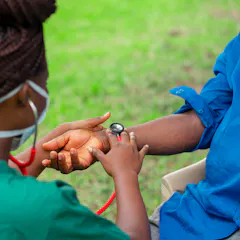
Nurses represent 50% of the global healthcare workforce. And they are often the sole healthcare providers in many low and middle-income countries.
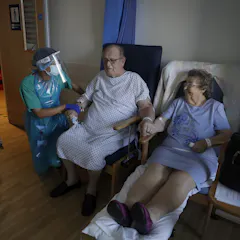
Death rates for hospitalized COVID-19 patients fell from 25.6% in March to 7.6% in August, according to a new study on three hospitals in New York. A study in the UK found similar results.
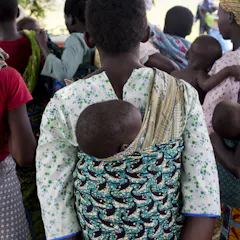
The use of antiretroviral therapy among pregnant and breastfeeding women in Zambia has increased but adherence is a problem.

There are ingredients in your pills other than the one designed to treat your ailments. Those unnamed ingredients can alter how you respond to a medicine or even make you sick.
Dans les lieux où le port du masque est respecté, les formes sévères de Covid-19 semblent moins fréquentes. Les masques protégeraient donc non seulement les autres, mais aussi leurs porteurs.
Authors
-

Professor Emeritus of Social Behavioral Sciences, University of California, San Francisco
-
épidémiologiste, University of California, San Francisco
-
Assistant Professor of Humanities & Social Sciences, University of California, San Francisco
-
Assistant Professor, Institute for Health & Aging, University of California, San Francisco
-
Professor of Sociology, University of California, San Francisco
-
PhD Candidate in Public Health, University of California, San Francisco
-
Associate Professor of Dermatology, University of California, San Francisco
-
Professor, Department of Bioengineering and Therapeutic Sciences; Director, Institute for Human Genetics, University of California, San Francisco
-
Professor Emeritus of Psychiatry, University of California, San Francisco
-
Associate Professor, Pediatric Orthopaedics and Sports Medicine, University of California, San Francisco
-
Associate professor, University of California, San Francisco
-
Senior Attending Physician in Occupational Health, University of California, San Francisco
-
Associate Professor of Obstetrics, Gynecology and Gynecologic Surgery, University of California, San Francisco
-
Professor of Obstetrics, Gynecology & Reproductive Science, University of California, San Francisco
-
Professor of Physiology, Kavli Institute for Fundamental Neuroscience, University of California, San Francisco