

Short-circuiting the language of literary value, permanently wrongfooting the custodians of taste, Gravity’s Rainbow proposes a new way of thinking about what we treasure most.
University of Adelaide

The University of Adelaide unites and serves those striving to change the world—and themselves—for the better. It’s a place where history is made.
Established in 1874, we’re home to over 29,000 students and 3,000 staff, all working to create progress. For our community. For all.
This is a university of outstanding quality—ranked among the top 1% globally—in the heart of Australia’s most liveable city*.
We’ve made a habit of breaking new ground. We were Australia’s first university to welcome female students. The first to offer degrees in science and business. The first with a conservatorium of music.
Among those who’ve studied, taught, or conducted research here are five Nobel Laureates; Australia’s first female prime minister; the first Australian astronaut to walk in space; Australia’s first female Supreme Court judge.
And our bold spirit continues to drive us to excel today. In research, we’re rising to challenges in a huge range of fields—with work universally rated world-standard or above. While in education, we’re recognised among the top 100 universities globally in 23 different subject areas†.
We can’t wait to see what’s next.
*Economist Intelligence Unit, 2021. Excellence in Research Australia, 2018. †Total unique entries across QS World University Rankings by Subject, and Academic Ranking of World Universities by Subject, 2021.
Links
Articles

Will the return of buybacks in the Murray-Darling Basin trigger more water fights? Let’s hope not. Buybacks are the most efficient way to recover water for the environment and deliver the Basin Plan.
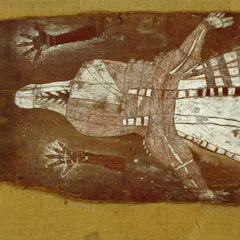
Majumbu’s work sits in the Melbourne Museum, but until now he has not been named as the artist.
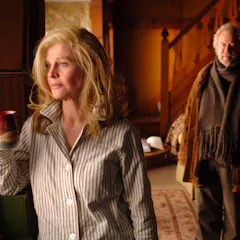
Love and intimacy are valuable for wellbeing at every age. But for older people, especially those in aged care, intimacy can be complicated. Carol Lefevre explores, through real life and fiction.
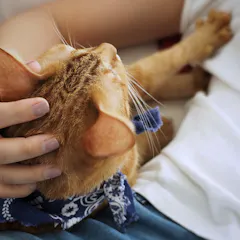
Le pétrissage est un comportement typique du chaton. Mais il peut se poursuivre à l’âge adulte, car il peut servir à communiquer des messages.

The treasurer has outlined a blueprint for an economy that will solve problems while still looking after the people at its centre. And despite the detractors, there is much to be said for it.

Australia slipped from 7th to 18th in the rankings over the past decade. But this year we’ve climbed back to 13th thanks to reforms in key areas including the new National Anti-Corruption Commission.
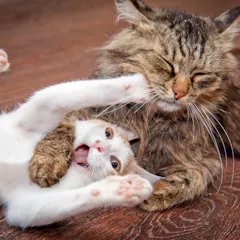
In a home with more than one cat, feline wrestling can be a common sight. But how do we know when it’s becoming a problem?
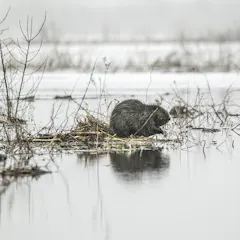
Restoring entire ecosystems is a difficult and expensive process. Thankfully, certain species, called ecosystem engineers, can make restoration easier. Gaining social and political support is critical too.
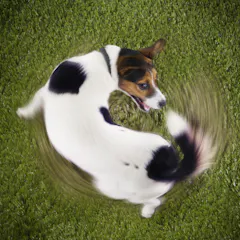
A proposed scientific name is frenetic random activity periods (FRAPs). In rabbits, these high activity periods are called ‘binkies’. But many cat and dog-owners simply call them ‘zoomies’.

The idea of healing benefits and emotional catharsis through reading is intuitively appealing. But does it work that way? Jane Turner Goldsmith finds answers in neuroscience, philosophy and more.

You might think of bunnies as ubiquitous, but it’s actually a relatively small group of species – and many of them are unique, little-known, and in trouble.
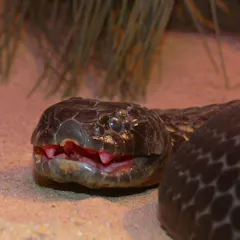
Less than a century ago, a slither of tiger snakes was abandoned on one of Western Australia’s tiny islets. Here’s how they adapted to survive.
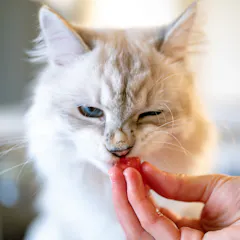
As omnivores, humans can choose to not consume any animal products. But what happens when we feed a vegan diet to our carnivore companions?

It’s counterproductive to push your child to read a whole chapter book independently if they are not ready. You might turn them off reading altogether. Here’s what to do instead.

No, you’re not imagining it. Your body does some weird things up in the air. Here’s a guide to the common and merely embarrassing to the rare, but serious.

John Banville calls Mrs Eckdorf in O'Neill’s Hotel, ‘an inexplicably neglected 20th-century masterpiece’. Carol Lefevre shares her fascination with William Trevor’s ‘crazed’ photographer Ivy Eckdorf.

Avatar 2 is released this week - but now it’s hard to remember a single detail from the original film. Does this make it a ‘forgotbuster’?

Early treatment with antibiotics can be life-saving.
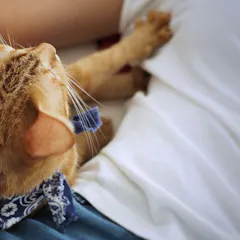
Kneading is typical kitten behaviour but may be retained into adulthood because it can help communicate messages.
Authors
No experts from University of Adelaide have registered yet.