

The government lost another appeal in the fight over whether a Sri Lankan family can stay in Australia. It’s time to ask a fundamental question: is this hardline approach appropriate anymore?
University of Adelaide

The University of Adelaide unites and serves those striving to change the world—and themselves—for the better. It’s a place where history is made.
Established in 1874, we’re home to over 29,000 students and 3,000 staff, all working to create progress. For our community. For all.
This is a university of outstanding quality—ranked among the top 1% globally—in the heart of Australia’s most liveable city*.
We’ve made a habit of breaking new ground. We were Australia’s first university to welcome female students. The first to offer degrees in science and business. The first with a conservatorium of music.
Among those who’ve studied, taught, or conducted research here are five Nobel Laureates; Australia’s first female prime minister; the first Australian astronaut to walk in space; Australia’s first female Supreme Court judge.
And our bold spirit continues to drive us to excel today. In research, we’re rising to challenges in a huge range of fields—with work universally rated world-standard or above. While in education, we’re recognised among the top 100 universities globally in 23 different subject areas†.
We can’t wait to see what’s next.
*Economist Intelligence Unit, 2021. Excellence in Research Australia, 2018. †Total unique entries across QS World University Rankings by Subject, and Academic Ranking of World Universities by Subject, 2021.
Links
Articles

It’ll be harder for employers to underpay workers, but easier to offer them extra hours without penalty pay.
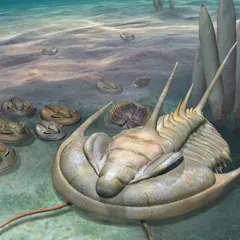
Looking a bit like enlarged woodlice, ancient trilobites crawled along the seabed and had an exoskeleton made of calcite — nature’s version of a suit of armour.

Job cuts don’t necessarily mean there’s less work to do. Those who are are employed may be working harder than usual to pick up the slack, with less reward for their efforts — and it’s not good for their health.

Our research shows dire wolves lived in the tropics not the Arctic, and were not especially close relatives of the grey wolf.

COVID-19 showed us we can’t necessarily have anything we want at any hour of the day, or in any season.

Evidence is mounting that suggests a link between cooking with gas and asthma in children.

The Commonwealth can never become insolvent. It ought to help out the states.
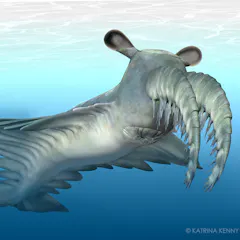
Our study on weird ancient marine animals called radiodonts supports the idea that vision played a crucial role during the Cambrian Explosion, a rapid burst of evolution about 500 million years ago.

Grocon as a construction business might be on its last legs, but Grocon as a property development and landlord business should be fine.

Super-spreader events typically have the ‘three Vs" in common: indoor venues, poor ventilation and vocalisation. But many buildings frequented by the public lack ventilation or the means to monitor it.
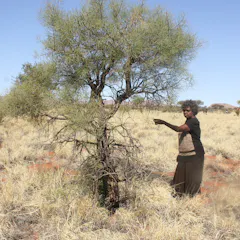
Buffel grass causes just as much damage to native wildlife as feral cats. But with the right control measures, biodiversity can bounce back.
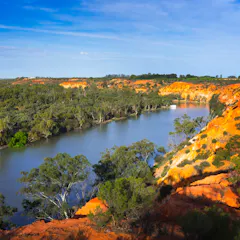
This year marks a decade since the Millennium Drought ended. The Murray-Darling Basin has endured a lot since, but two species are making an impressive comeback.
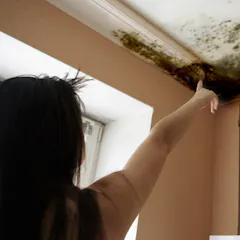
In Australia, we do housing and we do health, but they sit in different portfolios of government and the policy dots aren’t joined often enough.

Universities are being forced to move to less suitable locations in order to “revitalise” cities.

Un reciente estudio combina tres técnicas para revelar más sobre la datación de dos yacimientos Paleolítico franceses.

Current housing stimulus measures aim to boost buyer demand and are too small to sustain a recovery. A second round of stimulus is likely to be needed, and it should go into social housing supply.

When cats were introduced to Australia, they brought several diseases with them. These diseases are taking a big toll on human health and the economy — but there are things we can do.
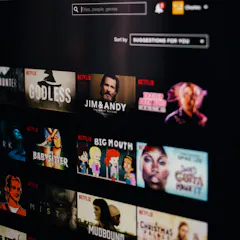
Have you ever watched something because YouTube recommended it to you? You’ve probably been influenced by an algorithm. But at the end of the day, underneath all the algorithms are people.
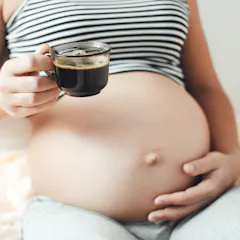
Nous avons demandé à cinq experts si boire du café pendant la grossesse était sans risque. Quatre experts sur cinq ont répondu par l'affirmative, sous conditions.
Authors
No experts from University of Adelaide have registered yet.