

When keeping score, you aren’t supposed to add ‘own goals’ to your own tally.
University of Adelaide

The University of Adelaide unites and serves those striving to change the world—and themselves—for the better. It’s a place where history is made.
Established in 1874, we’re home to over 29,000 students and 3,000 staff, all working to create progress. For our community. For all.
This is a university of outstanding quality—ranked among the top 1% globally—in the heart of Australia’s most liveable city*.
We’ve made a habit of breaking new ground. We were Australia’s first university to welcome female students. The first to offer degrees in science and business. The first with a conservatorium of music.
Among those who’ve studied, taught, or conducted research here are five Nobel Laureates; Australia’s first female prime minister; the first Australian astronaut to walk in space; Australia’s first female Supreme Court judge.
And our bold spirit continues to drive us to excel today. In research, we’re rising to challenges in a huge range of fields—with work universally rated world-standard or above. While in education, we’re recognised among the top 100 universities globally in 23 different subject areas†.
We can’t wait to see what’s next.
*Economist Intelligence Unit, 2021. Excellence in Research Australia, 2018. †Total unique entries across QS World University Rankings by Subject, and Academic Ranking of World Universities by Subject, 2021.
Links
Articles

Whether you like Nordic noir, horror, feisty feminists or gardening, our experts have rounded up the best of what’s new to streaming.

As oceans warm, tropical fish are on the move, heading south into cooler waters. New research reveals how they are getting on with the fish they encounter there.
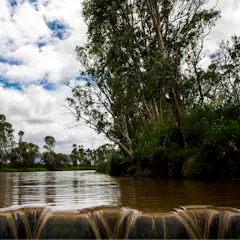
Restoring the basin to health requires more than just more water. Coordinated local efforts to restore rivers and the surrounding land are desperately needed.

In 1955, director Charles Laughton crafted one of the darkest, strangest fairytales ever to come out of Hollywood.
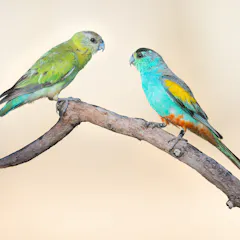
Trees are invading the open, grassy habitat of the endangered golden-shouldered parrot – giving predators cover to lie in wait.
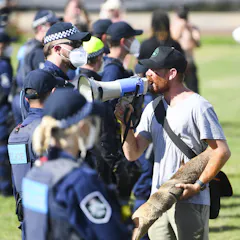
Sovereign citizens might seem eccentric, or even harmless. But those who look to engage in ‘pseudolaw’ can pose real risks.

In his National Press Club address, Former Treasury Secretary Ken Henry made the case for urgent, ambitious nature law reform to boost productivity while saving species.

The Therapeutic Goods Administration is recommending extra safeguards for two ingredients and a sunscreen ingredient by-product.

We’ve genetically selected dogs to want to be with us, and unfortunately this means many don’t cope well when they’re alone.

Estudo confirma suspeita dos cientistas de que, quando o clima do nosso planeta ultrapassa certos “pontos de inflexão”, pode ocorrer um colapso ecológico verdadeiramente catastrófico.

The answer confirms scientists’ suspicion that when our planet’s climate crosses certain ‘tipping points’, truly catastrophic ecological collapse can follow.

Trump believes the United States holds all the cards in trade talks. That’s not necessarily the case.
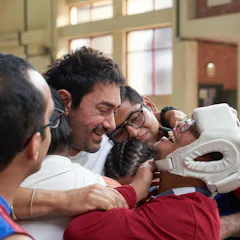
The funny and heartwarming new film is already a box office hit.
The aim is to find and treat lung cancers early, before they grow and spread, to improve the chance of survival. Here’s what’s involved.
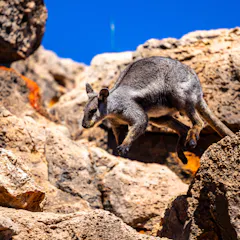
South Australia’s new Biodiversity Act will achieve things no federal or state law has done before. It shows states and territories can achieve ambitious reform.

Si votre chat passe beaucoup de temps à renifler quelque chose, cela signifie que l’objet n’est pas familier.
The Queensland government has halted a World Heritage nomination bid put forth by Labor last year. It’s next steps could greatly impact the cape’s future.

For the first time, women lead Australia’s key economic institutions. The moment matters because research shows women think about the economy differently from men.
The algal bloom in SA is a warning to coastal communities, as well as tourism, seafood and aquaculture industries. It’s a sign of what’s to come as the oceans warm.
Authors
No experts from University of Adelaide have registered yet.