

Today, the High Court of Australia dramatically altered the previously understood scope of the Commonwealth’s power to spend money and enter into contracts. This decision has immediate repercussions for…
University of Adelaide

The University of Adelaide unites and serves those striving to change the world—and themselves—for the better. It’s a place where history is made.
Established in 1874, we’re home to over 29,000 students and 3,000 staff, all working to create progress. For our community. For all.
This is a university of outstanding quality—ranked among the top 1% globally—in the heart of Australia’s most liveable city*.
We’ve made a habit of breaking new ground. We were Australia’s first university to welcome female students. The first to offer degrees in science and business. The first with a conservatorium of music.
Among those who’ve studied, taught, or conducted research here are five Nobel Laureates; Australia’s first female prime minister; the first Australian astronaut to walk in space; Australia’s first female Supreme Court judge.
And our bold spirit continues to drive us to excel today. In research, we’re rising to challenges in a huge range of fields—with work universally rated world-standard or above. While in education, we’re recognised among the top 100 universities globally in 23 different subject areas†.
We can’t wait to see what’s next.
*Economist Intelligence Unit, 2021. Excellence in Research Australia, 2018. †Total unique entries across QS World University Rankings by Subject, and Academic Ranking of World Universities by Subject, 2021.
Links
Articles
Home ownership does not lead to improved mental health, according a new study from the University of Adelaide. Dr Emma Baker…
I’ve written before about the toxins secreted by the Cane Toad. The toad’s venom is a complex mix of chemicals. The most important is related to digoxin, the toxin found in the Foxglove plant, and works…
Women pregnant with twins should give birth at 37 weeks to avoid complications, according to new research. Thirty-seven weeks…

Welcome to the State of the Future series. This series addresses 15 global challenges posed by the Millennium Project, an international non-profit think-tank collecting responses for 40 nodes worldwide…
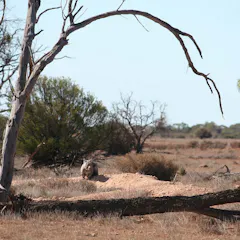
Over the past 18 months, increasing numbers of southern hairy nosed wombats in the Murraylands region have been found in poor to emaciated condition with damage to their skin and other organs. The skin…
The Adelaide Hills, the Barossa Valley, Mount Barker and McLaren Vale should be granted UNESCO World Heritage listing, according…
The iTelescope SSO webcam is going well with some dropouts, http://www.ustream.tv/channel/itelescope The Universe Today webcam is going strong. http://www.universetoday.com/95630/watch-the-transit-of-venus-live…
The historic transit of Venus is tomorrow (6 June), starting early in the morning. While some of you will have taken time off work (or made simple observing devices to take to work), not everybody can…

We’ve written previously on The Conversation about how taxonomy – the science of describing and naming species – can be quite a subjective science. But taxonomists can broadly be split into two camps…
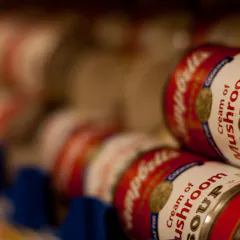
Bisphenol A (BPA) - a chemical used in the manufacture of polycarbonate plastics and some epoxy resins – has been in the news quite a bit lately. Headline-grabbing news items have been breathlessly reporting…
Who amongst us hasn’t wished, in the wee small hours when we are staring at the bedroom ceiling wide awake, heart pumping, bitterly regretting that last, late night espresso, that there was an anti-caffeine…
In the aftermath of the announcement that the government will remove the 30% private insurance rebate for alternative medicines found to be ineffective, last Saturdays Adelaide Advertiser carried a double…
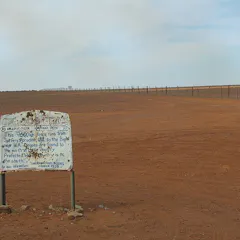
We feel we have to set the record straight after some of our (Bradshaw’s) comments were taken grossly out of context, or not considered at all (Ritchie’s). A bubbling kerfuffle in the media over the last…
Cost is the main reason people don’t go to the dentist, according to a recent study. Other factors, such as fear, time constraints…
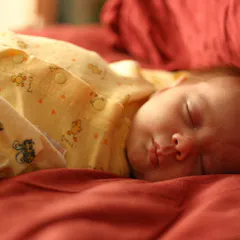
Recently published research helps clarify the risk of birth defects linked to assisted reproductive technology. The study authors (including myself) found that a major factor for birth defects was parental…

The image of the bearded, grubby ecologist, out-dated spectacles askew and sporting an eccentric grin of geeky, scientific relish, is one that is shared by many, including novice ecologists themselves…
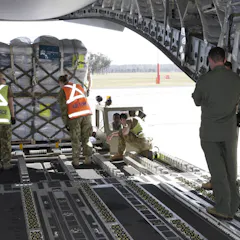
Reporting on the federal budget has been replete with commentary about “cuts” to foreign aid. But the fact is that the aid program was not cut in any meaningful sense of the word. In nominal terms, aid…
In the aftermath of the budget, one set of cuts may have been missed. The government is looking to remove the 30 per cent private health insurance rebate for some “alternative” medicines and therapies…
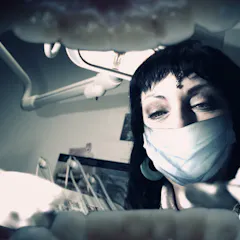
The Federal Budget includes $515.3 million dentistry package that will go some way to easing some of the problems with dental care in Australia. Of this total, $345.9 million will be used to treat patients…
Authors
No experts from University of Adelaide have registered yet.