

People under 18 can leave school, get a job, drive a car and pay taxes. Should they be allowed to vote too?
University of Adelaide

The University of Adelaide unites and serves those striving to change the world—and themselves—for the better. It’s a place where history is made.
Established in 1874, we’re home to over 29,000 students and 3,000 staff, all working to create progress. For our community. For all.
This is a university of outstanding quality—ranked among the top 1% globally—in the heart of Australia’s most liveable city*.
We’ve made a habit of breaking new ground. We were Australia’s first university to welcome female students. The first to offer degrees in science and business. The first with a conservatorium of music.
Among those who’ve studied, taught, or conducted research here are five Nobel Laureates; Australia’s first female prime minister; the first Australian astronaut to walk in space; Australia’s first female Supreme Court judge.
And our bold spirit continues to drive us to excel today. In research, we’re rising to challenges in a huge range of fields—with work universally rated world-standard or above. While in education, we’re recognised among the top 100 universities globally in 23 different subject areas†.
We can’t wait to see what’s next.
*Economist Intelligence Unit, 2021. Excellence in Research Australia, 2018. †Total unique entries across QS World University Rankings by Subject, and Academic Ranking of World Universities by Subject, 2021.
Links
Articles

Gas mining is expanding across Australia, and has been touted as part of the answer to cutting emissions. But there is evidence that this rollout will pose significant health and environmental risks.

When it comes to environmental activism, optimism is key.

It started on February, 14 when a suicide attack killed more than 40 people in the Indian controlled part of Kashmir. Now, Pakistan and India’s conflict over the disputed region is heating up again.
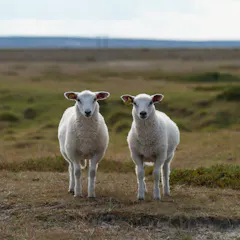
Q fever is a flu-like infection that spreads to people from animals. The bacteria that causes it can withstand harsh environmental conditions – in particular, drought.

Fewer girls study economics today than 25 years ago, perhaps because they have become aware of the barriers to progress.

The amount of alcohol you’d have to drink before glyphosate posed even a negligible risk would harm you well before the glyphosate would.

It’s time for a more reasonable, hybrid definition of civilisation that incorporates our Indigenous heritage.

Since the Tampa affair in 2001, successive governments have been anxious to be seen as “hard-line” on asylum seekers, but the cost – to people and the country – has been too high.

The danger with car hacking isn’t terrorists taking control of your car (as movies might have you think), but the age old problem of dodgy mechanics getting you to spend more on servicing it.
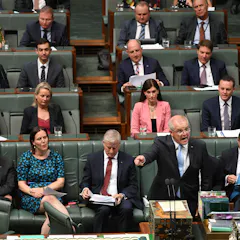
Whether they form the next government or not, the Liberals need to reconsider their reliance on neoliberal economics, which may no longer be serving the party – or the country.

A maximum work week of 38 hours makes scientific sense. Working longer hours is bad for mental and physical health.

It’s natural to assume that a downturn in the property market is good news for people who’ve been priced out of the market. In practice, they might still not be able to buy a home.

Dash Buttons have been ruled illegal under Germany’s consumer rights law. They might also contravene Australian consumer law.

When you click on unverified links or download suspicious apps you increase the risk of exposure to malware. Here’s what could happen if you do – and how you can minimise your risk.
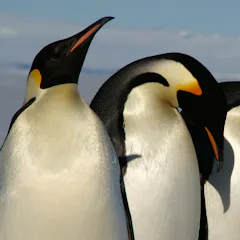
Genetic information extracted from fossil bones of two extinct penguin species shows the geological emergence of islands plays a role in penguin evolution.

If you’re one of the one in six Australian couples experiencing infertility, you’ve probably thought about IVF. Here’s a step by step breakdown of how it all works.

Our research compared penalties for animal cruelty issued before and after the law change in SA. We found the penalties did in fact increase, but reports of abuse haven’t decreased.

When an African grey parrot named Rocco made purchases via his owner’s Amazon Alexa voice assistant, it raised questions about who was legally responsible for footing the bill.
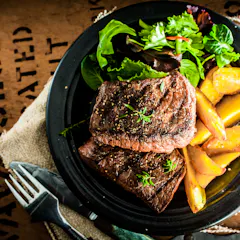
With the rising influence of celebrity chefs around the world, do restaurants have responsibilities to promote more ethical forms of eating?
Authors
No experts from University of Adelaide have registered yet.