

On the outskirts of Bangalore, families must piece together drinking water from communal supplies, intermittently available tap water, and “water ATMs”.
University of Adelaide

The University of Adelaide unites and serves those striving to change the world—and themselves—for the better. It’s a place where history is made.
Established in 1874, we’re home to over 29,000 students and 3,000 staff, all working to create progress. For our community. For all.
This is a university of outstanding quality—ranked among the top 1% globally—in the heart of Australia’s most liveable city*.
We’ve made a habit of breaking new ground. We were Australia’s first university to welcome female students. The first to offer degrees in science and business. The first with a conservatorium of music.
Among those who’ve studied, taught, or conducted research here are five Nobel Laureates; Australia’s first female prime minister; the first Australian astronaut to walk in space; Australia’s first female Supreme Court judge.
And our bold spirit continues to drive us to excel today. In research, we’re rising to challenges in a huge range of fields—with work universally rated world-standard or above. While in education, we’re recognised among the top 100 universities globally in 23 different subject areas†.
We can’t wait to see what’s next.
*Economist Intelligence Unit, 2021. Excellence in Research Australia, 2018. †Total unique entries across QS World University Rankings by Subject, and Academic Ranking of World Universities by Subject, 2021.
Links
Articles
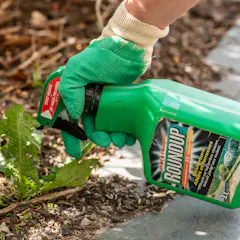
A US court recently ruled the weed killer Roundup contributed to a former gardener’s cancer. Juries don’t decide science. The weight of evidence shows Roundup has little association with cancer.

Jodie Whittaker finally takes over as the first woman to play the Doctor in the long-running TV series. But that’s not all that’s new as the show make a welcome return to our screens.

For our country to have a sustainable future, we need to ensure all Australians have access to quality education and healthcare and take steps to reduce inequality.
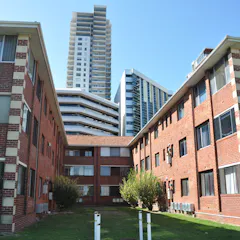
It’s not fair to evict people against their will. On the other hand, one holdout shouldn’t be able to derail the sale of an entire strata-titled apartment block. Now an international team has come up with an ingenious solution.

The candidates most likely to be chosen as independent directors are those good at avoiding tax.
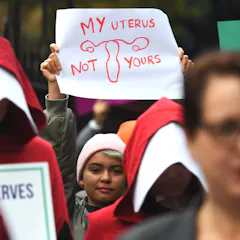
Although there is a move towards decriminalising abortion in Australian states, there is a long way to go before abortion is treated like other medical procedures under the law.

Dorrit Black, Grace Cossington Smith and Grace Crowley were some of many talented modernist women artists. But only with the advent of second wave feminism in the 1970s was their work properly acknowledged.
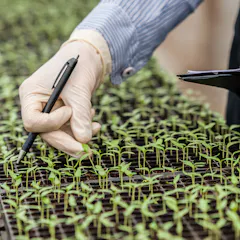
Synthetic biology is highly promising – but if we don’t get the regulation and engagement right, we risk alienating members of the public, and may even close doors for potentially fruitful research.
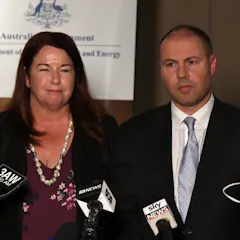
Splitting the energy and environment portfolios might sound like a backward step, but here’s why it could work.

What drives companies to be green? Women, it turns out, are the key. New research shows that firms with a more balanced mix of women and men in the boardroom receive fewer environmental lawsuits.
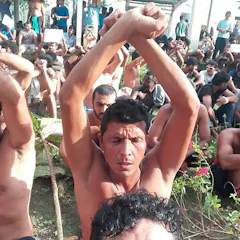
Boochani bears witness to the deterioration of the human spirit on Manus Island, where he’s been detained with hundreds of other asylum seekers for the last five years.

Some diamonds come from depths of more than 650km. Tiny imperfections in these gems give us clues about what’s happening in Earth’s hidden geological layers.

Whoever ends up the Liberal prime minister will need to articulate a more coherent economic policy to help everyday Australians.

No country can lay claim to sovereignty over a planet, moon or rocky body. But in the absence of clear laws regulating mining in space, it’s a case of first in, best dressed for resource extraction.
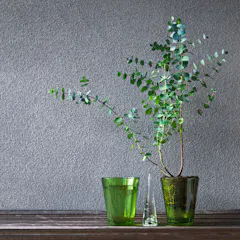
Sap from one tree collected in hollows in the bark, and natural yeast fermented the liquid to an alcoholic drink used by Aboriginal people. Europeans called the tree a cider gum because of the taste.

In May-August each year, giant Australian cuttlefish gather and mate over a narrow stretch of rocky coastline in South Australia. At their peak you see literally one cuttlefish per square metre.

Aboriginal Australians have effectively been on their country for as long as modern human populations have been outside of Africa. We have a limit as to how long ago that was: around 50,000 years.
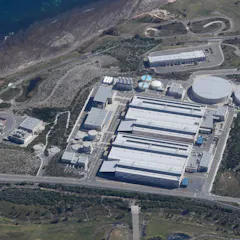
Farmers are calling for South Australia to ramp up its desalination plant to free up more water from the Murray Darling.
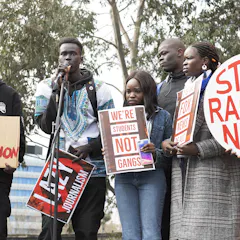
The problem is the disproportionate amount of attention on the so-called African gang problem and the way these incidents are being reported.
Authors
No experts from University of Adelaide have registered yet.