

Que peut nous dire un site archéologique sur les origines de notre espèce et des néanderthaliens ?
University of Adelaide

The University of Adelaide unites and serves those striving to change the world—and themselves—for the better. It’s a place where history is made.
Established in 1874, we’re home to over 29,000 students and 3,000 staff, all working to create progress. For our community. For all.
This is a university of outstanding quality—ranked among the top 1% globally—in the heart of Australia’s most liveable city*.
We’ve made a habit of breaking new ground. We were Australia’s first university to welcome female students. The first to offer degrees in science and business. The first with a conservatorium of music.
Among those who’ve studied, taught, or conducted research here are five Nobel Laureates; Australia’s first female prime minister; the first Australian astronaut to walk in space; Australia’s first female Supreme Court judge.
And our bold spirit continues to drive us to excel today. In research, we’re rising to challenges in a huge range of fields—with work universally rated world-standard or above. While in education, we’re recognised among the top 100 universities globally in 23 different subject areas†.
We can’t wait to see what’s next.
*Economist Intelligence Unit, 2021. Excellence in Research Australia, 2018. †Total unique entries across QS World University Rankings by Subject, and Academic Ranking of World Universities by Subject, 2021.
Links
Articles

Academics can control the way they engage with people, and communicate – and these are skills that get better with practice.

New tools add to an emerging view of the past as a turbulent “Game of Thrones” style scenario, with distinct early human ancestors living in Eurasia before Homo sapiens arrived.

Malcolm Turnbull’s acknowledgement of gendered power imbalances in parliament reveals that the gendered nature of politics is under challenge.
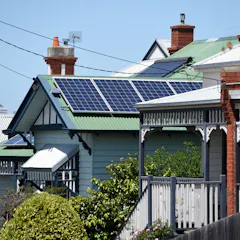
While new buildings may be the glamorous eco-home pinups, retrofitting existing homes is the main game when it comes to creating energy-efficient, comfortable housing stock for all Australians.

Oysters aren’t just good for a feed. They also give a vital boost to coastal ecosystems, which is why efforts are underway to restore Australia’s once-abundant oyster reefs to their former glory.
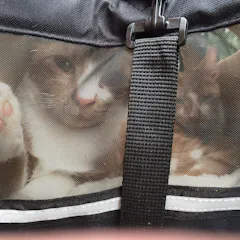
As the online trade of pets becoming normalised, regulation is now needed to protect animals.
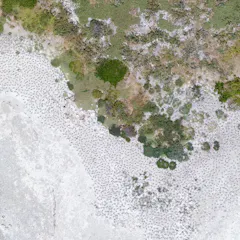
A few thousand fake ducks, a group of experienced wildlife spotters and a drone have proven the usefulness and accuracy of drones for wildlife monitoring.

As Congress takes up the issue of immigration, we turned to our global network of scholars to get their perspective on how so-called merit systems work.
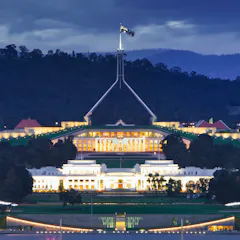
Starting February 14, the Science Meets Parliament event brings clear benefits - but there’s a case to be made for an ongoing effort in “Science Listens, Engages, and Collaborates with the Public.”
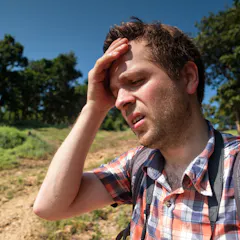
Heatstroke is a medical emergency and often kills. But there are many processes in the body that occur between being exposed to heat and ending up in the ED – and warning signs to look out for too.

Who should be legally responsible when 3D printed devices fail? Proposed changes to the Therapeutic Goods Administration’s regulatory framework have the potential to settle that question.

Private health insurance is meant to take pressure off the public system. But with exclusionary policies, people are increasingly avoiding the levies and using the public system anyway.
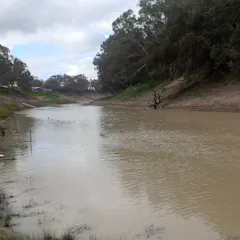
A dozen leading researchers have issued an urgent call to action for the Murray-Darling Basin, arguing that the billions spent on water-efficient irrigation have done little for the rivers’ health.

Preventing problems like Meltdown and Spectre from reocurring requires software developers to be given sufficient information about hardware to ensure security.
Science should be about answering the “what if?” questions, but is that under threat by the privatisation of science and the drive for results ahead of any competition?
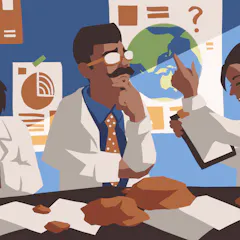
The world is made of tiny building blocks called ‘elements’. Scientists have worked out how fast some elements change into other elements. That gives us a very big clue about how old the Earth is.

If you need an alarm to get up in the morning, you’re probably not getting enough sleep.
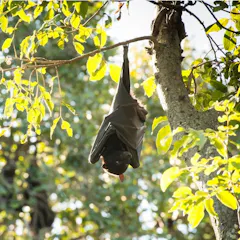
We need balanced media reporting about bat-borne diseases to help avoid vilification of Australia’s under-appreciated creatures of the night.

Chocolate poisoning in dogs remains a problem, particularly at Christmas.
Authors
No experts from University of Adelaide have registered yet.