

Activities that engage your brain, such as learning a new language and completing crosswords, as well as having high levels of social interaction, can reduce your risk of dementia.
University of Adelaide

The University of Adelaide unites and serves those striving to change the world—and themselves—for the better. It’s a place where history is made.
Established in 1874, we’re home to over 29,000 students and 3,000 staff, all working to create progress. For our community. For all.
This is a university of outstanding quality—ranked among the top 1% globally—in the heart of Australia’s most liveable city*.
We’ve made a habit of breaking new ground. We were Australia’s first university to welcome female students. The first to offer degrees in science and business. The first with a conservatorium of music.
Among those who’ve studied, taught, or conducted research here are five Nobel Laureates; Australia’s first female prime minister; the first Australian astronaut to walk in space; Australia’s first female Supreme Court judge.
And our bold spirit continues to drive us to excel today. In research, we’re rising to challenges in a huge range of fields—with work universally rated world-standard or above. While in education, we’re recognised among the top 100 universities globally in 23 different subject areas†.
We can’t wait to see what’s next.
*Economist Intelligence Unit, 2021. Excellence in Research Australia, 2018. †Total unique entries across QS World University Rankings by Subject, and Academic Ranking of World Universities by Subject, 2021.
Links
Articles

Photos are full of information, from your location to phone model, and digital forensics can help extract it.

While research for a cure for MND is underway, first we need to know what causes it.

The case provided a platform to lay bare the ugly reality of conditions in detention, and the role of the Commonwealth and its contractors in producing and sustaining those conditions over many years.

Australia’s herbaria are a priceless repository, holding around 8 million samples that map historical and current distributions of native and introduced plant species in Australia.

Layers and layers of sand and sediment collected in Naracoorte Caves create windows into what Australia was like in our recent past.
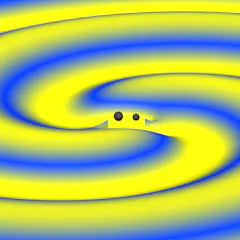
Scientists have made a third detection of gravitational waves, again caused by the merger of two black holes. But they think there’s something different about the black holes in this case.

We set out to discover whether it’s possible to reduce the alarming rates of non-communicable diseases in Pacific nations while improving nutrition security and income.

Advertisers want to know how you feel online through a process known as sentiment analysis, but it still has its limitations.

Women have been getting their fallopian tubes flushed for 100 years to help them conceive. Studies show it works, all the better if you use an oil-based liquid.

Many shoppers choose free-range eggs because they think they are tastier and healthier, rather than being motivated purely by concerns for hens’ welfare, a new study has found.

A lack of “breakthrough” moments in innovation may be caused by the increase of specialised workforces.

A national icon in New Zealand, tuatara are the only living example of a reptile group that was widespread 60-240 million years ago.
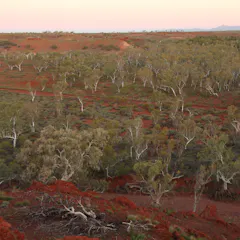
A new survey has identified millions of hectares of forest in dryland areas, a finding that boosts the total global forest cover by 9% and has significant consequences for carbon budgets.

The Conversation’s political experts react to the 2017-18 budget’s key measures in the areas of welfare, foreign aid, defence spending and more.

The Turnbull government is desperately trying to develop a more convincing economic narrative around good economic management, nation-building and fairness.
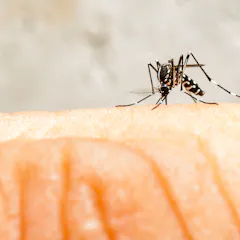
A broad process of communication and consultation should be initiated before gene drives are applied to control pests and diseases in Australia.

A new form of the highly contagious canine parovirus has been found in Australia. The strain has been found in vaccinated dogs.
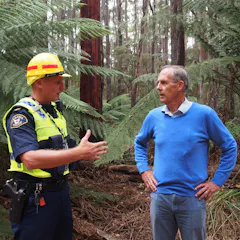
Following his 2016 arrest, former Greens leader Bob Brown aims to show that Tasmania’s anti-protest laws are in conflict with the constitution’s implied right to political communication.
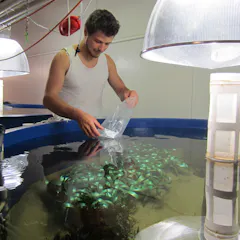
A new study suggests the benefits of a boost to marine plant growth from increased carbon dioxide will be cancelled out by the increased stress to fish species.
Authors
No experts from University of Adelaide have registered yet.