

The Great Southern Reef covers 71,000 square km and contributes more than A$10 billion to Australia’s economy each year.
University of Adelaide

The University of Adelaide unites and serves those striving to change the world—and themselves—for the better. It’s a place where history is made.
Established in 1874, we’re home to over 29,000 students and 3,000 staff, all working to create progress. For our community. For all.
This is a university of outstanding quality—ranked among the top 1% globally—in the heart of Australia’s most liveable city*.
We’ve made a habit of breaking new ground. We were Australia’s first university to welcome female students. The first to offer degrees in science and business. The first with a conservatorium of music.
Among those who’ve studied, taught, or conducted research here are five Nobel Laureates; Australia’s first female prime minister; the first Australian astronaut to walk in space; Australia’s first female Supreme Court judge.
And our bold spirit continues to drive us to excel today. In research, we’re rising to challenges in a huge range of fields—with work universally rated world-standard or above. While in education, we’re recognised among the top 100 universities globally in 23 different subject areas†.
We can’t wait to see what’s next.
*Economist Intelligence Unit, 2021. Excellence in Research Australia, 2018. †Total unique entries across QS World University Rankings by Subject, and Academic Ranking of World Universities by Subject, 2021.
Links
Articles

The restart of Japan’s nuclear reactors is good news for climate change. But there are still large psychological barriers to overcome.

Given that retaining the socialist objective hasn’t prevented the ALP from developing pro-market policies, why is it still seen as such a significant issue?
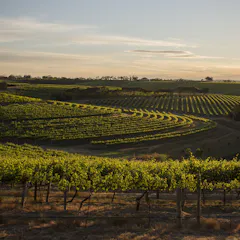
The wine industry is sensitive to climate change, but grape growers also have the funding and knowledge to put themselves at the forefront of climate adaptation. Other farmers should watch with interest.
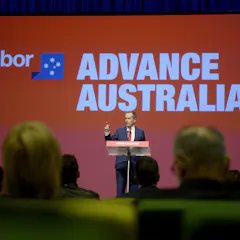
The Conversation’s experts respond to the ALP national conference on matters of asylum seekers, health, education, party reform and more.

Animals that couldn’t adapt to rapid warming quickly succumbed.

Feral cats are highly adaptable and highly variable, hence we must continue to search for their Achilles Heel and invest in a wide range of control methods.
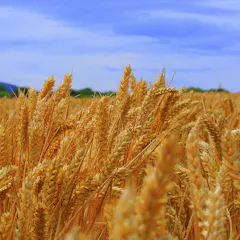
By embracing science and technology, Australia’s agricultural industry could be more efficient, productive and sustainable.

Labor has little to gain politically from deviating from the Coalition’s harsh asylum seeker policy, and yet there is urgent need for reform.

Viruses cause all kinds of infections from relatively mild cases of the flu to deadly outbreaks of Ebola. Clearly, not all viruses are equal and one of these differences is when you can infect others.

Voluntary administration was considered a state-of-the-art rescue procedure for struggling companies in 1993. But is is time for another wide-ranging review of our insolvency laws?

Pope Francis’ recent encyclical on the environment has attracted plenty of attention since it was published last week, and indeed it caused a significant stir even before it was released to the public…

ACTU President Ged Kearney has warned the recently signed China-Australia Free Trade Agreement could lock out Australian workers. Is that true?

The immediate importance of the Pope Francis’ encyclical comes from its potential to influence world leaders and galvanise the developing world ahead of the Paris Climate Conference this year.
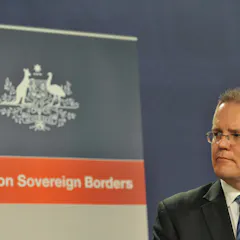
The withholding of information about government actions in asylum seeker policy undermines its democratic accountability to the Australian people.

New research into affordable housing reveals some poorly understood distinctions that deserve great policy scrutiny.

Following in the footpath of China, India is seeking new state to state tie-ups. Australia should answer the call.
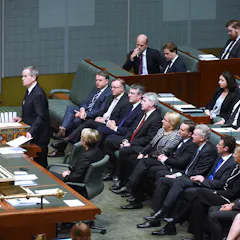
The legislative reform required to allow same-sex marriage is not complicated. There is relative consensus as to how this can be achieved.
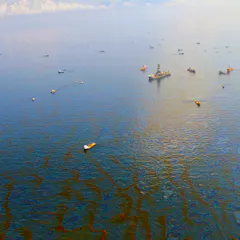
Big oil companies are moving to exploit new resources such as the Arctic or the Great Australian Bight. But are they worth the risk?
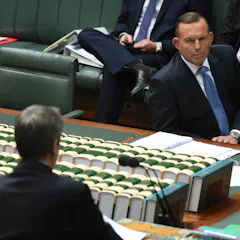
As opposition leader Bill Shorten prepares to introduce an amendment on Monday to the Marriage Act to legalise same-sex marriage, why has Australia lagged so far behind?
Authors
No experts from University of Adelaide have registered yet.