

With final results awaiting the inclusion of special votes, the shape of New Zealand’s next parliament hangs in the balance. Here are the variables in play.
The University of Melbourne

The University of Melbourne is a global leader in higher education. Across our campuses we convene brilliant minds from different disciplines and sectors to come together to address important questions and tackle grand challenges. In a disrupted world, that capacity has never been more important.
Our vision is to equip our students with a distinctive, future-facing education personalised around their ambitions and needs, enriched by global perspectives and embedded in a richly collaborative research culture. As active citizens and future leaders, our students represent our greatest contribution to the world, and are at the heart of everything we do.
We serve society by engaging with our communities and ensuring education and research are inspired from the outset by need and for the benefit of society, while remaining committed to allowing academic freedom to flourish. In this, we remain true to our purpose and fulfil our mission as a public-spirited organisation, dedicated to the principles of fairness, equality and excellence in everything we do.
We strive for an environment that is inclusive and celebrates diversity.
Beyond our campuses we imagine an Australia that is ambitious, forward thinking and increasing its reputation and influence globally. We are committed to playing a part in achieving this – building on our advantageous location in one of the world’s most exciting cities and across the state of Victoria, in a region rapidly becoming a hub for innovative education, research and collaboration.
Links
Articles
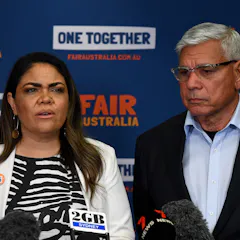
Our election analyst lays out the current projections across the nation.
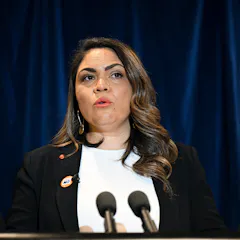
As the Voice referendum draws to a close this weekend, polls suggest the “no” case will win by a substantial margin.
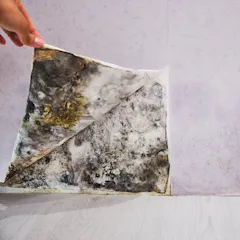
Here are 12 questions worth considering before you sign a residential tenancy agreement.
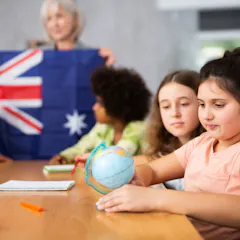
For over 100 years, the Victorian school curriculum has failed to give generations of students the chance to learn about Indigenous political movements.
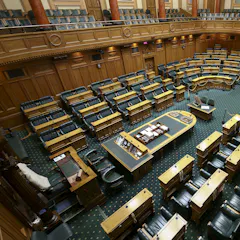
With two days of the campaign left, what had earlier seemed like a relatively predictable election has narrowed considerably, with several variables potentially influencing the outcome.
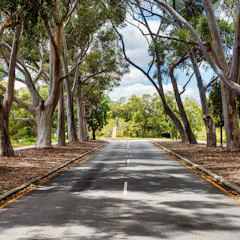
It’s spring, but many street trees look stressed and sick. Heat and insect attack are arriving early. But our cities are also steadily losing canopy cover.
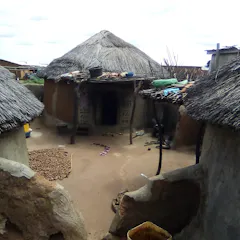
Victims of witchcraft accusations face alienation or exclusion from their communities.
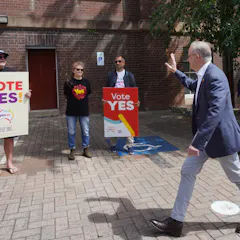
With less than a week to go until the Voice referendum, the polls are looking grim for the “yes” campaign.
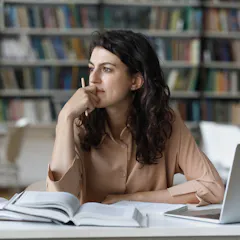
A limited number of specialists are able to diagnose and treat ADHD, making it difficult to even start the process of getting diagnosed. Should GPs play a greater role?
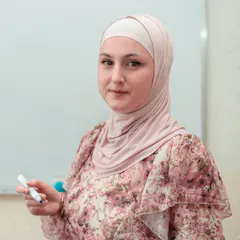
Australia’s teachers are predominantly Australian-born, female, and non-Indigenous. Most hail from middle-class backgrounds with urban upbringings, and are less likely to have disabilities.

One ‘no’ video was reposted more than 10,000 times by WeChat users, while a ‘yes’ video from the Victorian Labor Party was shared only 25 times.
The preliminary global-average temperature anomaly for September is a shocking 1.7°C. These are the drivers of current record-breaking heat.

New research shows turning northern rivers inland to irrigate Australia’s dry interior would not increase rainfall. This is another argument against the Bradfield scheme.
The Modern, a debut novel centred on an Australian researcher at New York’s MoMA, muses on modern art and relationships – riffing off MoMA artists like Grace Hartigan and Nan Goldin.

We sampled 118 rivers and creeks before and after the Black Summer bushfires, searching for platypus DNA. Here’s what we found.
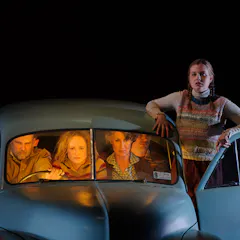
My Sister Jill disrupts ideas of colonial glory with a troubling depiction of family violence, PTSD, homophobia and the ruinous intergenerational impacts of patriarchal oppression on everyone.
A new helpline aims to help people with sexual thoughts about children before they act on them. And so far, it’s having its intended effect.
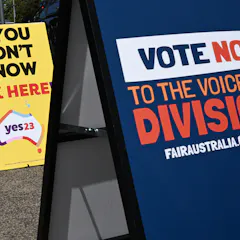
While the latest Essential polls shows an improvement for the “yes” vote, it’s still not enough for it to lead.
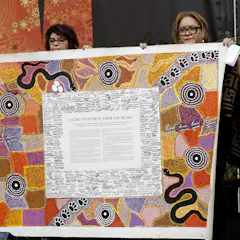
A new book sheds light on the moral frameworks of human governance among our First Nations, showing how we can heal as a nation by living with each other and the natural world.
Authors
-

Election Analyst (Psephologist) at The Conversation; and Honorary Associate, School of Mathematics and Statistics, The University of Melbourne
-
Guest Research Fellow, School of Computing and Information Systems, The University of Melbourne
-
Professor of Sociology of Law and Deviance, Università di Bologna; University of Essex; The University of Melbourne
-
McKenzie Research Fellow, The University of Melbourne
-
Research assistant, Movember Institute of Men's Health, The University of Melbourne
-
Senior Research Associate, School of Agriculture, Food and Ecosystem Sciences, The University of Melbourne
-
Paleontologist, The University of Melbourne
-
Senior Lecturer, Centre for Advancing Journalism, The University of Melbourne
-
Research Fellow, Centre for Youth Mental Health, The University of Melbourne
-
Deputy Vice-Chancellor (Global, Culture and Engagement), The University of Melbourne
-
Emeritus professor, History, The University of Melbourne
-
Professor of Health Economics, The University of Melbourne
-
Associate Professor and Head, Behavioural Neuropharmacology Laboratory, The University of Melbourne
-
Lecturer in History, The University of Melbourne
-
Associate Professor, Centre for Youth Mental Health, The University of Melbourne