

Burning Man turned to mud. Korea’s Scout Jamboree ended in heat, a typhoon, evacuations and recriminations. Extreme weather threatens your favourite festival.
The University of Melbourne

The University of Melbourne is a global leader in higher education. Across our campuses we convene brilliant minds from different disciplines and sectors to come together to address important questions and tackle grand challenges. In a disrupted world, that capacity has never been more important.
Our vision is to equip our students with a distinctive, future-facing education personalised around their ambitions and needs, enriched by global perspectives and embedded in a richly collaborative research culture. As active citizens and future leaders, our students represent our greatest contribution to the world, and are at the heart of everything we do.
We serve society by engaging with our communities and ensuring education and research are inspired from the outset by need and for the benefit of society, while remaining committed to allowing academic freedom to flourish. In this, we remain true to our purpose and fulfil our mission as a public-spirited organisation, dedicated to the principles of fairness, equality and excellence in everything we do.
We strive for an environment that is inclusive and celebrates diversity.
Beyond our campuses we imagine an Australia that is ambitious, forward thinking and increasing its reputation and influence globally. We are committed to playing a part in achieving this – building on our advantageous location in one of the world’s most exciting cities and across the state of Victoria, in a region rapidly becoming a hub for innovative education, research and collaboration.
Links
Articles
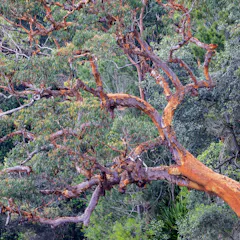
The loss of so many trees in Sydney’s Castle Cove represents the theft of environmental benefits and services from future generations of Australians.
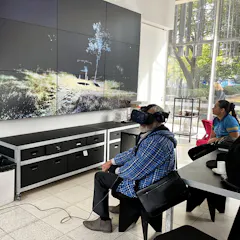
Olkola Traditional Owners are working with researchers to use digital technologies to see how story interweaves with Country. It also aims to bring Country to Olkola people who are unable to travel.

You’re the Voice reinforces the view that supporting the Voice to Parliament is an act of national reconciliation we can take together.
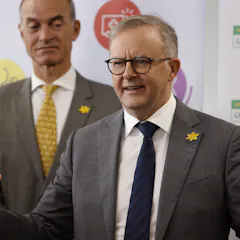
The latest Newspoll shows more bad news for the “yes” campaign.

With dads being the primary earners in many heterosexual households, it was often the mother who gave up work to manage extra work at home during the pandemic. But what about heterosexual households where the mother was the primary earner?
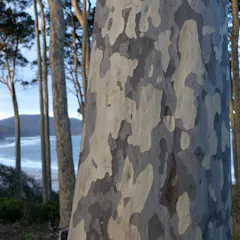
Tall. Straight. Abundant flowers. And a stunning trunk. What’s not to like about the spotted gum?
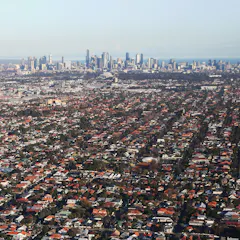
Despite adopting the goal of creating medium-density neighbourhoods to end urban sprawl, our cities have struggled to achieve it. Confused debates about ‘good density’ are part of the problem.
Once again, First Nations in the Murray-Darling Basin have been shortchanged in water reform and shortchanged in the water market. It’s time to listen and actually deliver tangible outcomes.

Any policy interventions from Creative Australia to support visual and craft artists’ incomes will need to take a sector-wide approach.

Erotica and pornography are huge in the audio space, with stories about intimate, emotionally-charged sexual encounters designed to create a sense of closeness between speakers and listeners.

In future, Australia will spend much more on aged care. This increased spending needs to be well planned, so access is protected and all older people – regardless of income – get the care they need.

Children as young as ten don’t have access to Medicare if detained. And they’re dying of largely preventable diseases.
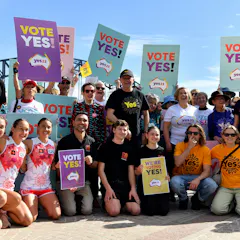
If the “yes” case is to win the October referendum, there will need to be sharp turn around in the polling trends to date.
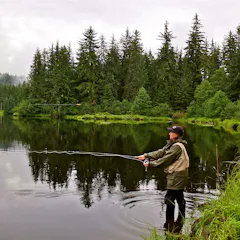
Founded in 1959, the membership group Trout Unlimited has changed the culture of fly-fishing and mobilized members to support conservation. Could its approach work for other social problems?
Governments spend billions of dollars every year to encourage us to take up private cover. But our research shows this does little to reduce pressure on the public system.

Pandemi COVID-19 membawa tantangan nyata bagi dunia pendidikan. Salah satu yang paling sering disebut adalah ‘learning loss’. Sudah pulihkah kita dari kondisi tersebut?

Our research with 124 Australian hospitality staff found women bar workers were routinely seen as ‘better suited’ to manage the threat of violence - which is both risky and exploitative.
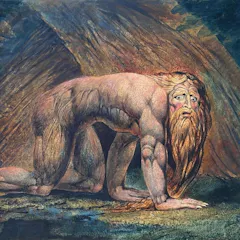
Humans have attempted to understand and treat mental illness for centuries – from ancient Greek medicine, Middle Ages exorcisms and the rise of asylums, to modern medical breakthroughs.

As COVID finds its equilibrium, infection rates will rise and fall, influenced by seasons, school holidays and new subvariants. Managing the risk is complex and needs to be cost effective.
Authors
-

Election Analyst (Psephologist) at The Conversation; and Honorary Associate, School of Mathematics and Statistics, The University of Melbourne
-
Guest Research Fellow, School of Computing and Information Systems, The University of Melbourne
-
Professor of Sociology of Law and Deviance, Università di Bologna; University of Essex; The University of Melbourne
-
McKenzie Research Fellow, The University of Melbourne
-
Research assistant, Movember Institute of Men's Health, The University of Melbourne
-
Senior Research Associate, School of Agriculture, Food and Ecosystem Sciences, The University of Melbourne
-
Paleontologist, The University of Melbourne
-
Senior Lecturer, Centre for Advancing Journalism, The University of Melbourne
-
Research Fellow, Centre for Youth Mental Health, The University of Melbourne
-
Deputy Vice-Chancellor (Global, Culture and Engagement), The University of Melbourne
-
Emeritus professor, History, The University of Melbourne
-
Professor of Health Economics, The University of Melbourne
-
Associate Professor and Head, Behavioural Neuropharmacology Laboratory, The University of Melbourne
-
Lecturer in History, The University of Melbourne
-
Associate Professor, Centre for Youth Mental Health, The University of Melbourne