

If the “yes” case is to win the October referendum, there will need to be sharp turn around in the polling trends to date.
The University of Melbourne

The University of Melbourne is a global leader in higher education. Across our campuses we convene brilliant minds from different disciplines and sectors to come together to address important questions and tackle grand challenges. In a disrupted world, that capacity has never been more important.
Our vision is to equip our students with a distinctive, future-facing education personalised around their ambitions and needs, enriched by global perspectives and embedded in a richly collaborative research culture. As active citizens and future leaders, our students represent our greatest contribution to the world, and are at the heart of everything we do.
We serve society by engaging with our communities and ensuring education and research are inspired from the outset by need and for the benefit of society, while remaining committed to allowing academic freedom to flourish. In this, we remain true to our purpose and fulfil our mission as a public-spirited organisation, dedicated to the principles of fairness, equality and excellence in everything we do.
We strive for an environment that is inclusive and celebrates diversity.
Beyond our campuses we imagine an Australia that is ambitious, forward thinking and increasing its reputation and influence globally. We are committed to playing a part in achieving this – building on our advantageous location in one of the world’s most exciting cities and across the state of Victoria, in a region rapidly becoming a hub for innovative education, research and collaboration.
Links
Articles

Founded in 1959, the membership group Trout Unlimited has changed the culture of fly-fishing and mobilized members to support conservation. Could its approach work for other social problems?
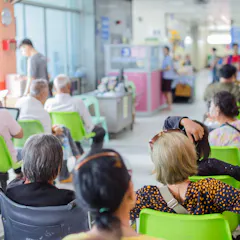
Governments spend billions of dollars every year to encourage us to take up private cover. But our research shows this does little to reduce pressure on the public system.

Pandemi COVID-19 membawa tantangan nyata bagi dunia pendidikan. Salah satu yang paling sering disebut adalah ‘learning loss’. Sudah pulihkah kita dari kondisi tersebut?

Our research with 124 Australian hospitality staff found women bar workers were routinely seen as ‘better suited’ to manage the threat of violence - which is both risky and exploitative.

Humans have attempted to understand and treat mental illness for centuries – from ancient Greek medicine, Middle Ages exorcisms and the rise of asylums, to modern medical breakthroughs.

As COVID finds its equilibrium, infection rates will rise and fall, influenced by seasons, school holidays and new subvariants. Managing the risk is complex and needs to be cost effective.
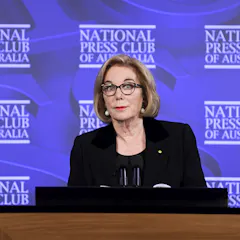
Buttrose’s tenure as chair was tainted by being a Morrison government ‘captain’s pick’, but she nonetheless defended the ABC against tat government’s predations.

Beberapa ahli mengkhawatirkan terciptanya ekspektasi yang tidak realistis yang berkaitan dengan kekerasan berbasis gender dan potensi kecanduan. Yang lain mengatakan bahwa pendidikan dapat membantu mengimbangi bahaya-bahaya ini.
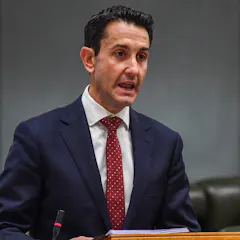
By the October 2024 state election, Labor will have governed for almost ten years, so there could be an ‘it’s time’ factor for voters.

How did George Stubbs, one of England’s foremost painters of horses and dogs, get Australian animals so wrong?

From diseases to climate change, we need new solutions more than ever – yet patents may be slowing us down. For example, there is growing evidence new drug development speeds up once patents expire.

Artikel ini merupakan bagian dari rangkaian serial “#PemilihMuda2024” Salah satu kategori pemilih yang sangat menarik untuk diteliti menjelang pemilihan umum (pemilu) adalah pemilih pemula. Kelompok pemilih…

Our new research has tracked the gender of artists working at Australian opera companies and found evidence of pervasive gender inequality.

Claims regarding on these apps’ effectiveness are often based on less than robust findings.

Poccum’s Law provides a best practice, evidence-based model for bail reform which would have prevented Veronica Nelson’s death in custody.

Research shows nearly 20% of the poorer mental health reported by young adults with disability could be alleviated by helping those who want to work into jobs.

Matildas fans, we have a job to do. We need to scream our support as loudly as possible – but not at the expense of our vocal health.

Middle-aged people in equatorial regions have lived through the most perceptible warming in their lifetimes. But many others may experience unrecognisable changes in their local climate later in life.
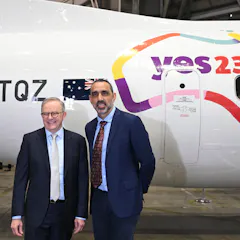
Polling on the Voice continues to provide bad news for the Albanese government and the “yes” campaign.
Authors
-

Election Analyst (Psephologist) at The Conversation; and Honorary Associate, School of Mathematics and Statistics, The University of Melbourne
-
Guest Research Fellow, School of Computing and Information Systems, The University of Melbourne
-
Professor of Sociology of Law and Deviance, Università di Bologna; University of Essex; The University of Melbourne
-
McKenzie Research Fellow, The University of Melbourne
-
Research assistant, Movember Institute of Men's Health, The University of Melbourne
-
Senior Research Associate, School of Agriculture, Food and Ecosystem Sciences, The University of Melbourne
-
Paleontologist, The University of Melbourne
-
Senior Lecturer, Centre for Advancing Journalism, The University of Melbourne
-
Research Fellow, Centre for Youth Mental Health, The University of Melbourne
-
Deputy Vice-Chancellor (Global, Culture and Engagement), The University of Melbourne
-
Emeritus professor, History, The University of Melbourne
-
Professor of Health Economics, The University of Melbourne
-
Associate Professor and Head, Behavioural Neuropharmacology Laboratory, The University of Melbourne
-
Lecturer in History, The University of Melbourne
-
Associate Professor, Centre for Youth Mental Health, The University of Melbourne