

The six books on this year’s Miles Franklin shortlist vary in style, themes and the writers’ experience, with veteran novelists and debuts – including an international prize-winner and a 26-year-old.
The University of Melbourne

The University of Melbourne is a global leader in higher education. Across our campuses we convene brilliant minds from different disciplines and sectors to come together to address important questions and tackle grand challenges. In a disrupted world, that capacity has never been more important.
Our vision is to equip our students with a distinctive, future-facing education personalised around their ambitions and needs, enriched by global perspectives and embedded in a richly collaborative research culture. As active citizens and future leaders, our students represent our greatest contribution to the world, and are at the heart of everything we do.
We serve society by engaging with our communities and ensuring education and research are inspired from the outset by need and for the benefit of society, while remaining committed to allowing academic freedom to flourish. In this, we remain true to our purpose and fulfil our mission as a public-spirited organisation, dedicated to the principles of fairness, equality and excellence in everything we do.
We strive for an environment that is inclusive and celebrates diversity.
Beyond our campuses we imagine an Australia that is ambitious, forward thinking and increasing its reputation and influence globally. We are committed to playing a part in achieving this – building on our advantageous location in one of the world’s most exciting cities and across the state of Victoria, in a region rapidly becoming a hub for innovative education, research and collaboration.
Links
Articles

Victoria has a plan for the state to electrify, but how do we make the transition fair and equitable for everyone? New research suggests a way forward.

Russia has long been a ‘paramilitarised’ regime, where the state can be challenged and undermined, but is not completely destroyed, by paramilitary or criminal groups.
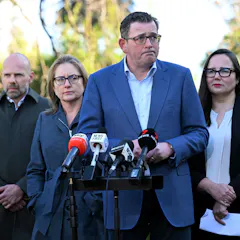
For the first time since becoming premier in 2014, more voters disapprove of Dan Andrews than approve of him in the Morgan poll.

Treasurer Jim Chalmers wants to make the national wellbeing framework part of how governments make decisions, as others like Wales have done. But international experience suggests it won’t be easy.
The Universities Accord review wants universities and vocational education providers to collaborate more. It talks of ‘seamless’ transitions for students.
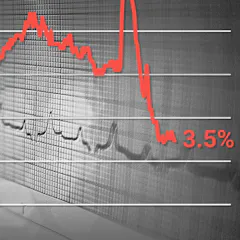
While fewer new jobs are being created, an unusually high backlog of vacancies is keeping demand for workers high. But over the past year, we’ve seen a shift in who is being hired.

There will likely be a settlement between Victoria and the games organisers for breaching the contract. But the Commonwealth Games may be the ones to suffer long-term reputational damage.

Yumi Stynes and Melissa Kang’s sex education guide for teens is a topic of hot debate for its frankness. It also provides comprehensive, inclusive sex education that combats misinformation.
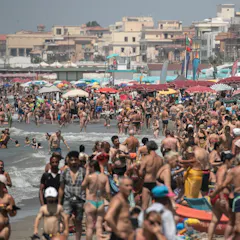
The predicted El Niño is a worry, but it doesn’t guarantee the record-breaking heat we’re seeing in parts of the Northern Hemisphere.

Bayangkan betapa anehnya belut. Mereka mengalami masa puber sebanyak 4-5 kali, dengan setiap perubahan tubuh dramatis. Belut adalah makhluk yang sangat aneh, bukan?

Nel Law’s voyage to Antarctica and back, through the choppy waters of a longstanding marriage, is the story of a woman’s right to be, to change, to grow and to love.

What are we really doing when we go online? New research suggests much of our digital activity is about regulating our own emotions.
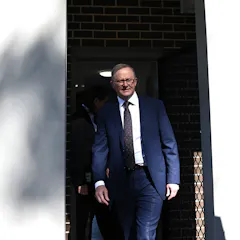
Labor’s post-election honeymoon, while hitting a snag or two, has not yet ended - but support for the Voice to Parliament continues to slide.

Growing ship numbers and reductions in the industry’s total emissions add up to big emission cuts per ship – as much as 60% by 2030 and 91% by 2040. The days of fossil-fuelled ships are now numbered.

Mientras sigan funcionando las centrales nucleares, seremos vulnerables no sólo a accidentes graves, sino también a la militarización de estas instalaciones como está sucediendo en Ucrania.

How can we ensure ethical research principles for young trans people and their families are met – especially when they might see research as one of few avenues for accessing care?

As long as nuclear power plants continue to operate, we are frighteningly vulnerable not only to severe accidents, but also to the weaponisation of these facilities.

Christopher Glasl’s withdrawn memoir of his time in Special Operations Group raises questions about publisher fact checking. How do they do it? And can it be improved?
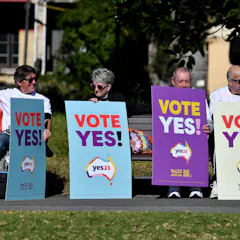
Polling continues to show that support for a “yes” vote at the upcoming referendum is losing ground.
Authors
-

Election Analyst (Psephologist) at The Conversation; and Honorary Associate, School of Mathematics and Statistics, The University of Melbourne
-
Guest Research Fellow, School of Computing and Information Systems, The University of Melbourne
-
Professor of Sociology of Law and Deviance, Università di Bologna; University of Essex; The University of Melbourne
-
McKenzie Research Fellow, The University of Melbourne
-
Research assistant, Movember Institute of Men's Health, The University of Melbourne
-
Senior Research Associate, School of Agriculture, Food and Ecosystem Sciences, The University of Melbourne
-
Paleontologist, The University of Melbourne
-
Senior Lecturer, Centre for Advancing Journalism, The University of Melbourne
-
Research Fellow, Centre for Youth Mental Health, The University of Melbourne
-
Deputy Vice-Chancellor (Global, Culture and Engagement), The University of Melbourne
-
Emeritus professor, History, The University of Melbourne
-
Professor of Health Economics, The University of Melbourne
-
Associate Professor and Head, Behavioural Neuropharmacology Laboratory, The University of Melbourne
-
Lecturer in History, The University of Melbourne
-
Associate Professor, Centre for Youth Mental Health, The University of Melbourne