

There has been a huge amount of speculation about what ChatGPT means for university study. But has actually been happening? A new survey looks at the first semester with this new technology.
The University of Melbourne

The University of Melbourne is a global leader in higher education. Across our campuses we convene brilliant minds from different disciplines and sectors to come together to address important questions and tackle grand challenges. In a disrupted world, that capacity has never been more important.
Our vision is to equip our students with a distinctive, future-facing education personalised around their ambitions and needs, enriched by global perspectives and embedded in a richly collaborative research culture. As active citizens and future leaders, our students represent our greatest contribution to the world, and are at the heart of everything we do.
We serve society by engaging with our communities and ensuring education and research are inspired from the outset by need and for the benefit of society, while remaining committed to allowing academic freedom to flourish. In this, we remain true to our purpose and fulfil our mission as a public-spirited organisation, dedicated to the principles of fairness, equality and excellence in everything we do.
We strive for an environment that is inclusive and celebrates diversity.
Beyond our campuses we imagine an Australia that is ambitious, forward thinking and increasing its reputation and influence globally. We are committed to playing a part in achieving this – building on our advantageous location in one of the world’s most exciting cities and across the state of Victoria, in a region rapidly becoming a hub for innovative education, research and collaboration.
Links
Articles

Firstly, there is no such thing as ‘too much’ immunity. Beyond the regular side-effects of a vaccine, there are no known additional risks to being re-vaccinated soon after an infection.

My top three works situated witnessing as a political act. These works invite you to revisit what you thought you knew.

Despite his legal troubles, the former president maintains a healthy lead in the race for the Republican nomination.

A new survey finds Australians care deeply about the environment but many are not aware of the full extent of biodiversity loss.

The Office Australia launches in 2024. It will be interesting to see whether we understand ourselves well enough to make a compelling new version of this popular show.

Media Monsters deserves to stand among the giants of academic research and authorship on Australian media and political history.

The continued reductions in arts funding seem counter intuitive given the negative impact of COVID on the arts and cultural sector.
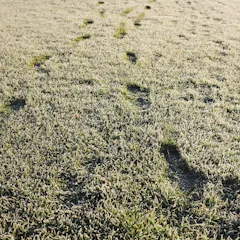
Different grasses respond to and cope with winter in different ways.
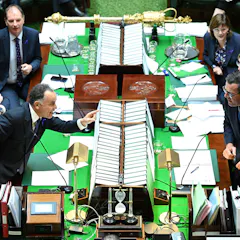
After a shocking state election result, the Victorian opposition has slumped further in the latest polls.

While it’s tempting to focus on what people can do to ‘stay safe’ or respond effectively to harassers, this is ultimately the wrong question to ask and puts responsibility victims.

Stimulants such as Ritalin and modafinil have a reputation as off-label ‘smart drugs’ that boost cognitive performance. New research suggests they have the opposite effect.
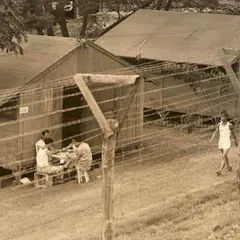
When US President Franklin D. Roosevelt signed Executive Order 9066, he paved the way for the incarceration of Japanese Americans on the mainland and Hawaii
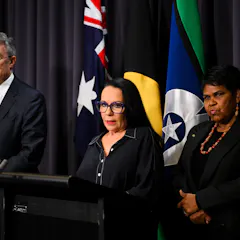
The polls are showing wildly different results for the likelihood of the Voice to parliament succeeding - which may be explained by who they are polling.
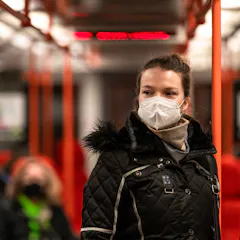
Australia is in the middle of its fifth Omicron wave, which has been brewing since February. But it’s been slow and drawn out and the health impacts are very different to earlier waves.
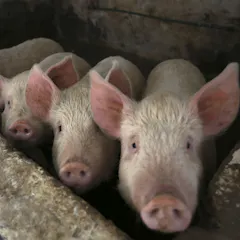
First published in 1975, Animal Liberation opened our eyes to the exploitation of animals. At a time of ‘ag-gag’ laws and ‘skyscraper’ farms, a new edition assesses the state of animal rights today.
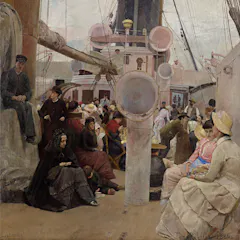
British and Irish girls and young women who migrated to Australia in the mid-1800s used diaries to record their day-to-day lives, document their travel experiences and navigate their emotions.

Tibetan Buddhists may face a future of duelling Dalai Lamas: one born in exile who will receive traditional religious training, the other a mouthpiece of the Communist Party.
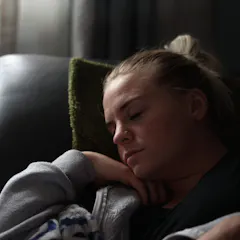
We know from other viruses that viral fragments can remain in different tissues for months or even years. This could be the case for long COVID.

Ireland recently passed legislation to introduce clearer alcohol labels to warn about the risks of liver disease and fatal cancers from drinking alcohol. Australia should do the same.
Authors
-

Election Analyst (Psephologist) at The Conversation; and Honorary Associate, School of Mathematics and Statistics, The University of Melbourne
-
Guest Research Fellow, School of Computing and Information Systems, The University of Melbourne
-
Professor of Sociology of Law and Deviance, Università di Bologna; University of Essex; The University of Melbourne
-
McKenzie Research Fellow, The University of Melbourne
-
Research assistant, Movember Institute of Men's Health, The University of Melbourne
-
Senior Research Associate, School of Agriculture, Food and Ecosystem Sciences, The University of Melbourne
-
Paleontologist, The University of Melbourne
-
Senior Lecturer, Centre for Advancing Journalism, The University of Melbourne
-
Research Fellow, Centre for Youth Mental Health, The University of Melbourne
-
Deputy Vice-Chancellor (Global, Culture and Engagement), The University of Melbourne
-
Emeritus professor, History, The University of Melbourne
-
Professor of Health Economics, The University of Melbourne
-
Associate Professor and Head, Behavioural Neuropharmacology Laboratory, The University of Melbourne
-
Lecturer in History, The University of Melbourne
-
Associate Professor, Centre for Youth Mental Health, The University of Melbourne