

Governments and activist groups are bringing environmental issues to international courts. They argue that the impact of climate change and environmental issues affect human rights.
The University of Melbourne

The University of Melbourne is a global leader in higher education. Across our campuses we convene brilliant minds from different disciplines and sectors to come together to address important questions and tackle grand challenges. In a disrupted world, that capacity has never been more important.
Our vision is to equip our students with a distinctive, future-facing education personalised around their ambitions and needs, enriched by global perspectives and embedded in a richly collaborative research culture. As active citizens and future leaders, our students represent our greatest contribution to the world, and are at the heart of everything we do.
We serve society by engaging with our communities and ensuring education and research are inspired from the outset by need and for the benefit of society, while remaining committed to allowing academic freedom to flourish. In this, we remain true to our purpose and fulfil our mission as a public-spirited organisation, dedicated to the principles of fairness, equality and excellence in everything we do.
We strive for an environment that is inclusive and celebrates diversity.
Beyond our campuses we imagine an Australia that is ambitious, forward thinking and increasing its reputation and influence globally. We are committed to playing a part in achieving this – building on our advantageous location in one of the world’s most exciting cities and across the state of Victoria, in a region rapidly becoming a hub for innovative education, research and collaboration.
Links
Articles
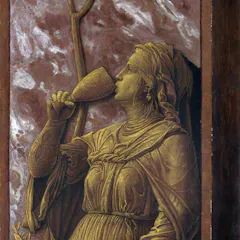
Despite wine’s centrality to the everyday life of the Romans, the ancient sources continuously attest it was a problematic drink when consumed by women.
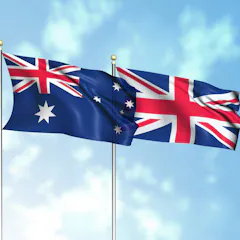
A free trade agreement between Australia and the United Kingdom has begun – and it failed to put climate change at the forefront.
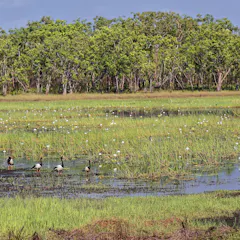
The end of native timber harvesting in Victoria offers a generational opportunity for First Peoples to care for Forest Country
In our new research, we have explored how podcasts about mental health can be designed in a way that reduces stigma and discrimination.

Young Rupert took up his inheritance in Adelaide in 1953 with minimal journalistic experience. He quickly revealed himself to be a ruthless rule-breaker and hands on, expansionary proprietor.
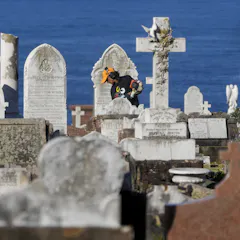
The communities of Australia’s biggest cities could soon face the prospect of having nowhere to bury their loved ones. Four key changes are needed to avert the crisis.
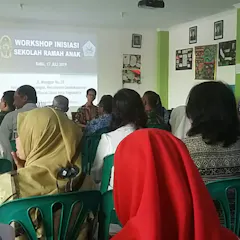
Temuan kami menunjukkan bahwa orang tua di Yogyakarta memainkan peran penting dan aktif dalam advokasi kebijakan pendidikan – bukan hanya sekadar menggantikan tugas sekolah di rumah.

The optimal trade-off between restoring habitat and crop production hinges on pollinators. A new study shows giving pollinators more natural habitat on the farm leads to big increases in production.
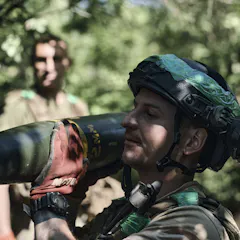
There are no polemics in Serhii Plokhy’s book about the Russo-Ukranian war. The Ukranian historian lets the facts speak – showing remarkable restraint.
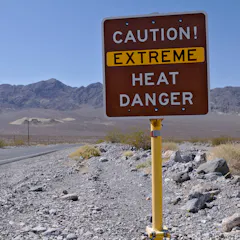
Humans prospered in a stable climate. But conditions are changing. Research out today shows 2 billion people will be pushed out of the habitable zone by 2.7C warming. Why? What does this mean for us?
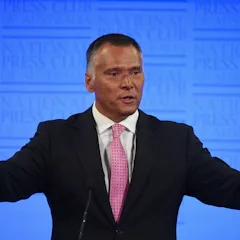
The national broadcaster’s management has finally condemned the racist abuse directed at their high-profile presenter and apologised too him, but it has come far too late.

The Treasury has been taking extraordinary measures to delay a default, but these measures could fail as early as June 1.

There are several ways Australia can support its northern neighbour, to the benefit of both countries.

It’s important to understand that a First Nations consultative body such as the Customary Senate doesn’t pose a ‘threat’ to democracy or the rule of law.

Edwina Preston reflects on the lost art of hanging out – which feeds creativity – and the need to reclaim time from the pressures of productivity. She draws on new books by Jenny Odell and Sheila Liming.
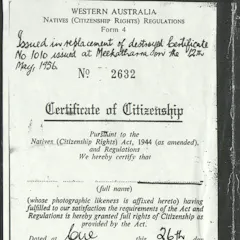
For nearly 30 years, Western Australia peddled the lie that Aboriginal people had to apply under state law to become ‘Australian citizens’.
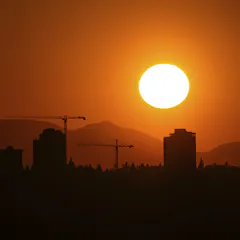
There’s a 98% chance of a record hot year by 2028, and a 66% chance of exceeding the 1.5°C threshold for at least that year, according to the latest World Meteorological Organization update.

Labor’s post-election honeymoon shows no sign of ending, but the Voice referendum is on shakier ground.
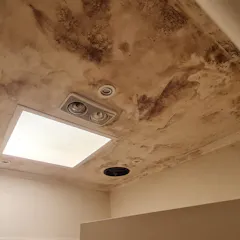
Mould is a health hazard and renters are most at risk. Here experts in health, law, building and construction examine the problem of mould in homes and offer guidance for both renters and landlords.
Authors
-

Election Analyst (Psephologist) at The Conversation; and Honorary Associate, School of Mathematics and Statistics, The University of Melbourne
-
Guest Research Fellow, School of Computing and Information Systems, The University of Melbourne
-
Professor of Sociology of Law and Deviance, Università di Bologna; University of Essex; The University of Melbourne
-
McKenzie Research Fellow, The University of Melbourne
-
Research assistant, Movember Institute of Men's Health, The University of Melbourne
-
Senior Research Associate, School of Agriculture, Food and Ecosystem Sciences, The University of Melbourne
-
Paleontologist, The University of Melbourne
-
Senior Lecturer, Centre for Advancing Journalism, The University of Melbourne
-
Research Fellow, Centre for Youth Mental Health, The University of Melbourne
-
Deputy Vice-Chancellor (Global, Culture and Engagement), The University of Melbourne
-
Emeritus professor, History, The University of Melbourne
-
Professor of Health Economics, The University of Melbourne
-
Associate Professor and Head, Behavioural Neuropharmacology Laboratory, The University of Melbourne
-
Lecturer in History, The University of Melbourne
-
Associate Professor, Centre for Youth Mental Health, The University of Melbourne