

Analysis of Victoria’s winter COVID wave found Paxlovid and Lagevrio reduced the risk of hospitalisation and death. The results were better for Paxlovid, but not everyone can take it.
The University of Melbourne

The University of Melbourne is a global leader in higher education. Across our campuses we convene brilliant minds from different disciplines and sectors to come together to address important questions and tackle grand challenges. In a disrupted world, that capacity has never been more important.
Our vision is to equip our students with a distinctive, future-facing education personalised around their ambitions and needs, enriched by global perspectives and embedded in a richly collaborative research culture. As active citizens and future leaders, our students represent our greatest contribution to the world, and are at the heart of everything we do.
We serve society by engaging with our communities and ensuring education and research are inspired from the outset by need and for the benefit of society, while remaining committed to allowing academic freedom to flourish. In this, we remain true to our purpose and fulfil our mission as a public-spirited organisation, dedicated to the principles of fairness, equality and excellence in everything we do.
We strive for an environment that is inclusive and celebrates diversity.
Beyond our campuses we imagine an Australia that is ambitious, forward thinking and increasing its reputation and influence globally. We are committed to playing a part in achieving this – building on our advantageous location in one of the world’s most exciting cities and across the state of Victoria, in a region rapidly becoming a hub for innovative education, research and collaboration.
Links
Articles
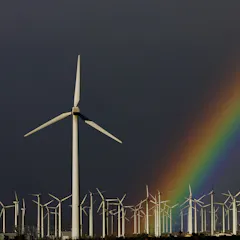
Amid Russia’s war on Ukraine, spiralling inflation and energy shortages, tackling climate change has been central to the recovery plans of the world’s biggest economies.

The first Chinese object was acquired by the year-old gallery in 1862. A new exhibition looks at this history – and towards the future.

A new study investigated whether ‘school connectedness’ prevents the onset of depression and anxiety in 14 to 24 year-olds.
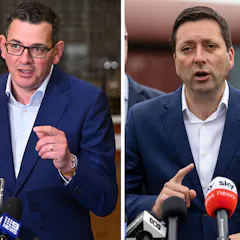
In covering the final days of the Victorian election, mainstream media fell victim to wanting the most dramatic outcome – no matter how weak the evidence for it may have been.
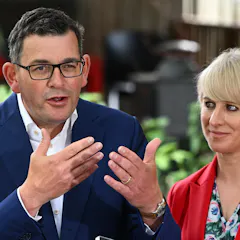
Despite a swing away from Labor, the Andrews government has been returned comfortably for a third term.
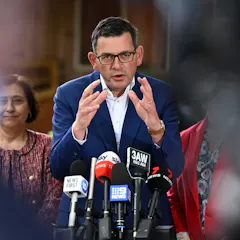
As election day arrives in Victoria, two late polls predict a return of the Andrews Labor government.

The announcement that Amazon would rescue the beloved Aussie soap overturns many expectations about television in the age of streaming.

Still getting a negative RAT after a COVID exposure and days of symptoms? It might be time to consider a PCR.

Mala, a Polish Orthodox Jewish woman, escaped the Warsaw ghetto early in the second world war and survived by passing as a Catholic. A new book tells her story.

Men could be doing more around the house. And it’s affecting relationships in ways no-one has explored, until now.
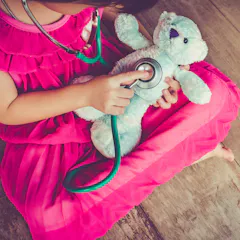
Many occupations in Australia are more heavily gendered than they were 35 years ago.
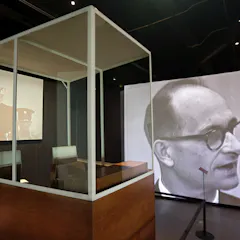
As a child of Hungarian Jews, reading Eichmann in Jerusalem was a revelation to Peter Christoff. Yet might the ‘Eichmann problem’ of criminal disregard apply, today to those exploiting fossil fuels?
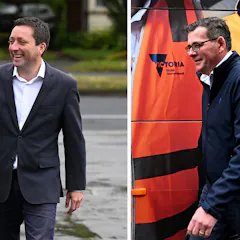
With the Victorian state election just days away, a new poll shows the gap between the two major parties to be tightening.
Class allows us to understand inequality not as a consequence of personal failings, but as a socioeconomic issue.
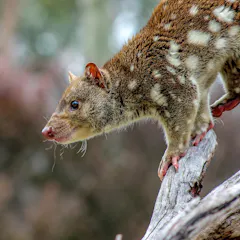
About a third of Victoria’s land-based plants, animals and ecological communities face extinction. We look at what the political parties have promised ahead of the state election.
Komunikasi risiko yang tidak empatik dan menyalahkan masyarakat berpotensi pada pengambilan keputusan yang enggan mengurai permasalahan untuk mencari solusi yang lebih sistemik.

Memakai earbuds atau headphone untuk memutar musik bersuara sangat keras serta pergi ke konser bisa jadi membuat hingga 1,35 miliar anak muda berisiko mengalami kehilangan pendengaran permanen.
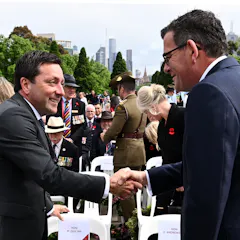
Latest polls show a narrowing lead for the ALP in the Victorian election, while the upper house voting system continues to attract criticism.
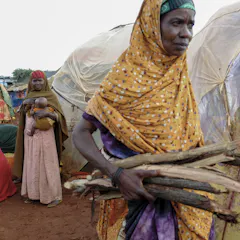
When it comes to loss and damage, COP27 negotiations seem likely to reach a dead end. But as we enter the final days of the summit, anything can happen.
Authors
-

Election Analyst (Psephologist) at The Conversation; and Honorary Associate, School of Mathematics and Statistics, The University of Melbourne
-
Guest Research Fellow, School of Computing and Information Systems, The University of Melbourne
-
Professor of Sociology of Law and Deviance, Università di Bologna; University of Essex; The University of Melbourne
-
McKenzie Research Fellow, The University of Melbourne
-
Research assistant, Movember Institute of Men's Health, The University of Melbourne
-
Senior Research Associate, School of Agriculture, Food and Ecosystem Sciences, The University of Melbourne
-
Paleontologist, The University of Melbourne
-
Senior Lecturer, Centre for Advancing Journalism, The University of Melbourne
-
Research Fellow, Centre for Youth Mental Health, The University of Melbourne
-
Deputy Vice-Chancellor (Global, Culture and Engagement), The University of Melbourne
-
Emeritus professor, History, The University of Melbourne
-
Professor of Health Economics, The University of Melbourne
-
Associate Professor and Head, Behavioural Neuropharmacology Laboratory, The University of Melbourne
-
Lecturer in History, The University of Melbourne
-
Associate Professor, Centre for Youth Mental Health, The University of Melbourne