

The Labor government’s lead is closing in the polls, but it still looks set to be returned on November 26.
The University of Melbourne

The University of Melbourne is a global leader in higher education. Across our campuses we convene brilliant minds from different disciplines and sectors to come together to address important questions and tackle grand challenges. In a disrupted world, that capacity has never been more important.
Our vision is to equip our students with a distinctive, future-facing education personalised around their ambitions and needs, enriched by global perspectives and embedded in a richly collaborative research culture. As active citizens and future leaders, our students represent our greatest contribution to the world, and are at the heart of everything we do.
We serve society by engaging with our communities and ensuring education and research are inspired from the outset by need and for the benefit of society, while remaining committed to allowing academic freedom to flourish. In this, we remain true to our purpose and fulfil our mission as a public-spirited organisation, dedicated to the principles of fairness, equality and excellence in everything we do.
We strive for an environment that is inclusive and celebrates diversity.
Beyond our campuses we imagine an Australia that is ambitious, forward thinking and increasing its reputation and influence globally. We are committed to playing a part in achieving this – building on our advantageous location in one of the world’s most exciting cities and across the state of Victoria, in a region rapidly becoming a hub for innovative education, research and collaboration.
Links
Articles
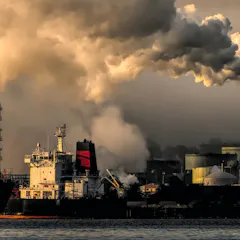
Planet kita sedang kritis dan sangat membutuhkan konferensi iklim COP27 untuk berhasil. Tanpa tindakan nyata, kita akan menjerumuskan anak-anak hari ini ke masa depan bumi yang lebih berbahaya.
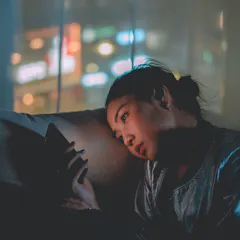
We found being a night owl increased the risk of having behavioural problems and delayed brain development in later adolescence.
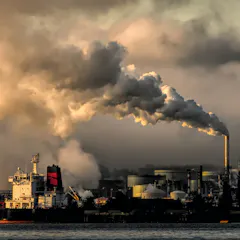
Our planet is undeniably in crisis and desperately needs COP27 to succeed. Without concrete action, we are condemning today’s children to a harsher future.

There are so many forms of the virus, it’s hard to keep up. Here’s what to expect next as the virus mutates and recombines.

There were mixed results for the Albanese government from polls take in the wake of its first budget.
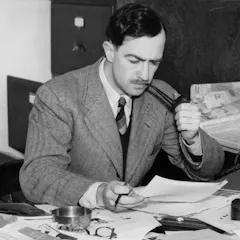
In Emperors in Lilliput, Jim Davidson examines legacy of Clem Christesen and Stephen Murray-Smith.
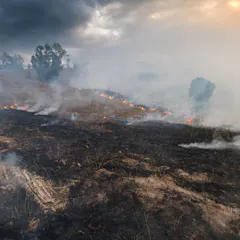
New research finds the Victorian town of Buchan never experienced catastrophic bushfires, until misguided laws banned the use of burning as a way to control the land.

Both cancer and cancer treatment can impact someone’s ability to have biological children. It’s important to discuss fertility right after cancer diagnosis.
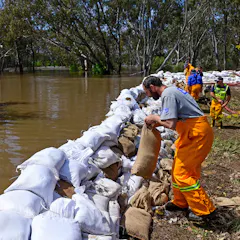
After storms of rain come storms of blame. But the blame game is circular. To stop disasters, we must prepare for disasters.
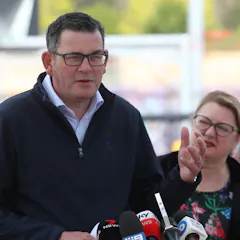
Four weeks out from the Victorian state election, Labor still looks likely to retain government, although with a swing against it.
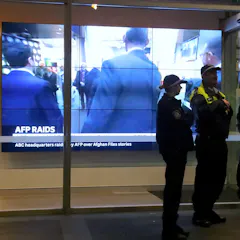
Australia’s press freedom problems have been acknowledged by both the Morrison and Albanese governments. However, we’re yet to see any actual law reform to support public interest journalism.
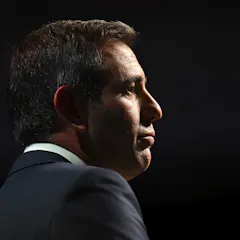
The Albanese government’s first budget contains many measures that may contribute to wellbeing, but that’s not the same as being a wellbeing budget.
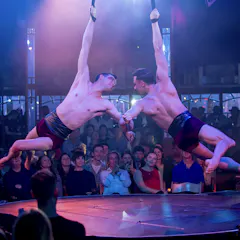
Arts Minister Tony Burke says the government is waiting for its new cultural policy. But artists are struggling now.
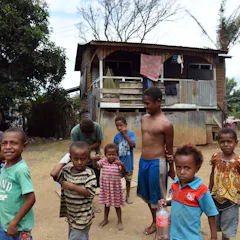
The latest budget shows we’re starting to cement the view that an adequate development budget is non-negotiable if Australia wants to have influence in the region.
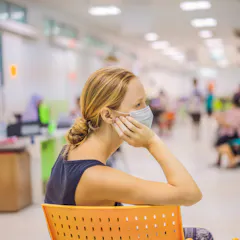
The budget gets on with the job of implementing the health policies already promised. But there’s still more to do to get the new government’s policy settings right.

From Popes and philosophers to writers and emperors, the foot fetish has a long and storied history in our world.
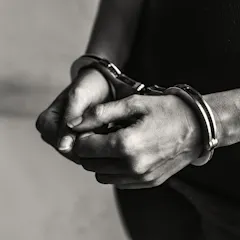
Menurut tafsir Al-Quran dan Alkitab, opsi hukuman mati bagi koruptor sangat terbuka dan tidak bertentangan dengan agama.
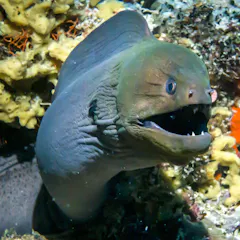
Imagine if you had to go through puberty four or five times, with each bodily change more dramatic than the last. Then you’d have a pretty good understanding of what it’s like to be an eel.

Permanent residents can vote in New Zealand. So why not here?
Authors
-

Election Analyst (Psephologist) at The Conversation; and Honorary Associate, School of Mathematics and Statistics, The University of Melbourne
-
Guest Research Fellow, School of Computing and Information Systems, The University of Melbourne
-
Professor of Sociology of Law and Deviance, Università di Bologna; University of Essex; The University of Melbourne
-
McKenzie Research Fellow, The University of Melbourne
-
Research assistant, Movember Institute of Men's Health, The University of Melbourne
-
Senior Research Associate, School of Agriculture, Food and Ecosystem Sciences, The University of Melbourne
-
Paleontologist, The University of Melbourne
-
Senior Lecturer, Centre for Advancing Journalism, The University of Melbourne
-
Research Fellow, Centre for Youth Mental Health, The University of Melbourne
-
Deputy Vice-Chancellor (Global, Culture and Engagement), The University of Melbourne
-
Emeritus professor, History, The University of Melbourne
-
Professor of Health Economics, The University of Melbourne
-
Associate Professor and Head, Behavioural Neuropharmacology Laboratory, The University of Melbourne
-
Lecturer in History, The University of Melbourne
-
Associate Professor, Centre for Youth Mental Health, The University of Melbourne