

The ‘Sydney Modern expansion’ seems a fitting description of a building that effectively doubles the size of the Art Gallery of New South Wales.
The University of Melbourne

The University of Melbourne is a global leader in higher education. Across our campuses we convene brilliant minds from different disciplines and sectors to come together to address important questions and tackle grand challenges. In a disrupted world, that capacity has never been more important.
Our vision is to equip our students with a distinctive, future-facing education personalised around their ambitions and needs, enriched by global perspectives and embedded in a richly collaborative research culture. As active citizens and future leaders, our students represent our greatest contribution to the world, and are at the heart of everything we do.
We serve society by engaging with our communities and ensuring education and research are inspired from the outset by need and for the benefit of society, while remaining committed to allowing academic freedom to flourish. In this, we remain true to our purpose and fulfil our mission as a public-spirited organisation, dedicated to the principles of fairness, equality and excellence in everything we do.
We strive for an environment that is inclusive and celebrates diversity.
Beyond our campuses we imagine an Australia that is ambitious, forward thinking and increasing its reputation and influence globally. We are committed to playing a part in achieving this – building on our advantageous location in one of the world’s most exciting cities and across the state of Victoria, in a region rapidly becoming a hub for innovative education, research and collaboration.
Links
Articles

Although female inventorship has grown over the years, 15 years’ worth of patent outcomes from IP Australia suggests inventing is still a luxury for women.

Appeals to social organisation are about knowing one’s place, a particularly English preoccupation.

At the time Australia needs it most, there is a crisis in the workforce of psychologists trained to assess and treat brain and mental health conditions.
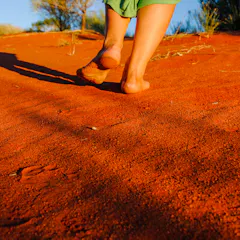
It’s great news Origin is walking away from fracking and gas. But other companies are still keen to frack the Beetaloo despite climate and environment concerns.

Joyce Carol Oates saw Blonde, her epic novel interrogating the legend of Marilyn Monroe, as ‘my Moby Dick’. Mel Campbell celebrates Oates’ achievement, in the lead-up to the Netflix adaptation.
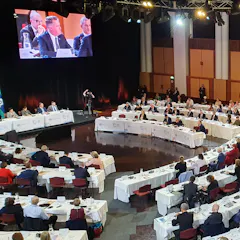
A comparison of 17 OECD countries shows those with multi-employer bargaining had worse wage outcomes than those enterprise bargaining.

Scuttlebutt is an entirely decentralised social network – and it shows we can learn to make the internet better.
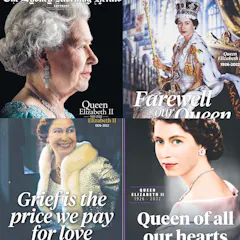
The Australian media’s blanket coverage of the sovereign’s death was a reflection of public expectations, but it was allowed to drag on and became increasingly bizarre.
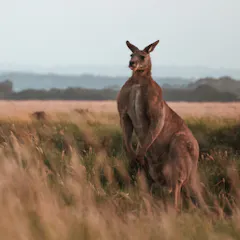
Kangaroos are essentially peace-loving herbivores, but they’re known to attack if it feels cornered – or even if it sees a human as a sparring partner.

Tough feedback can shake our confidence. But there are healthy, helpful ways to process it. And yes, venting is one of them!
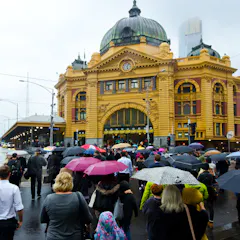
La Niña is officially here for the third year in a row. You probably associate it with flooding, but how might it affect future drought and bushfires? And could a fourth La Niña be possible?

The government has missed a chance to better target cost cuts to certain patient groups, for certain medical conditions, and for generic drugs.
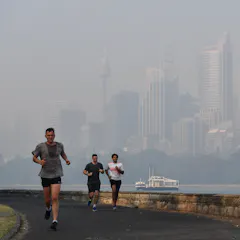
Every year, air pollution kills 2,600 Australians. Australia’s new climate policy regime must account for this and other harms climate change wreaks on society.

Penyintas KSA dapat meminimalisir dampak negatif yang mereka alami dan menjalani kehidupannya dengan normal kembali melalui bantuan keluarga dan lingkungan sekitar

‘Everything is random,’ the Penguin Random House CEO recently told a US court, about how the publishing business works. It all seemed to be a gamble. But is that how it works in Australia?
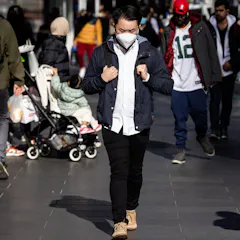
With the goal of ‘business as usual’, politicians will continue to reduce COVID protections without immediate consequence while transmission is low. But then the next wave will come.
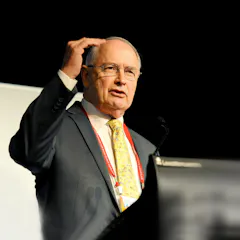
Australia hasn’t tried hard enough to deliver full employment. We are well-placed, if we play to our natural strengths – including having the best solar and wind resources in the developed world.
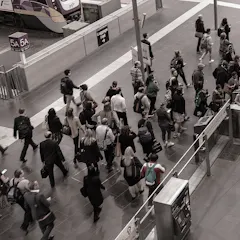
The surveyed Australians who changed jobs in 2021 switched for less than if they had stayed.
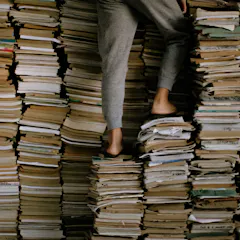
Fewer than 1% of Australian publishing professionals are First Nations and only 8.5% have an Asian cultural identity.
Authors
-

Election Analyst (Psephologist) at The Conversation; and Honorary Associate, School of Mathematics and Statistics, The University of Melbourne
-
Guest Research Fellow, School of Computing and Information Systems, The University of Melbourne
-
Professor of Sociology of Law and Deviance, Università di Bologna; University of Essex; The University of Melbourne
-
McKenzie Research Fellow, The University of Melbourne
-
Research assistant, Movember Institute of Men's Health, The University of Melbourne
-
Senior Research Associate, School of Agriculture, Food and Ecosystem Sciences, The University of Melbourne
-
Paleontologist, The University of Melbourne
-
Senior Lecturer, Centre for Advancing Journalism, The University of Melbourne
-
Research Fellow, Centre for Youth Mental Health, The University of Melbourne
-
Deputy Vice-Chancellor (Global, Culture and Engagement), The University of Melbourne
-
Emeritus professor, History, The University of Melbourne
-
Professor of Health Economics, The University of Melbourne
-
Associate Professor and Head, Behavioural Neuropharmacology Laboratory, The University of Melbourne
-
Lecturer in History, The University of Melbourne
-
Associate Professor, Centre for Youth Mental Health, The University of Melbourne