

People feel more secure knowing there’s a levee nearby - but this can backfire, leading to more development on floodplains. Australia needs to tackle the incentives behind these risky developments.
The University of Melbourne

The University of Melbourne is a global leader in higher education. Across our campuses we convene brilliant minds from different disciplines and sectors to come together to address important questions and tackle grand challenges. In a disrupted world, that capacity has never been more important.
Our vision is to equip our students with a distinctive, future-facing education personalised around their ambitions and needs, enriched by global perspectives and embedded in a richly collaborative research culture. As active citizens and future leaders, our students represent our greatest contribution to the world, and are at the heart of everything we do.
We serve society by engaging with our communities and ensuring education and research are inspired from the outset by need and for the benefit of society, while remaining committed to allowing academic freedom to flourish. In this, we remain true to our purpose and fulfil our mission as a public-spirited organisation, dedicated to the principles of fairness, equality and excellence in everything we do.
We strive for an environment that is inclusive and celebrates diversity.
Beyond our campuses we imagine an Australia that is ambitious, forward thinking and increasing its reputation and influence globally. We are committed to playing a part in achieving this – building on our advantageous location in one of the world’s most exciting cities and across the state of Victoria, in a region rapidly becoming a hub for innovative education, research and collaboration.
Links
Articles

The legendary British theatre director Peter Brook died on Saturday, age 97. His clarifying focus on what really matters in theatre can be felt across the spectrum of contemporary theatre.

The new paper also found some mammals are suffering due to a lack of fire.

The Hellfire Club in Stranger Things is a school DnD club – but the real Hellfire Club from history which it’s based upon is far more scandalous and notorious.
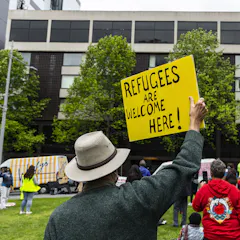
Our report sets out practical reforms that can be implemented relatively simply, within existing legislative provisions and with only minimal changes to policy and regulations.

New Victorian Child Safe Standards make organisations that work with children and young people legally responsible for their well-being. But what does this mandatory requirement mean in practice?

We must redress the challenges of unpaid domestic work and the mental load on women’s physical, mental and economic health and well-being.

From discovering hidden populations of vulnerable newts to dropping “seed bombs”, two new research papers show how genomics and drones help restore threatened ecosystems.

Mindfulness can have benefits, but it shouldn’t replace first-line treatment, and it shouldn’t claim to be able to.
Australia’s treasury helped inspire NZ and other governments to adopt well-being budgets – now, years later, we look set to get one too. So what are the challenges ahead?
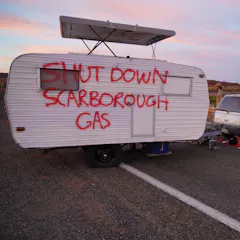
Green-lighting new gas projects is a code red for the Great Barrier Reef. But a new landmark federal court case may stop the Scarborough offshore gas project in its tracks.

With former Chunky Move founder and choreographer Gideon Obarzanek as co-director, dance had a heavy presence at this year’s Rising festival.

Land Abounds, created for Ngununggula in the heart of NSW’s Southern Highlands questions the comfort of the Australian landscape tradition
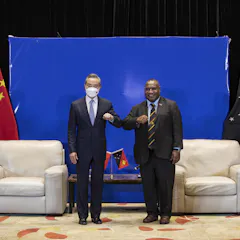
Australians should accept that Pacific island countries will engage with other countries, and instead recognise the gaps in our defence, development and diplomatic relationships with the region.
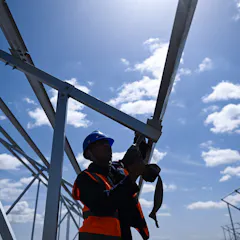
Governments embraced shovel ready projects during the pandemic as a way to stimulate the economy. But the potential for real transformation was lost in the rush to build.

Time dilation might seem like science fiction, but it’s not. There are astronauts circling the Earth right now who are experiencing it – though luckily nowhere near as much as Buzz Lightyear.
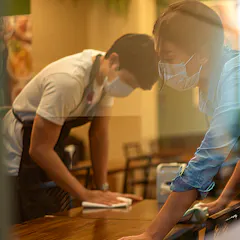
Even with an unemployment rate of 3.9%, wages aren’t adjusted often.

First Nations women and their newborns are considered high risk due to fatality rates and access to care. Research shows First Nations-led culturally safe healthcare could prevent further deaths.

Kunjungan Perdana Menteri Australia Anthony Albanese sangat penting. Hubungan antara pemerintah Australia dan Indonesia adalah hubungan yang rapuh.

Karena Omicron telah menyebar dengan cepat, dan memiliki banyak kesempatan untuk bermutasi, Omicron juga memperoleh mutasi spesifiknya sendiri.
Authors
-

Election Analyst (Psephologist) at The Conversation; and Honorary Associate, School of Mathematics and Statistics, The University of Melbourne
-
Guest Research Fellow, School of Computing and Information Systems, The University of Melbourne
-
Professor of Sociology of Law and Deviance, Università di Bologna; University of Essex; The University of Melbourne
-
McKenzie Research Fellow, The University of Melbourne
-
Research assistant, Movember Institute of Men's Health, The University of Melbourne
-
Senior Research Associate, School of Agriculture, Food and Ecosystem Sciences, The University of Melbourne
-
Paleontologist, The University of Melbourne
-
Senior Lecturer, Centre for Advancing Journalism, The University of Melbourne
-
Research Fellow, Centre for Youth Mental Health, The University of Melbourne
-
Deputy Vice-Chancellor (Global, Culture and Engagement), The University of Melbourne
-
Emeritus professor, History, The University of Melbourne
-
Professor of Health Economics, The University of Melbourne
-
Associate Professor and Head, Behavioural Neuropharmacology Laboratory, The University of Melbourne
-
Lecturer in History, The University of Melbourne
-
Associate Professor, Centre for Youth Mental Health, The University of Melbourne