

Almost 90% of students with disability go to mainstream schools but an increasing number are going to special schools.
The University of Melbourne

The University of Melbourne is a global leader in higher education. Across our campuses we convene brilliant minds from different disciplines and sectors to come together to address important questions and tackle grand challenges. In a disrupted world, that capacity has never been more important.
Our vision is to equip our students with a distinctive, future-facing education personalised around their ambitions and needs, enriched by global perspectives and embedded in a richly collaborative research culture. As active citizens and future leaders, our students represent our greatest contribution to the world, and are at the heart of everything we do.
We serve society by engaging with our communities and ensuring education and research are inspired from the outset by need and for the benefit of society, while remaining committed to allowing academic freedom to flourish. In this, we remain true to our purpose and fulfil our mission as a public-spirited organisation, dedicated to the principles of fairness, equality and excellence in everything we do.
We strive for an environment that is inclusive and celebrates diversity.
Beyond our campuses we imagine an Australia that is ambitious, forward thinking and increasing its reputation and influence globally. We are committed to playing a part in achieving this – building on our advantageous location in one of the world’s most exciting cities and across the state of Victoria, in a region rapidly becoming a hub for innovative education, research and collaboration.
Links
Articles
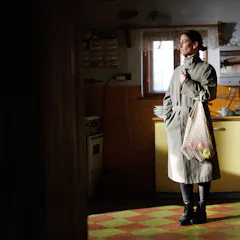
Our new research suggests that while a break up, on average, reduces men’s disposable household income by 5%, on average women’s household income decreases by almost 30%.
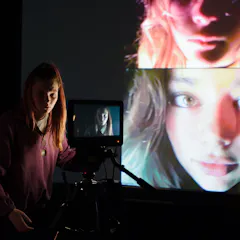
In this new work at Melbourne’s Rising Festival, Anything & Everything lets kids tell us how they see themselves and the world around them.
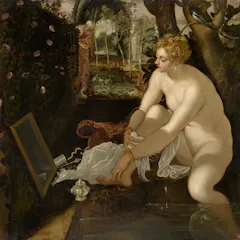
John Berger’s Ways of Seeing has been described as art history’s equivalent of Mao’s Little Red Book. It changed how we look at art.
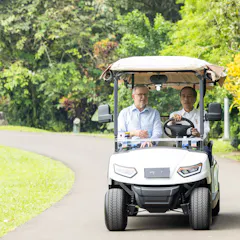
Prime Minister Anthony Albanese’s visit is so essential because most previous ‘resets’ have not lasted. The government-to-government relationship between Australia and Indonesia is a fragile one.

We’ve seen AI systems writing texts that are indistinguishable from human texts. Some are even rendering impressive 3D artworks from short text inputs. But it doesn’t mean they can ‘think’ like us.
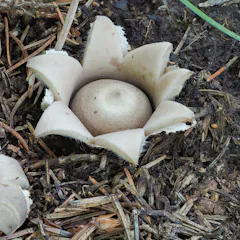
When Melbourne had to isolate during COVID lockdowns, Greg Moore and his family discovered the pleasure of a very fine fungi-spotting season.
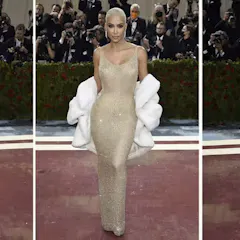
Influencer perlu menyadari bahwa beberapa pengikut mereka mungkin memiliki hubungan yang tidak sehat dengan media sosial. Meskipun kontras dengan tujuan mereka, influencer dapat membantu menciptakan hubungan yang sehat.
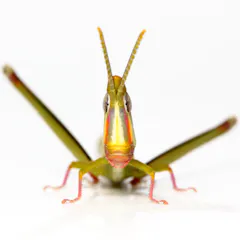
Few animals have babies without sex, so biologists assumed asexual reproduction must have evolutionary drawbacks. But a self-cloning Australian grasshopper shows things might be more complicated.
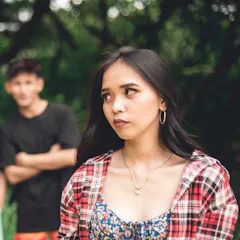
We asked participants about why they think people (mostly men) harass others in public space. Their answers were revealing.
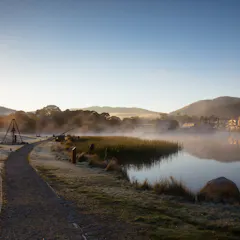
These temperatures are well below average, even for the middle of winter.
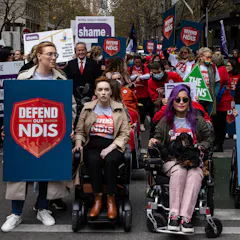
The short-term NDIS priorities for the new government are to rebuild trust and restore it to its original intention.
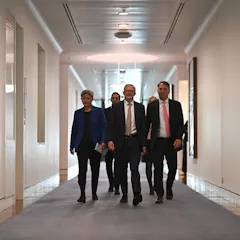
With just three more seats to be finalised in the House of Representatives, Labor will be hoping to pick up at least one of those to obtain a majority. Meanwhile, the Senate is looking promising too.
The independent review of the Reserve Bank should be headed by someone from outside the country say 12 leading economists in an open letter to the treasurer.
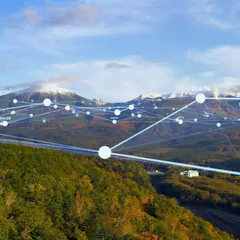
We can use AI to protect nature and human health. But first, we have to expand AI beyond being entirely human-centred.
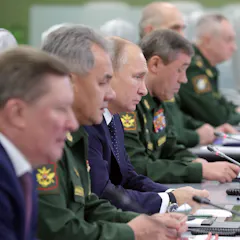
Russia’s botched invasion of Ukraine vividly demonstrates the real-world impacts of corruption, with Russian soldiers forced to eat rations years out of date while their leaders bought mega-yachts.
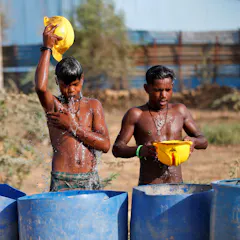
And after India banned wheat exports in May due to the high temperatures, we find out how vulnerable crops are to extreme heat. Listen to The Conversation Weekly podcast.
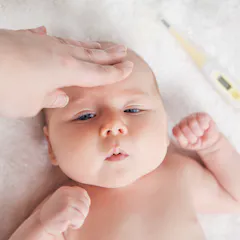
As cases continue to skyrocket in Australia, parents are understandably worried about what would happen if their baby got COVID.
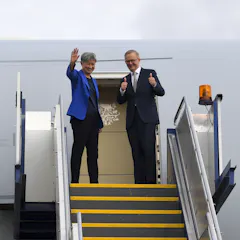
In the final episode of our election podcast, our regular panellists are joined by two expert guests to discuss what the election outcome could mean for domestic and foreign policy.
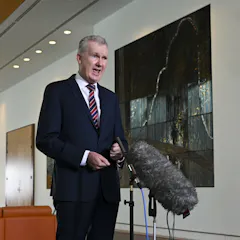
After holding the shadow portfolios, it is expected Tony Burke will be sworn in as minister for the arts and minister for industrial relations.
Authors
-

Election Analyst (Psephologist) at The Conversation; and Honorary Associate, School of Mathematics and Statistics, The University of Melbourne
-
Guest Research Fellow, School of Computing and Information Systems, The University of Melbourne
-
Professor of Sociology of Law and Deviance, Università di Bologna; University of Essex; The University of Melbourne
-
McKenzie Research Fellow, The University of Melbourne
-
Research assistant, Movember Institute of Men's Health, The University of Melbourne
-
Senior Research Associate, School of Agriculture, Food and Ecosystem Sciences, The University of Melbourne
-
Paleontologist, The University of Melbourne
-
Senior Lecturer, Centre for Advancing Journalism, The University of Melbourne
-
Research Fellow, Centre for Youth Mental Health, The University of Melbourne
-
Deputy Vice-Chancellor (Global, Culture and Engagement), The University of Melbourne
-
Emeritus professor, History, The University of Melbourne
-
Professor of Health Economics, The University of Melbourne
-
Associate Professor and Head, Behavioural Neuropharmacology Laboratory, The University of Melbourne
-
Lecturer in History, The University of Melbourne
-
Associate Professor, Centre for Youth Mental Health, The University of Melbourne