

The final polls ahead of the federal election on May 21 give Labor a 53-47 two-party preferred leave - if that is repeated on May 21, Labor will win government.
The University of Melbourne

The University of Melbourne is a global leader in higher education. Across our campuses we convene brilliant minds from different disciplines and sectors to come together to address important questions and tackle grand challenges. In a disrupted world, that capacity has never been more important.
Our vision is to equip our students with a distinctive, future-facing education personalised around their ambitions and needs, enriched by global perspectives and embedded in a richly collaborative research culture. As active citizens and future leaders, our students represent our greatest contribution to the world, and are at the heart of everything we do.
We serve society by engaging with our communities and ensuring education and research are inspired from the outset by need and for the benefit of society, while remaining committed to allowing academic freedom to flourish. In this, we remain true to our purpose and fulfil our mission as a public-spirited organisation, dedicated to the principles of fairness, equality and excellence in everything we do.
We strive for an environment that is inclusive and celebrates diversity.
Beyond our campuses we imagine an Australia that is ambitious, forward thinking and increasing its reputation and influence globally. We are committed to playing a part in achieving this – building on our advantageous location in one of the world’s most exciting cities and across the state of Victoria, in a region rapidly becoming a hub for innovative education, research and collaboration.
Links
Articles
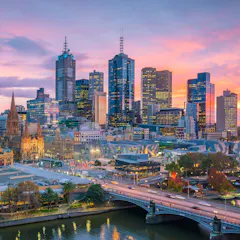
Australia’s policies prevent the necessary action to not only address cities’ contribution to climate change, but also to protect cities from its impacts.

Have you ever noticed tiredness and illness can make us feel close to the verge of tears? Here’s what’s happening in the brain.
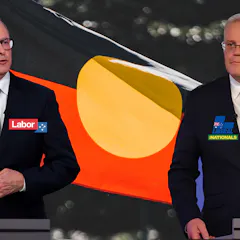
One of the recommendations from the 2017 Uluru Statement from the Heart calls for the establishment of a First Nations Voice to parliament, enshrined in the Constitution. This would ensure First Nations…
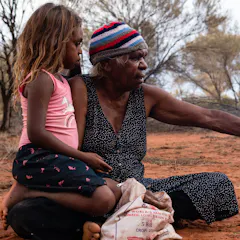
NT residents receive approximately 30% less Medicare funding per capita than the national average. The gap is worse for First Nations Australians in the NT.

We asked five experts to analyse and grade the Coalition and ALP arts and cultural policies.
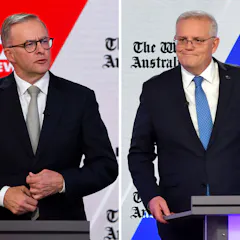
Late polls show a tightening on two-party preferred votes, but a slew of seat polls reveal just how close a lot of the contests will be on May 21.
Germany and England spend around A$4–5 per capita on cultural engagement and diplomacy. We spend 20 cents.
We asked six experts to nominate books that might help us avert environmental catastrophe. Here’s what they said.
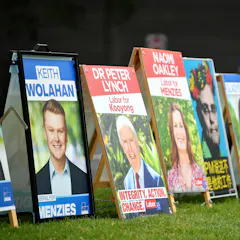
Below the Line Episode 11
The Conversation66.1 MB (download)
In the final episode of our election podcast before polling day, our expert panel interview a Facebook official on the online campaign, and discuss Morrison's mea culpa and last-minute housing policy.

Labor’s election pledge for Medicare includes some additional funding, but to strengthen the system, it needs to improve people’s access to doctors.
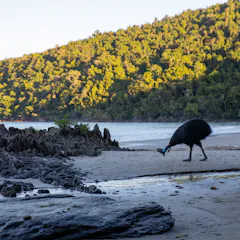
Labor and the Greens launched environmental policies last week. We take a close look at what was promised, and if they’re enough to tackle Australia’s extinction crisis.
Despite. a small approval drop for the opposition leader, Newspoll still predicts a comfortable win for Labor on May 21.
Below the Line Episode 10
The Conversation84.3 MB (download)
In this episode of our election podcast, our expert panel discuss the last leaders' debate, the latest polls and what might the future of the unsuccessful major party might look like.

This year’s winning Archibald Prize portrait, Moby Dickens by Blak Douglas, encapsulates the justifiable rage felt by people living in flooded Bundjalung country
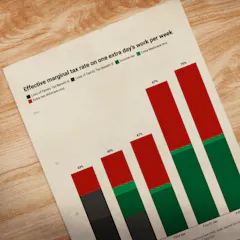
So high are childcare costs that on the fourth day or work per week a returning parent can face an effective marginal tax rate as high as 67%
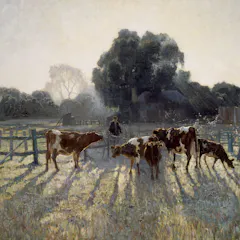
In 1895 the Wynne Prize was proposed as an award for a ‘landscape painting of Australian scenery’. Today it is more likely to be given to an Indigenous artist’s explanation of Country.

Influencers need to be aware that some of their followers may have unhealthy relationships with social media. Although it contrasts with their goals, influencers can help create healthy relationships.
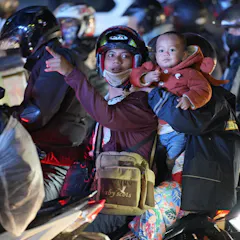
There is a big opportunity for Australia to help Southeast Asia meet its energy needs. But time is running out.
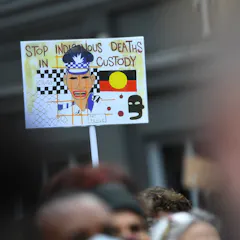
Victorian prisons provide limited access to adequate health care, particularly for Aboriginal and Torres Strait Islander people. Coronial inquests into deaths in custody show something must be done.
Authors
-

Election Analyst (Psephologist) at The Conversation; and Honorary Associate, School of Mathematics and Statistics, The University of Melbourne
-
Guest Research Fellow, School of Computing and Information Systems, The University of Melbourne
-
Professor of Sociology of Law and Deviance, Università di Bologna; University of Essex; The University of Melbourne
-
McKenzie Research Fellow, The University of Melbourne
-
Research assistant, Movember Institute of Men's Health, The University of Melbourne
-
Senior Research Associate, School of Agriculture, Food and Ecosystem Sciences, The University of Melbourne
-
Paleontologist, The University of Melbourne
-
Senior Lecturer, Centre for Advancing Journalism, The University of Melbourne
-
Research Fellow, Centre for Youth Mental Health, The University of Melbourne
-
Deputy Vice-Chancellor (Global, Culture and Engagement), The University of Melbourne
-
Emeritus professor, History, The University of Melbourne
-
Professor of Health Economics, The University of Melbourne
-
Associate Professor and Head, Behavioural Neuropharmacology Laboratory, The University of Melbourne
-
Lecturer in History, The University of Melbourne
-
Associate Professor, Centre for Youth Mental Health, The University of Melbourne