

Don’t expect meditation to provide Christmas miracles. But if you start learning how to meditate now, your holidays may be a bit less stressful and perhaps a little more meaningful.
The University of Melbourne

The University of Melbourne is a global leader in higher education. Across our campuses we convene brilliant minds from different disciplines and sectors to come together to address important questions and tackle grand challenges. In a disrupted world, that capacity has never been more important.
Our vision is to equip our students with a distinctive, future-facing education personalised around their ambitions and needs, enriched by global perspectives and embedded in a richly collaborative research culture. As active citizens and future leaders, our students represent our greatest contribution to the world, and are at the heart of everything we do.
We serve society by engaging with our communities and ensuring education and research are inspired from the outset by need and for the benefit of society, while remaining committed to allowing academic freedom to flourish. In this, we remain true to our purpose and fulfil our mission as a public-spirited organisation, dedicated to the principles of fairness, equality and excellence in everything we do.
We strive for an environment that is inclusive and celebrates diversity.
Beyond our campuses we imagine an Australia that is ambitious, forward thinking and increasing its reputation and influence globally. We are committed to playing a part in achieving this – building on our advantageous location in one of the world’s most exciting cities and across the state of Victoria, in a region rapidly becoming a hub for innovative education, research and collaboration.
Links
Articles
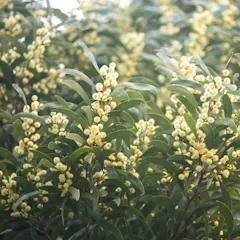
Blackwood’s main claim to fame is its magnificent dark and durable timber. But let me introduce you to the tree, a stunning wattle with Christmas-green foliage.

Cues from people and events around us plus memories of past holidays shape our sense of time over summer. No wonder one day blends into the next.
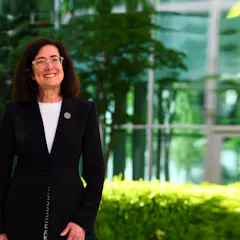
The inaugural chair of the ACCC says Gina Cass-Gottlieb’s experience opposing the ACCC in court will prove invaluable, and that it’s time to appoint a lawyer as chair.

Early intervention programs for young people with psychosis might cost more initially, and require more intensive support for longer periods, but they’re worth the investment.

It was hoped intensive early intervention programs might ‘bend the curve’ and change the lifetime trajectory of illnesses such as schizophrenia. But that doesn’t appear to be the case.

A review of Australia’s illegal logging laws tests the Morrison government’s commitment to halting global forest loss.

Jeffrey Smart is admired for his carefully structured paintings of Tuscany and Rome. This National Gallery of Australia’s centenary celebration of his birth takes the viewer back to Adelaide.

Genetic testing of embryos during IVF doesn’t increase the odds of having a baby. But there are a number of downsides, including cost.

Tree sunburn tends to occur during hot spring days or in early summer, when trees are full of moisture. So why does it happen? And which trees are most vulnerable?
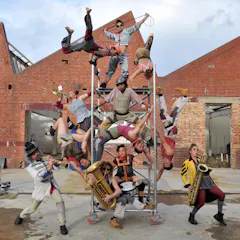
Circus Oz was a revelation: so joyous, funny, imaginative, talented, witty – and so Australian.

Changes to National Employment Standards have done little for casual staff hoping for conversion to ongoing positions. A comprehensive review of university work and employment is long overdue.

Plus, the tactics the food industry is using to boost sales of ultra-processed foods in middle-income countries. Listen to The Conversation Weekly.
Scientists have created tiny self-replicating organisms made from frog stem cells. So is this as much of a Pandora’s Box as it sounds? Not yet, but we should carefully weigh the risks and rewards.

Climate change threatens the crucial storage of carbon in Aussie forests. Victoria’s national parks alone store almost 1 billion tonnes of carbon dioxide equivalent.

While 18 universities suffered medium to high financial impacts, the incomes of eight increased or were stable. Overall revenue fell 5% – less than feared – but 35,000 staff lost their jobs.

Rates of full-time employment and pay relative to other workers have fallen for the latest generation of new workers. Yet the HILDA Survey shows their reported job satisfaction has risen.

The latest Newspoll puts Labor ahead, 53 to 47, but other surveys suggest the two party race is tighter.
It’s 650 metres below the surface, across 6,000 square kilometres – and has been overlooked for far too long.

Pengumpulan data HIV bisa dilakukan secara lebih kolaboratif, melibatkan warga dan paka agar dapat lebih memahami bagaimana data dikumpulkan dan apa tujuan pengumpulannya.
Authors
-

Election Analyst (Psephologist) at The Conversation; and Honorary Associate, School of Mathematics and Statistics, The University of Melbourne
-
Guest Research Fellow, School of Computing and Information Systems, The University of Melbourne
-
Professor of Sociology of Law and Deviance, Università di Bologna; University of Essex; The University of Melbourne
-
McKenzie Research Fellow, The University of Melbourne
-
Research assistant, Movember Institute of Men's Health, The University of Melbourne
-
Senior Research Associate, School of Agriculture, Food and Ecosystem Sciences, The University of Melbourne
-
Paleontologist, The University of Melbourne
-
Senior Lecturer, Centre for Advancing Journalism, The University of Melbourne
-
Research Fellow, Centre for Youth Mental Health, The University of Melbourne
-
Deputy Vice-Chancellor (Global, Culture and Engagement), The University of Melbourne
-
Emeritus professor, History, The University of Melbourne
-
Professor of Health Economics, The University of Melbourne
-
Associate Professor and Head, Behavioural Neuropharmacology Laboratory, The University of Melbourne
-
Lecturer in History, The University of Melbourne
-
Associate Professor, Centre for Youth Mental Health, The University of Melbourne