

There’s more than one way to get companies to do what you want. Sometime the threat of a vote at an annual general meeting is enough.
The University of Melbourne

The University of Melbourne is a global leader in higher education. Across our campuses we convene brilliant minds from different disciplines and sectors to come together to address important questions and tackle grand challenges. In a disrupted world, that capacity has never been more important.
Our vision is to equip our students with a distinctive, future-facing education personalised around their ambitions and needs, enriched by global perspectives and embedded in a richly collaborative research culture. As active citizens and future leaders, our students represent our greatest contribution to the world, and are at the heart of everything we do.
We serve society by engaging with our communities and ensuring education and research are inspired from the outset by need and for the benefit of society, while remaining committed to allowing academic freedom to flourish. In this, we remain true to our purpose and fulfil our mission as a public-spirited organisation, dedicated to the principles of fairness, equality and excellence in everything we do.
We strive for an environment that is inclusive and celebrates diversity.
Beyond our campuses we imagine an Australia that is ambitious, forward thinking and increasing its reputation and influence globally. We are committed to playing a part in achieving this – building on our advantageous location in one of the world’s most exciting cities and across the state of Victoria, in a region rapidly becoming a hub for innovative education, research and collaboration.
Links
Articles
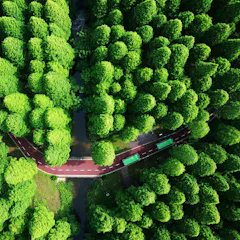
Yes, trees and soils can absorb and store carbon, but the carbon doesn’t stay stored forever. That’s one of the problems with how net-zero plans for the climate are being designed.
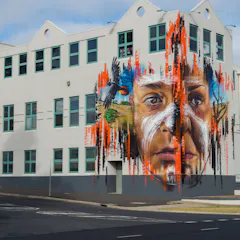
The Yoo-rrook Justice Commission is a royal commission seeking truth-telling on the historical and contemporary injustices experienced by First Nations peoples in Victoria.
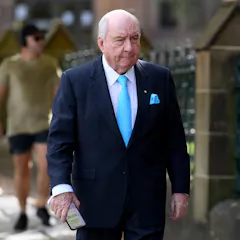
The controversial broadcaster seems to have run out of platforms, not because of the harm he has done, but because he is no longer bringing in big advertising dollars.
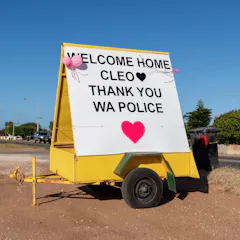
The most important thing to avoid is intrusive, probing questioning straight away. The media and the public should also refrain from speculative, premature comment.

Despite more spending on mental health services, suicide rates continue to climb. So in light of two major new reports released this week, we need to rethink our strategy to save lives.

In 1992 64% of the top 1% had been there the year before. By 2017 that proportion had grown to 73%.
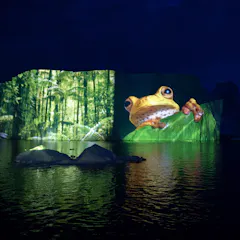
Artists do more than tell us there’s a problem. They can add nuance to the complex web of interconnected issues we face and tell stories about loss, possibility and transformation.
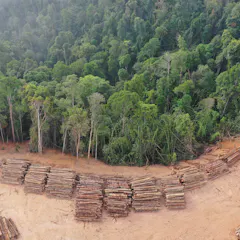
What really matters is domestic policy; if countries don’t change what they’re doing at home to bring fossil fuels emissions to zero and restore degraded lands, such declarations are meaningless.
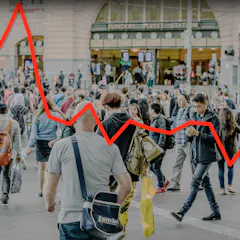
One million Australians quit their jobs in the past year, but there’s nothing new in that, and its down on previous years.

There is more than one way to pursue happiness and to cope with the inevitable low times in life.

Margel Hinder was responsible for some of Australia’s most significant public sculptures in the 1960s and 70s. A major exhibition now examines the totality of her career.

We talk to three experts who argue we governments need to find alternatives for their dependence on economic growth. Listen to episode 39 of The Conversation Weekly.
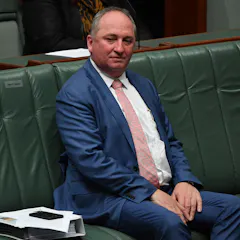
It appears from recent polling that the more the deputy prime minister is in the spotlight, the worse the Coalition will perform.
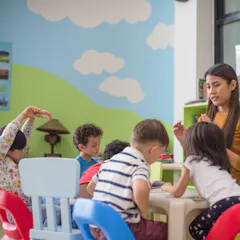
The pandemic highlighted Australia’s reliance on early childhood educators, while adding to their existing stresses. A study of how educators fared identifies three key factors in their well-being.
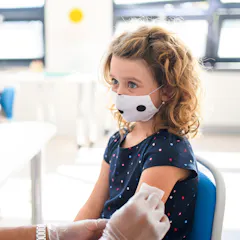
Regulators are currently reviewing the safety and efficacy data of the Pfizer vaccine for five to 11 year olds before deciding whether to approve its use in this age group.
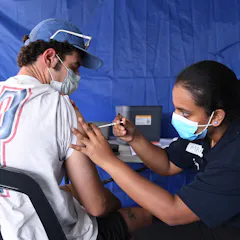
Unvaccinated people are ten times more likely to contract COVID, and more likely to pass it on than vaccinated people.
City centres have been hit hard by lockdown measures - but can artists and entrepreneurs really breathe life into the space?
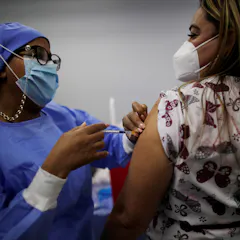
Protection from infection wanes over time. So boosters will offer extra protection and hopefully reduce the spread of the virus even further.
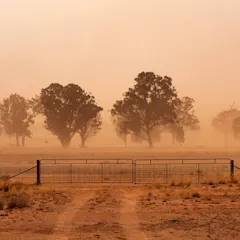
The UN’s new Emissions Gap Report shows we’re on track to overshoot the Paris target of 1.5°C. If we don’t close this emissions gap, what will Australia, and the rest of world, be forced to endure?
Authors
-

Election Analyst (Psephologist) at The Conversation; and Honorary Associate, School of Mathematics and Statistics, The University of Melbourne
-
Guest Research Fellow, School of Computing and Information Systems, The University of Melbourne
-
Professor of Sociology of Law and Deviance, Università di Bologna; University of Essex; The University of Melbourne
-
McKenzie Research Fellow, The University of Melbourne
-
Research assistant, Movember Institute of Men's Health, The University of Melbourne
-
Senior Research Associate, School of Agriculture, Food and Ecosystem Sciences, The University of Melbourne
-
Paleontologist, The University of Melbourne
-
Senior Lecturer, Centre for Advancing Journalism, The University of Melbourne
-
Research Fellow, Centre for Youth Mental Health, The University of Melbourne
-
Deputy Vice-Chancellor (Global, Culture and Engagement), The University of Melbourne
-
Emeritus professor, History, The University of Melbourne
-
Professor of Health Economics, The University of Melbourne
-
Associate Professor and Head, Behavioural Neuropharmacology Laboratory, The University of Melbourne
-
Lecturer in History, The University of Melbourne
-
Associate Professor, Centre for Youth Mental Health, The University of Melbourne