

The focus on rankings has been more a symptom than a cause of the challenge Australian universities face, namely a structural change in their revenue base.
The University of Melbourne

The University of Melbourne is a global leader in higher education. Across our campuses we convene brilliant minds from different disciplines and sectors to come together to address important questions and tackle grand challenges. In a disrupted world, that capacity has never been more important.
Our vision is to equip our students with a distinctive, future-facing education personalised around their ambitions and needs, enriched by global perspectives and embedded in a richly collaborative research culture. As active citizens and future leaders, our students represent our greatest contribution to the world, and are at the heart of everything we do.
We serve society by engaging with our communities and ensuring education and research are inspired from the outset by need and for the benefit of society, while remaining committed to allowing academic freedom to flourish. In this, we remain true to our purpose and fulfil our mission as a public-spirited organisation, dedicated to the principles of fairness, equality and excellence in everything we do.
We strive for an environment that is inclusive and celebrates diversity.
Beyond our campuses we imagine an Australia that is ambitious, forward thinking and increasing its reputation and influence globally. We are committed to playing a part in achieving this – building on our advantageous location in one of the world’s most exciting cities and across the state of Victoria, in a region rapidly becoming a hub for innovative education, research and collaboration.
Links
Articles

Apakah dibukanya akses Clubhouse ke pengguna Android akan membuat aplikasi ini menjadi lebih inklusif? Mengingat bahasan di media sosial secara umum yang masih sering bias kelas, nampaknya tidak.

More than 30 million people play Roblox every day - and millions also make their own games for the booming kid-friendly digital platform.
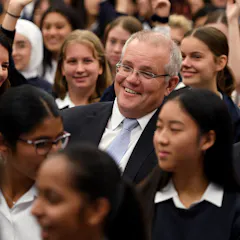
We hear a lot about the Morrison government ‘kicking the can down the road’ on emissions reduction. New research reveals the precise burden that forces onto young Australians.

An enabling approach was more likely to create attitudes among suppliers that were conducive to learning.
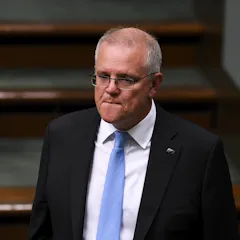
Prime Minister Scott Morrison’s strong ratings in the Newspoll and Essential poll suggest the slow vaccine rollout and anger among women might not be hurting the government yet.

Data from clinical trials and the real world COVID vaccine rollout suggest blood clots occur no more frequently in vaccinated people than they do in the general population.

Food insecurity affected many students even before the pandemic hit, with international students the worst hit. But students and universities have shown a lot can be done to end the problem.
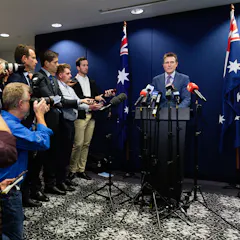
Porter claims even though he wasn’t named in the ABC article, he was easily identifiable to many Australians. For the ABC, the defences to defamation are notoriously difficult to establish.
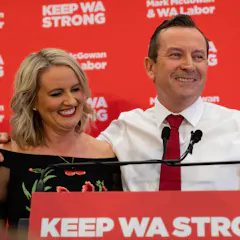
The WA Liberals’ near wipe-out includes the seat of Opposition Leader Zak Kirkup.

COVIDSafe was only able to detect a handful of cases successfully, but that doesn’t mean Bluetooth isn’t a helpful tool for addressing viral spread.

Sleeping through a live performance would usually indicate it wasn’t engaging. But as a film about Max Richter’s Sleep concerts explains, this is exactly the response the composer was hoping for.
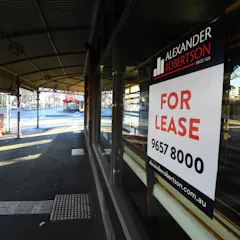
From some statistics 2020 looks like economic good times. Have relief measures averted economic pain or simply deferred it?
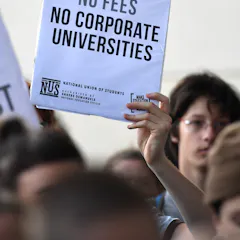
The issues dominating public debates about academic freedom are not where the greatest threats lie.

Public health measures have helped control COVID-19 in Australia. But they’ve affected other winter viruses, too.

For many years the British government resisted requests for the UK’s National Gallery to tour its collection, one of the world’s greatest. Now 61 of these works can be seen in Canberra.
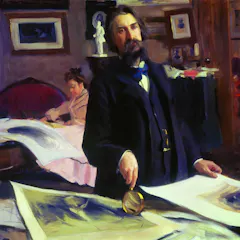
Created in response to Sherlock Holmes, detective Martin Hewitt is less operatic and more pragmatic.
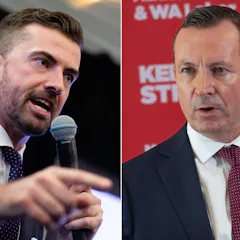
Polling has Labor on a primary vote of 59%, which hasn’t been seen in a state election since New South wales in 1978.

Flexible arrangements might help women maintain a work-life balance, but can also weaken their position in the labour market and lose them earnings in the long term.

Women who lose their jobs hold out longer for new jobs with fewer hours and shorter commutes.
Authors
-

Election Analyst (Psephologist) at The Conversation; and Honorary Associate, School of Mathematics and Statistics, The University of Melbourne
-
Guest Research Fellow, School of Computing and Information Systems, The University of Melbourne
-
Professor of Sociology of Law and Deviance, Università di Bologna; University of Essex; The University of Melbourne
-
McKenzie Research Fellow, The University of Melbourne
-
Research assistant, Movember Institute of Men's Health, The University of Melbourne
-
Senior Research Associate, School of Agriculture, Food and Ecosystem Sciences, The University of Melbourne
-
Paleontologist, The University of Melbourne
-
Senior Lecturer, Centre for Advancing Journalism, The University of Melbourne
-
Research Fellow, Centre for Youth Mental Health, The University of Melbourne
-
Deputy Vice-Chancellor (Global, Culture and Engagement), The University of Melbourne
-
Emeritus professor, History, The University of Melbourne
-
Professor of Health Economics, The University of Melbourne
-
Associate Professor and Head, Behavioural Neuropharmacology Laboratory, The University of Melbourne
-
Lecturer in History, The University of Melbourne
-
Associate Professor, Centre for Youth Mental Health, The University of Melbourne