

No-one says reducing emissions from the agriculture sector will be easy. But it must be done, or farmers will suffer the most.
The University of Melbourne

The University of Melbourne is a global leader in higher education. Across our campuses we convene brilliant minds from different disciplines and sectors to come together to address important questions and tackle grand challenges. In a disrupted world, that capacity has never been more important.
Our vision is to equip our students with a distinctive, future-facing education personalised around their ambitions and needs, enriched by global perspectives and embedded in a richly collaborative research culture. As active citizens and future leaders, our students represent our greatest contribution to the world, and are at the heart of everything we do.
We serve society by engaging with our communities and ensuring education and research are inspired from the outset by need and for the benefit of society, while remaining committed to allowing academic freedom to flourish. In this, we remain true to our purpose and fulfil our mission as a public-spirited organisation, dedicated to the principles of fairness, equality and excellence in everything we do.
We strive for an environment that is inclusive and celebrates diversity.
Beyond our campuses we imagine an Australia that is ambitious, forward thinking and increasing its reputation and influence globally. We are committed to playing a part in achieving this – building on our advantageous location in one of the world’s most exciting cities and across the state of Victoria, in a region rapidly becoming a hub for innovative education, research and collaboration.
Links
Articles

Many migrant parents are hesitant to pass their language accent onto their children. They fear this may lead them to experience discrimination. But speaking two languages has many advantages.

The first round of RISE funding recipients has been announced — but is it the best use of money?
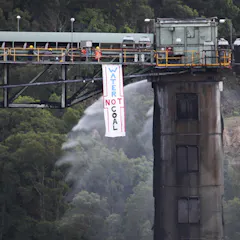
The damage mining causes to Sydney’s water supplies is unsustainable, and the law has failed to stop it.

Young fish need to find food to grow, but avoid being eaten themselves. That dance for survival is linked to moonlight, which has implications for fisheries management everywhere.

Wound care might be costly, but it’s cost-effective, saving health dollars in the long run. The issue is, who pays?
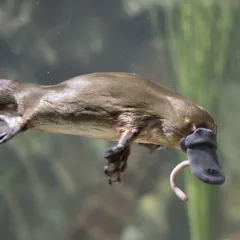
As ecologists, we’ve seen first-hand how Australia’s nature laws have permitted environmental degradation and destruction to the point of extinction.

The rejection culture of academia is damaging. Rejections are inevitable, but there are better ways of managing the process that don’t leave individuals to bear the whole burden of coping.

Navalny’s jailing could galvanise Russians who want a government no longer characterised by post-imperial nostalgia and a paranoid, siege mentality that constantly fears the West.
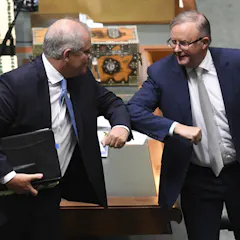
There is good news and bad news for Prime Minister Scott Morrison in the first Newspoll for 2021.

Selama ini, standar yang dibebankan pemerintah pada anak muda di Indonesia buta terhadap kesenjangan. Anak muda dibiarkan mencari cara sendiri untuk bertahan hidup di tengah dukungan negara yang minim.

You might be surprised to find yourself in the company of Elon Musk and Jeff Bezos in the world’s richest 1%. This has big implications for planetary survival.

As you swelter during this heatwave, it may not be all bad news for our urban and natural environments. Sometimes, positive outcomes arise when and where we least expect them.

Created by a prolific French author, Inspector Jules Maigret observes without judgement and moves like a chameleon between social classes.

50 years ago Art News published Linda Nochlin’s essay, Why have there been no great women artists? It would change how we see art and its institutions, and still reverberates today.
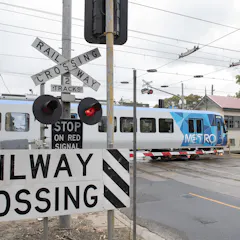
The pervasive impacts of infrastructure projects on public health are often overlooked. New research is teasing out the many ways Melbourne’s level-crossing removals will affect people’s health.
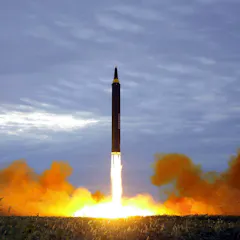
The nuclear-armed and dependent states have been put on notice. They know the treaty jeopardises their claimed right to continue to threaten the planet.

What to publish on incendiary issues is a complex matter, but journalists needn’t believe that not publishing, when there is a good reason, violates and inviolable right.
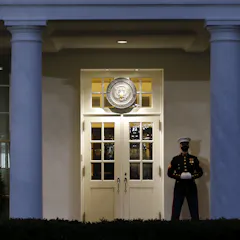
In the wake of the Capitol riots and baseless claims of election fraud, Trump ends his presidency with his worst approval rating since December 2017.

Economic circumstances do not justify the federal government’s rejection of the banking royal commission’s recommendations.
Authors
-

Election Analyst (Psephologist) at The Conversation; and Honorary Associate, School of Mathematics and Statistics, The University of Melbourne
-
Guest Research Fellow, School of Computing and Information Systems, The University of Melbourne
-
Professor of Sociology of Law and Deviance, Università di Bologna; University of Essex; The University of Melbourne
-
McKenzie Research Fellow, The University of Melbourne
-
Research assistant, Movember Institute of Men's Health, The University of Melbourne
-
Senior Research Associate, School of Agriculture, Food and Ecosystem Sciences, The University of Melbourne
-
Paleontologist, The University of Melbourne
-
Senior Lecturer, Centre for Advancing Journalism, The University of Melbourne
-
Research Fellow, Centre for Youth Mental Health, The University of Melbourne
-
Deputy Vice-Chancellor (Global, Culture and Engagement), The University of Melbourne
-
Emeritus professor, History, The University of Melbourne
-
Professor of Health Economics, The University of Melbourne
-
Associate Professor and Head, Behavioural Neuropharmacology Laboratory, The University of Melbourne
-
Lecturer in History, The University of Melbourne
-
Associate Professor, Centre for Youth Mental Health, The University of Melbourne