

Many plants are really good at withstanding bushfires, but the combination of drought, heatwaves and pest insects under climate change may push them to the brink.
The University of Melbourne

The University of Melbourne is a global leader in higher education. Across our campuses we convene brilliant minds from different disciplines and sectors to come together to address important questions and tackle grand challenges. In a disrupted world, that capacity has never been more important.
Our vision is to equip our students with a distinctive, future-facing education personalised around their ambitions and needs, enriched by global perspectives and embedded in a richly collaborative research culture. As active citizens and future leaders, our students represent our greatest contribution to the world, and are at the heart of everything we do.
We serve society by engaging with our communities and ensuring education and research are inspired from the outset by need and for the benefit of society, while remaining committed to allowing academic freedom to flourish. In this, we remain true to our purpose and fulfil our mission as a public-spirited organisation, dedicated to the principles of fairness, equality and excellence in everything we do.
We strive for an environment that is inclusive and celebrates diversity.
Beyond our campuses we imagine an Australia that is ambitious, forward thinking and increasing its reputation and influence globally. We are committed to playing a part in achieving this – building on our advantageous location in one of the world’s most exciting cities and across the state of Victoria, in a region rapidly becoming a hub for innovative education, research and collaboration.
Links
Articles

Digital technologies like artificial intelligence and wireless networks will be crucially important for Australia’s economy. A new report urges the government to invest strongly in our digital future.
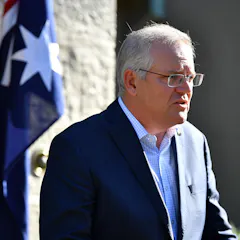
Labor still leads in two-party preferred polling, while the prime minister’s approval rating has slumped to its worst since the start of the pandemic.

This gem of a documentary explores the life — and furniture — of a Melbourne icon.
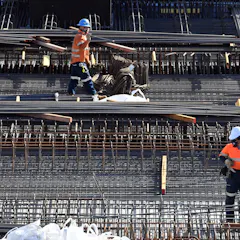
Unions are encouraging all workers to be vaccinated, but not through employment mandates. Instead, they support bodily autonomy, workers’ rights, fairness and democracy.
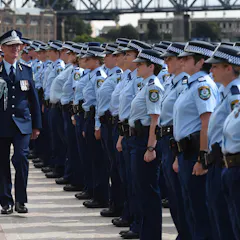
Establishing specialist women’s police stations has been suggested as a solution to violence against women in Australia. However research does not cover racial and gender inclusion in this policing.
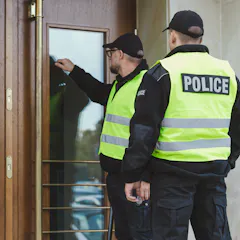
Plans have been made for the AI-based program to begin trials before the year ends. But it raises serious questions about the role of police in preventing domestic violence.
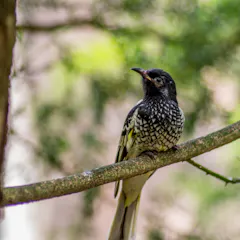
Under a new code, rural landholders in NSW will be allowed to clear up to 25 metres of land outside their property boundary. This will be devastating for the wildlife that live or migrate there.
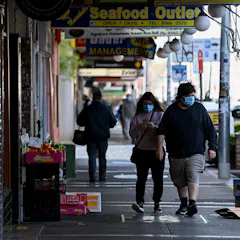
The drop in Australia’s unemployment rate in August is not a sign of improving labour market conditions. Instead it shows many gave up on looking for a job.
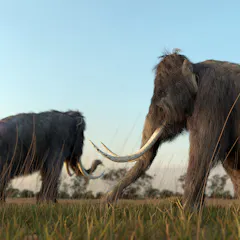
While the prospect of reviving extinct species has long been discussed, advances in genome editing have now brought such dreams close to reality.
Income and employment support are more important in addressing the mental health impact of the pandemic than mental health services.
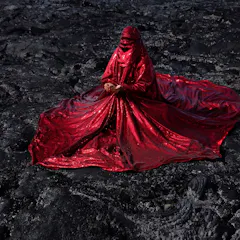
A new exhibition featuring works by16 women artists who share backgrounds in Islam is a tour de force.

In an open democracy, there is no rationale for withholding information about National Cabinet’s decisions or any documents these decisions are based on.
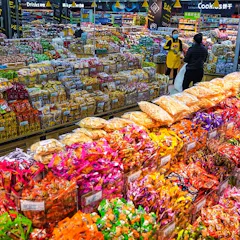
Big Food companies producing ulta-processed foods are using a range of key market and political practices to increase their reach, particularly in developing countries.

The subsidies for student places up to 2024 fall about $1.1 billion short of the level needed to create the extra places the government promised its Job-ready Graduates policy would deliver.
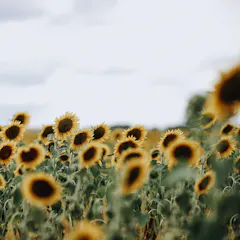
The phenomenon is called heliotropism, and sunflowers are most famous for it. But why do they track the sun? And how?
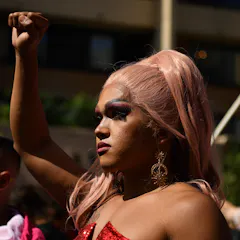
LGBTQ+ communities experience violence and abuse at similar, if not greater rates than cisgender, heterosexual women. Their stories need to be heard.

This gripping TV adaptation of H.G. Wells’ 1898 novel, updated to a contemporary setting, is more layered, intimate and satisfying than the original story.
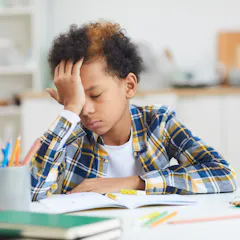
When students shift to learning from home, they lose many of the in-school support structures and resources. While the priority is students’ well-being, schools have developed new teaching strategies.
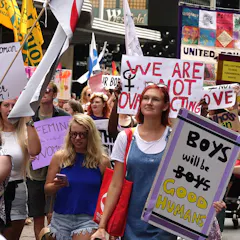
As politicians and experts meet to talk about how to make workplaces and homes safer for women, we also need to look at the bigger picture.
Authors
-

Election Analyst (Psephologist) at The Conversation; and Honorary Associate, School of Mathematics and Statistics, The University of Melbourne
-
Guest Research Fellow, School of Computing and Information Systems, The University of Melbourne
-
Professor of Sociology of Law and Deviance, Università di Bologna; University of Essex; The University of Melbourne
-
McKenzie Research Fellow, The University of Melbourne
-
Research assistant, Movember Institute of Men's Health, The University of Melbourne
-
Senior Research Associate, School of Agriculture, Food and Ecosystem Sciences, The University of Melbourne
-
Paleontologist, The University of Melbourne
-
Senior Lecturer, Centre for Advancing Journalism, The University of Melbourne
-
Research Fellow, Centre for Youth Mental Health, The University of Melbourne
-
Deputy Vice-Chancellor (Global, Culture and Engagement), The University of Melbourne
-
Emeritus professor, History, The University of Melbourne
-
Professor of Health Economics, The University of Melbourne
-
Associate Professor and Head, Behavioural Neuropharmacology Laboratory, The University of Melbourne
-
Lecturer in History, The University of Melbourne
-
Associate Professor, Centre for Youth Mental Health, The University of Melbourne