

Laporan terbaru terkait data kesehatan di dunia yang memanas. Setidaknya 296.000 kematian terkait panas terjadi pada usia di atas 65 tahun pada tahun 2018.
The University of Melbourne

The University of Melbourne is a global leader in higher education. Across our campuses we convene brilliant minds from different disciplines and sectors to come together to address important questions and tackle grand challenges. In a disrupted world, that capacity has never been more important.
Our vision is to equip our students with a distinctive, future-facing education personalised around their ambitions and needs, enriched by global perspectives and embedded in a richly collaborative research culture. As active citizens and future leaders, our students represent our greatest contribution to the world, and are at the heart of everything we do.
We serve society by engaging with our communities and ensuring education and research are inspired from the outset by need and for the benefit of society, while remaining committed to allowing academic freedom to flourish. In this, we remain true to our purpose and fulfil our mission as a public-spirited organisation, dedicated to the principles of fairness, equality and excellence in everything we do.
We strive for an environment that is inclusive and celebrates diversity.
Beyond our campuses we imagine an Australia that is ambitious, forward thinking and increasing its reputation and influence globally. We are committed to playing a part in achieving this – building on our advantageous location in one of the world’s most exciting cities and across the state of Victoria, in a region rapidly becoming a hub for innovative education, research and collaboration.
Links
Articles

The federal government’s industrial relations bill will fix a problem that doesn’t exist by making a failed legal argument the law.

A new review from the Australian Academy of Health and Medical Sciences says managing the pandemic into 2021 will mean persisting with the measures that have made Australia’s response successful so far.
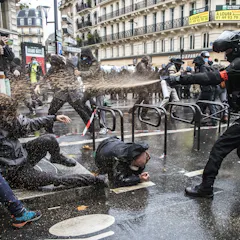
The protests, which have lasted for weeks, have become embroiled with deep anxieties in France about decolonisation, policing, the limits to secularism and the place of Muslims in French society.
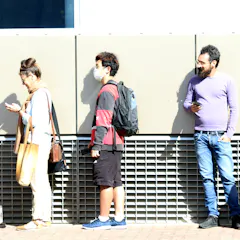
A new study highlights significant misunderstandings about the scale and scope of Australians who receive unemployment payments.

Walking all parts of Melbourne before and after the pandemic hit was eye-opening. It brought home just how much change is possible if we wish for a better, more sustainable way of living.

Enshrining the Model Code on Freedom of Speech and Academic Freedom in legislation won’t ensure disagreements on campus remain civil. Here are some practical guidelines on how to disagree well.

For over 60 years, Daniel Thomas has shaped and extended our understanding of Australian art. Sometimes cheeky, always erudite, Thomas’s writings are collected in a new book.
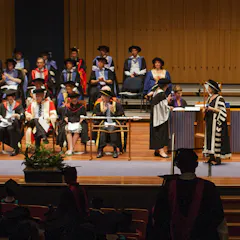
The sameness of ‘weird’ university leaderships creates well-documented risks for the sector and adds to the challenges of ensuring higher education meets future needs.
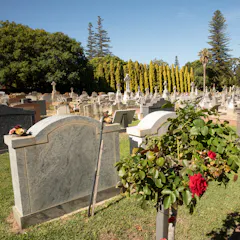
City cemeteries are fast running out of space, so researchers surveyed Australians and found many were quite open to the alternatives to traditional burials.

In early 2020, stranded cruise ships became a stark symbol of the COVID-19 global pandemic. Now it’s seafarers stranded on cargo ships.
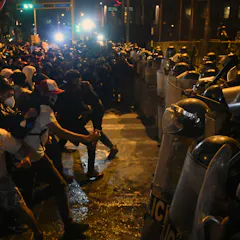
Después de convertirse en el tercer presidente del país en seis días, Francisco Sagasti debe llevar al país a elecciones y construir una mejor democracia. No es una tarea sencilla. Otros políticos peruanos fracasaron ante empresas similares.
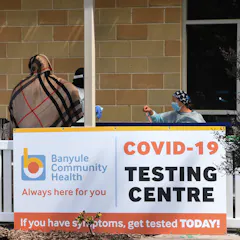
After more than a month of testing without a single positive case, the probability of coronavirus lurking in Victoria is vanishingly small.
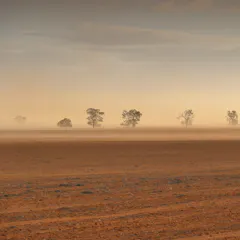
A major new report presents the latest data on the health impacts in a warming world. It found there were 296,000 heat-related deaths in people over 65 years in 2018.
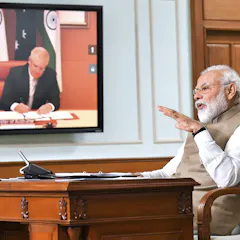
Hindi is the most widely spoken language of India and of the many people of Indian origin in Australia. The teaching of Hindi has been in decline at a time when the need for it has never been greater.
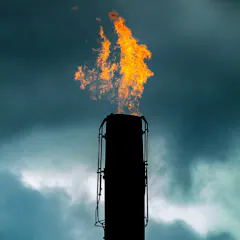
It reveals in alarming detail how gas emissions are cancelling out the gains won by Australia’s renewables boom, and uncovers misleading claims underpinning our gas-led economic recovery.

Criminal trials may hold offenders to account but they are far from perfect. The Victorian Law Reform Commission is looking at how restorative justice could be used for sexual offences.
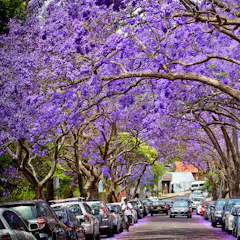
Over spring and early summer, jacarandas and their purple haze line many Australian streets. But how much do you really know about them?

After becoming Peru’s third president in six days, Francisco Sagasti must both lead the country into elections and build a better democracy. It’s a test Peruvian leaders largely failed 20 years ago.
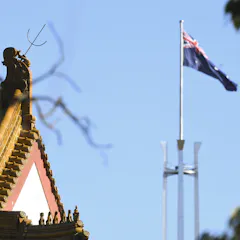
Australia can’t remake China into a completely different country. Instead, we need to see it as a challenge to be managed — not an enemy.
Authors
-

Election Analyst (Psephologist) at The Conversation; and Honorary Associate, School of Mathematics and Statistics, The University of Melbourne
-
Research fellow, Faculty of Architecture, Building and Planning, The University of Melbourne
-
Guest Research Fellow, School of Computing and Information Systems, The University of Melbourne
-
Professor of Sociology of Law and Deviance, Università di Bologna; University of Essex; The University of Melbourne
-
McKenzie Research Fellow, The University of Melbourne
-
Research assistant, Movember Institute of Men's Health, The University of Melbourne
-
Professor of Education Futures, The University of Melbourne
-
Senior Research Associate, School of Agriculture, Food and Ecosystem Sciences, The University of Melbourne
-
Senior Lecturer, Centre for Advancing Journalism, The University of Melbourne
-
Research Fellow, Centre for Youth Mental Health, The University of Melbourne
-
Deputy Vice-Chancellor (Global, Culture and Engagement), The University of Melbourne
-
Emeritus professor, History, The University of Melbourne
-
Associate Professor and Head, Behavioural Neuropharmacology Laboratory, The University of Melbourne
-
Lecturer in History, The University of Melbourne
-
Associate Professor, Centre for Youth Mental Health, The University of Melbourne