

Cut yourself some slack. For most people, the pandemic has been a unique challenge.
The University of Melbourne

The University of Melbourne is a global leader in higher education. Across our campuses we convene brilliant minds from different disciplines and sectors to come together to address important questions and tackle grand challenges. In a disrupted world, that capacity has never been more important.
Our vision is to equip our students with a distinctive, future-facing education personalised around their ambitions and needs, enriched by global perspectives and embedded in a richly collaborative research culture. As active citizens and future leaders, our students represent our greatest contribution to the world, and are at the heart of everything we do.
We serve society by engaging with our communities and ensuring education and research are inspired from the outset by need and for the benefit of society, while remaining committed to allowing academic freedom to flourish. In this, we remain true to our purpose and fulfil our mission as a public-spirited organisation, dedicated to the principles of fairness, equality and excellence in everything we do.
We strive for an environment that is inclusive and celebrates diversity.
Beyond our campuses we imagine an Australia that is ambitious, forward thinking and increasing its reputation and influence globally. We are committed to playing a part in achieving this – building on our advantageous location in one of the world’s most exciting cities and across the state of Victoria, in a region rapidly becoming a hub for innovative education, research and collaboration.
Links
Articles
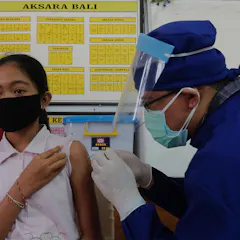
Meski waktu berakhirnya pandemi tidak dapat diprediksi, kita perlu mendorong dan mendukung pasien dengan kanker progresif untuk tetap mendapatkan terapi yang diperlukan.

The Conversation’s experts respond to the first US presidential debate between Donald Trump and Joe Biden.
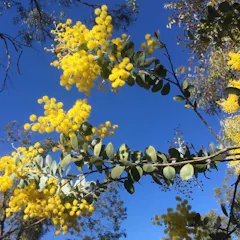
With their vibrant blooms and a lineage tracing back to the ancient supercontinent of Gondwana, wattles have a lot going for them.
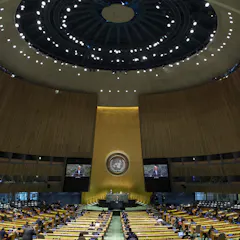
There is a risk of a ‘great fracture’ between the US and China. But unlike the Cold War, so far, no one has brandished a shoe at the General Assembly.

It’ll be up to the borrower, not the lender to determine whether what’s offered is suitable under changes to be detailed in the budget.

A new report shows out of 1 million students enrolled in all Victorian schools, only 337 may have acquired the virus through outbreaks at school.

A collapse in revenue and a lack of government support have led to university workforces being decimated to cut costs. This presents a number of longer-term risks for universities and the nation.
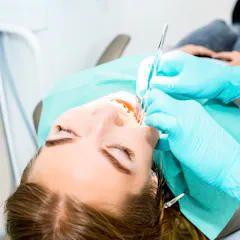
During the pandemic, there have been fewer claims on private health insurance. So why are premiums going up?

Our new research shows deep body fat wrapped around the heart can release dangerous molecules, potentially leading to atrial fibrillation.
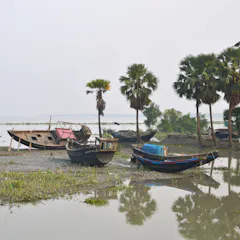
Rising sea levels are as likely to trap people as they are to force them to move.
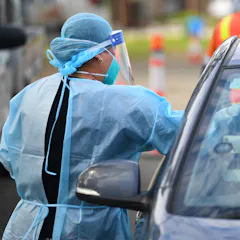
A new test, which can diagnose COVID-19 in 15 minutes, has been approved by the TGA. But it’s no silver bullet.

For the first time in its 99 year-history, the Archibald Prize has been won by an Indigenous painter. The Wynne and Sulman Prize winners also signal a time of change.

Video game ‘amoralists’ argue killing in gaming isn’t harmful since no living being is actually hurt. But when it comes to hurting virtual animals, we disagree.

Guaranteeing that it will overshoot its target for some time is the best way of getting inflation up.

Millions of households are expected to gain access to upgraded internet connections, with speeds of up to one gigabit per second (if you’re willing to pay for the plan).

The blasting of giant reproductions with surround sound is an experience that has little to do with the art it purports to honour.
We estimate the reduction in international student fees will lead to a loss of 5,100 to 6,100 researchers by 2024, with some universities more affected than others.

A biography about suffragist Vida Goldstein seeks to reveal her strength and endurance. Sadly, it also reveals how little progress women who seek political power on their terms have made.

Drugs like MDMA, ketamine, LSD and psylocibin may help heal the wounds of trauma - but more research is needed.
Authors
-

Election Analyst (Psephologist) at The Conversation; and Honorary Associate, School of Mathematics and Statistics, The University of Melbourne
-
Research fellow, Faculty of Architecture, Building and Planning, The University of Melbourne
-
Guest Research Fellow, School of Computing and Information Systems, The University of Melbourne
-
Professor of Sociology of Law and Deviance, Università di Bologna; University of Essex; The University of Melbourne
-
McKenzie Research Fellow, The University of Melbourne
-
Research assistant, Movember Institute of Men's Health, The University of Melbourne
-
Professor of Education Futures, The University of Melbourne
-
Senior Research Associate, School of Agriculture, Food and Ecosystem Sciences, The University of Melbourne
-
Senior Lecturer, Centre for Advancing Journalism, The University of Melbourne
-
Research Fellow, Centre for Youth Mental Health, The University of Melbourne
-
Deputy Vice-Chancellor (Global, Culture and Engagement), The University of Melbourne
-
Emeritus professor, History, The University of Melbourne
-
Associate Professor and Head, Behavioural Neuropharmacology Laboratory, The University of Melbourne
-
Lecturer in History, The University of Melbourne
-
Associate Professor, Centre for Youth Mental Health, The University of Melbourne