

Climate-related financial risks have already entered the corporate boardroom. With this case, they’ve now come knocking at the government’s door.
The University of Melbourne

The University of Melbourne is a global leader in higher education. Across our campuses we convene brilliant minds from different disciplines and sectors to come together to address important questions and tackle grand challenges. In a disrupted world, that capacity has never been more important.
Our vision is to equip our students with a distinctive, future-facing education personalised around their ambitions and needs, enriched by global perspectives and embedded in a richly collaborative research culture. As active citizens and future leaders, our students represent our greatest contribution to the world, and are at the heart of everything we do.
We serve society by engaging with our communities and ensuring education and research are inspired from the outset by need and for the benefit of society, while remaining committed to allowing academic freedom to flourish. In this, we remain true to our purpose and fulfil our mission as a public-spirited organisation, dedicated to the principles of fairness, equality and excellence in everything we do.
We strive for an environment that is inclusive and celebrates diversity.
Beyond our campuses we imagine an Australia that is ambitious, forward thinking and increasing its reputation and influence globally. We are committed to playing a part in achieving this – building on our advantageous location in one of the world’s most exciting cities and across the state of Victoria, in a region rapidly becoming a hub for innovative education, research and collaboration.
Links
Articles

Published anonymously in 1811, the first of Jane Austen’s novels throws light on life under COVID-19. It is the perfect lockdown read.
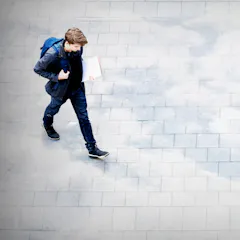
Young people’s prospects are worse than those of workers aged over 35, and worse than those of young people prior to 2008.

Temperature checks will miss children who are asymptomatic, which we know many kids with COVID-19 are. And the thermometers used aren’t necessarily the most reliable in the first place.

The hard lockdowns of whole blocks have been challenging for many residents due to their histories of trauma, their housing conditions and a lack of communication and understanding from authorities.
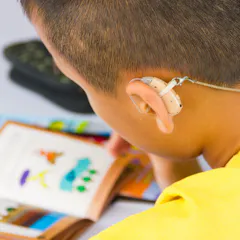
A seven week survey asked questions on the experiences of students with disabilities and their families when schools across Australia had mostly closed, and children learnt remotely.
A somewhat obscure 2003 science-fiction film has a luminous soundtrack, which brings surprising solace to a locked down world.
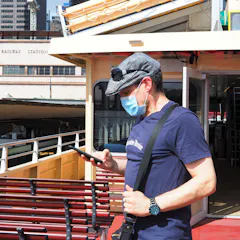
From personally targeting the Victorian premier to railing against the compulsory use of masks or scapegoating a minority group, News Corp’s coverage has been not just biased but dangerous.
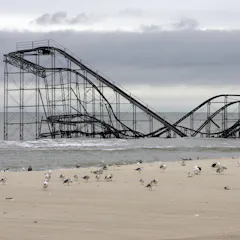
Books are both solace and provocation during a pandemic. This novel set during Hurricane Sandy is a poignant, often hilarious, reckoning with catastrophe and mortality.

A new study has found US mums have experienced a marked drop in their works hours during the pandemic. But this is not the case for dads.
Women make up around 55% of enrolments at university. But men are not at a disadvantage. They outperform women after they graduate in terms of both salary and seniority.
While the government is showing support and generosity to foreign filmmakers and commercial television interests, it seems less inclined to demonstrate similar largesse to its own creators.
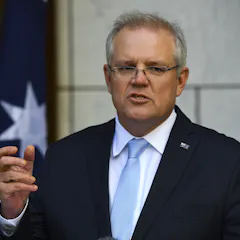
Voters appear to be holding state premiers responsible for coronavirus case surges, rather than the federal government.
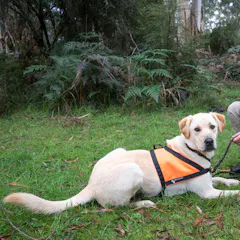
Moss is part of an elite squad of detection dogs that will locate threatened species in the wild and help endangered species breed in captivity.
We protect the savings of non-resident people in Australia but we leave them without any benefits if they lose their job here.

A new study finds no evidence of diagnostic inflation in the last four editions of the DSM.

A high-speed rail network in Australia would create many benefits by reshaping cities and regional communities along its route.
Twitter’s ‘blue tick’ club of influential users was locked out after financial scammers hacked celebrities’ accounts. But with ever more trust placed in social media, we stand to lose more than money.
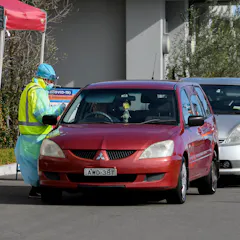
With COVID-19 spreading in Sydney’s southwest, can New South Wales avoid a return to lockdown and a similar scenario to Victoria’s second wave? The answer depends on whether there is community spread.
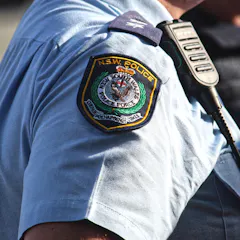
Proposals in NSW to force someone who spits at or bites a frontline worker to be tested for HIV and other blood-borne viruses are a real problem - for workers and the public.
Authors
-

Election Analyst (Psephologist) at The Conversation; and Honorary Associate, School of Mathematics and Statistics, The University of Melbourne
-
Research fellow, Faculty of Architecture, Building and Planning, The University of Melbourne
-
Guest Research Fellow, School of Computing and Information Systems, The University of Melbourne
-
Professor of Sociology of Law and Deviance, Università di Bologna; University of Essex; The University of Melbourne
-
McKenzie Research Fellow, The University of Melbourne
-
Research assistant, Movember Institute of Men's Health, The University of Melbourne
-
Professor of Education Futures, The University of Melbourne
-
Senior Research Associate, School of Agriculture, Food and Ecosystem Sciences, The University of Melbourne
-
Senior Lecturer, Centre for Advancing Journalism, The University of Melbourne
-
Research Fellow, Centre for Youth Mental Health, The University of Melbourne
-
Deputy Vice-Chancellor (Global, Culture and Engagement), The University of Melbourne
-
Emeritus professor, History, The University of Melbourne
-
Associate Professor and Head, Behavioural Neuropharmacology Laboratory, The University of Melbourne
-
Lecturer in History, The University of Melbourne
-
Associate Professor, Centre for Youth Mental Health, The University of Melbourne