

Revisi UU Minerba 2009 masih memberikan kelonggaran bagi perusahaan tambang untuk menutup lubang bekas tambang. Ini berpotensi meningkatkan angka korban kecelakaan.
The University of Melbourne

The University of Melbourne is a global leader in higher education. Across our campuses we convene brilliant minds from different disciplines and sectors to come together to address important questions and tackle grand challenges. In a disrupted world, that capacity has never been more important.
Our vision is to equip our students with a distinctive, future-facing education personalised around their ambitions and needs, enriched by global perspectives and embedded in a richly collaborative research culture. As active citizens and future leaders, our students represent our greatest contribution to the world, and are at the heart of everything we do.
We serve society by engaging with our communities and ensuring education and research are inspired from the outset by need and for the benefit of society, while remaining committed to allowing academic freedom to flourish. In this, we remain true to our purpose and fulfil our mission as a public-spirited organisation, dedicated to the principles of fairness, equality and excellence in everything we do.
We strive for an environment that is inclusive and celebrates diversity.
Beyond our campuses we imagine an Australia that is ambitious, forward thinking and increasing its reputation and influence globally. We are committed to playing a part in achieving this – building on our advantageous location in one of the world’s most exciting cities and across the state of Victoria, in a region rapidly becoming a hub for innovative education, research and collaboration.
Links
Articles
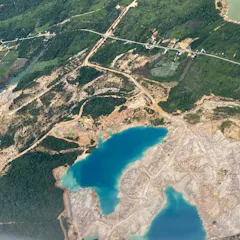
Indonesia’s revised mining law is loose on the requirements for mining companies to close pits when operations are over, potentially adding to drowning casualties.

The arts and cultural sector was plunged into crisis three months ago and pleaded for help. Now a federal rescue package has been announced – but who is it for and is it enough?
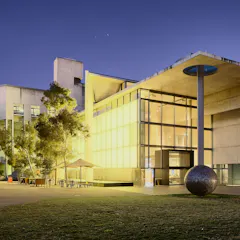
The National Gallery of Australia is facing a 10% reduction in staffing, but will maintain its $16 million acquisitions budget.

The media have mad a significant contribution to the current crisis of democracy - now, they must play a vital role in any democratic revival.

The reduced rate of funding to universities (of up to 17%), per place, for national priority courses sends perverse messages to universities.

By many measures, America is failing, and its people - in fact, the world - need the nuclear and military giant to turn itself around.

Most local councils, developers and nonprofit providers want mandatory affordable housing requirements applied to all development. The current system of voluntary negotiations just isn’t working well.
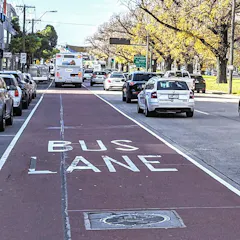
As COVID-19 restrictions are eased, cities face crippling congestion if people shun crowded public transport. More frequent and faster services, using innovations like pop-up bus lanes, can avoid this.

Pola perkawinan antarsuku adalah jendela yang unik untuk menelisik seberapa besar peran suku bangsa dalam kehidupan romantika penduduk muda di Jakarta

Findings from a study that followed more than 70,000 high school students in Greece suggest why girls may be less likely to pick careers in science and maths than boys.

As the bushfire royal commission examines whether to expand the use of indigenous fire techniques, overseas countries are already on board.

Le voyage dans le temps est le centre de nombre de récits fantastiques, mais qu’en disent les scientifiques ?
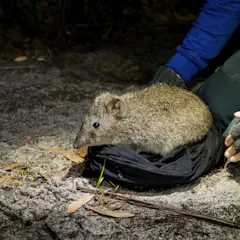
If long-nosed potoroos can co-exist with one of the world’s most deadly predators, then it’s time we rethink our conservation strategies.

There are two types of time travel: going back in time and going forward in time. And remarkably, people can feel time at different rates - but usually don’t notice it.
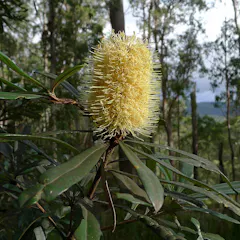
The plant takes its name from the colonial botanist Joseph Banks, but the coastal banksia’s history goes way back to ancient times.
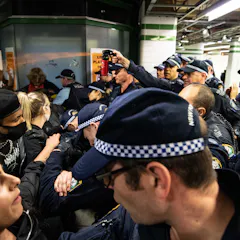
Pepper spray uses a chemical called capsaicin. It’s the same compound that makes chillies hot, but in a more intense, weaponised form.

Orders to fix serious defects, even up to ten years after completion, and to delay the occupation certificate developers need to sell apartments until they’re fixed, gives regulators real teeth.

An Aboriginal tree on Wiradjuri Country is much younger than anybody thought.
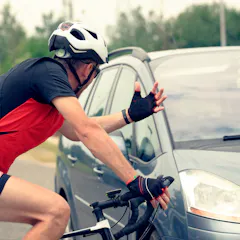
Drivers and cyclists develop distinct identities of themselves and others in ways that mirror the formation of ethnic identities. And on-road segregation runs the risk of reinforcing this process.
Authors
-

Election Analyst (Psephologist) at The Conversation; and Honorary Associate, School of Mathematics and Statistics, The University of Melbourne
-
Research fellow, Faculty of Architecture, Building and Planning, The University of Melbourne
-
Guest Research Fellow, School of Computing and Information Systems, The University of Melbourne
-
Professor of Sociology of Law and Deviance, Università di Bologna; University of Essex; The University of Melbourne
-
McKenzie Research Fellow, The University of Melbourne
-
Research assistant, Movember Institute of Men's Health, The University of Melbourne
-
Professor of Education Futures, The University of Melbourne
-
Senior Research Associate, School of Agriculture, Food and Ecosystem Sciences, The University of Melbourne
-
Senior Lecturer, Centre for Advancing Journalism, The University of Melbourne
-
Research Fellow, Centre for Youth Mental Health, The University of Melbourne
-
Deputy Vice-Chancellor (Global, Culture and Engagement), The University of Melbourne
-
Emeritus professor, History, The University of Melbourne
-
Associate Professor and Head, Behavioural Neuropharmacology Laboratory, The University of Melbourne
-
Lecturer in History, The University of Melbourne
-
Associate Professor, Centre for Youth Mental Health, The University of Melbourne