

If long-nosed potoroos can co-exist with one of the world’s most deadly predators, then it’s time we rethink our conservation strategies.
The University of Melbourne

The University of Melbourne is a global leader in higher education. Across our campuses we convene brilliant minds from different disciplines and sectors to come together to address important questions and tackle grand challenges. In a disrupted world, that capacity has never been more important.
Our vision is to equip our students with a distinctive, future-facing education personalised around their ambitions and needs, enriched by global perspectives and embedded in a richly collaborative research culture. As active citizens and future leaders, our students represent our greatest contribution to the world, and are at the heart of everything we do.
We serve society by engaging with our communities and ensuring education and research are inspired from the outset by need and for the benefit of society, while remaining committed to allowing academic freedom to flourish. In this, we remain true to our purpose and fulfil our mission as a public-spirited organisation, dedicated to the principles of fairness, equality and excellence in everything we do.
We strive for an environment that is inclusive and celebrates diversity.
Beyond our campuses we imagine an Australia that is ambitious, forward thinking and increasing its reputation and influence globally. We are committed to playing a part in achieving this – building on our advantageous location in one of the world’s most exciting cities and across the state of Victoria, in a region rapidly becoming a hub for innovative education, research and collaboration.
Links
Articles

There are two types of time travel: going back in time and going forward in time. And remarkably, people can feel time at different rates - but usually don’t notice it.
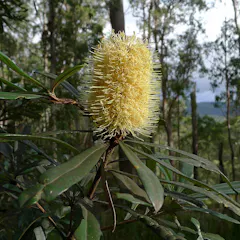
The plant takes its name from the colonial botanist Joseph Banks, but the coastal banksia’s history goes way back to ancient times.
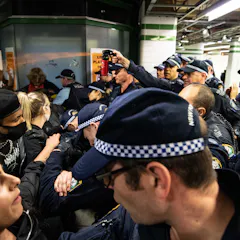
Pepper spray uses a chemical called capsaicin. It’s the same compound that makes chillies hot, but in a more intense, weaponised form.
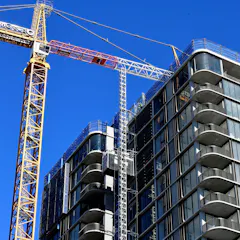
Orders to fix serious defects, even up to ten years after completion, and to delay the occupation certificate developers need to sell apartments until they’re fixed, gives regulators real teeth.

An Aboriginal tree on Wiradjuri Country is much younger than anybody thought.
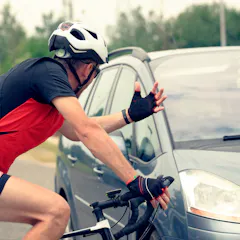
Drivers and cyclists develop distinct identities of themselves and others in ways that mirror the formation of ethnic identities. And on-road segregation runs the risk of reinforcing this process.
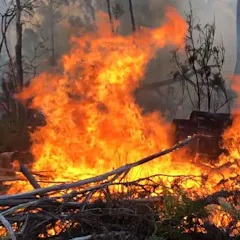
It was June last year when the first bushfires started in what became known as the Black Summer that claimed lives and destroyed homes.
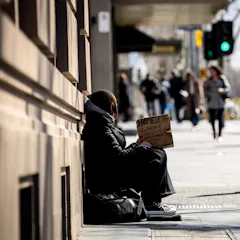
Australia has managed to house the homeless in hotels during the COVID-19 pandemic. We now have an opportunity to be thinking about longer-term solutions.
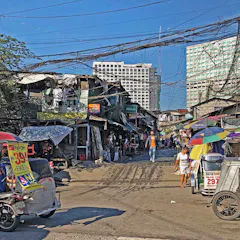
Besides battling the coronavirus pandemic, San Roque residents have long been locked in a bigger struggle for their very survival as a community in the face of home demolitions and relocations.

You’d think falling housing prices might help people on low incomes, but history shows downturns often increase inequality. And many buyers who took out big loans during the housing boom are at risk.
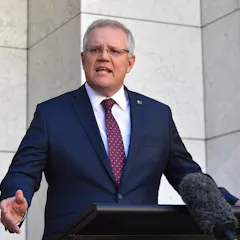
Scott Morrison’s popularity has bounced during the coronavirus pandemic, but that is still not translating to two-party preferred results. Meanwhile, Joe Biden pulls ahead in the US election race.

As climate change increases the frequency and scale of bushfires, our models suggest the habitats in Victoria’s Central Highlands may be hard to come by.

The release of a roadmap for green roofs, walls and facades in Australia can help our cities catch up with the world leaders in urban greening.
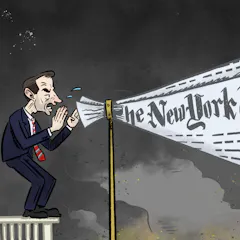
At this critical juncture in American history, the decision to publish a piece to “send in the troops” suggests a failure of nerve from an esteemed publication.

Listening with the volume too high or for too long can cause permanent hearing loss, but there are ways we can minimise the risks.
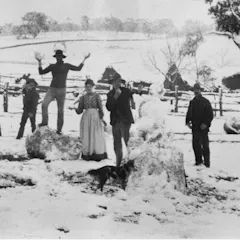
Older records can tell us a lot about Australia’s pre-industrial climate, before the large-scale burning of fossil fuels tainted global temperature records.
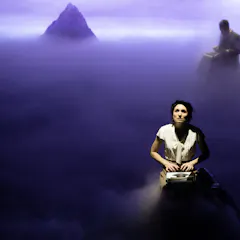
COVID-19 has exposed the insecurity of the cultural workforce. Making the performing arts freely available online may further diminish their value, right when the sector is arguing its worth.
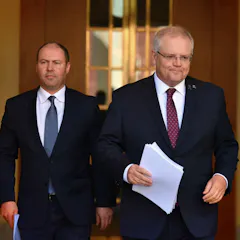
It’s far too early to declare victory. The need for conventional economic stimulus has just begun.
The best case scenario sees a short-term recovery to the depths of the 1980s and 1990s recessions.
Authors
-

Election Analyst (Psephologist) at The Conversation; and Honorary Associate, School of Mathematics and Statistics, The University of Melbourne
-
Research fellow, Faculty of Architecture, Building and Planning, The University of Melbourne
-
Guest Research Fellow, School of Computing and Information Systems, The University of Melbourne
-
Professor of Sociology of Law and Deviance, Università di Bologna; University of Essex; The University of Melbourne
-
McKenzie Research Fellow, The University of Melbourne
-
Research assistant, Movember Institute of Men's Health, The University of Melbourne
-
Professor of Education Futures, The University of Melbourne
-
Senior Research Associate, School of Agriculture, Food and Ecosystem Sciences, The University of Melbourne
-
Senior Lecturer, Centre for Advancing Journalism, The University of Melbourne
-
Research Fellow, Centre for Youth Mental Health, The University of Melbourne
-
Deputy Vice-Chancellor (Global, Culture and Engagement), The University of Melbourne
-
Emeritus professor, History, The University of Melbourne
-
Associate Professor and Head, Behavioural Neuropharmacology Laboratory, The University of Melbourne
-
Lecturer in History, The University of Melbourne
-
Associate Professor, Centre for Youth Mental Health, The University of Melbourne