

When an outbreak is brought under control, it’s possible only a small proportion of the population has been infected and gained immunity. This can set the scene for a second wave of infections later.
The University of Melbourne

The University of Melbourne is a global leader in higher education. Across our campuses we convene brilliant minds from different disciplines and sectors to come together to address important questions and tackle grand challenges. In a disrupted world, that capacity has never been more important.
Our vision is to equip our students with a distinctive, future-facing education personalised around their ambitions and needs, enriched by global perspectives and embedded in a richly collaborative research culture. As active citizens and future leaders, our students represent our greatest contribution to the world, and are at the heart of everything we do.
We serve society by engaging with our communities and ensuring education and research are inspired from the outset by need and for the benefit of society, while remaining committed to allowing academic freedom to flourish. In this, we remain true to our purpose and fulfil our mission as a public-spirited organisation, dedicated to the principles of fairness, equality and excellence in everything we do.
We strive for an environment that is inclusive and celebrates diversity.
Beyond our campuses we imagine an Australia that is ambitious, forward thinking and increasing its reputation and influence globally. We are committed to playing a part in achieving this – building on our advantageous location in one of the world’s most exciting cities and across the state of Victoria, in a region rapidly becoming a hub for innovative education, research and collaboration.
Links
Articles
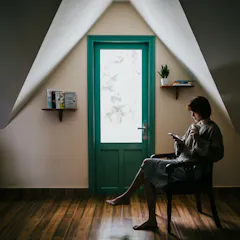
The COVID-19 lockdown will affect people differently depending on their personality.
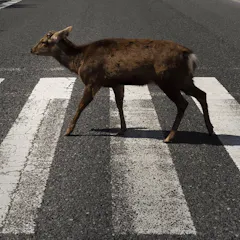
Wildlife is returning to our deserted cities. But will they stay once life returns to normal?

Australia is making good progress in flattening the curve, which will save our hospitals from being overwhelmed. But we still have to work out what comes next and how restrictions can be safely eased.
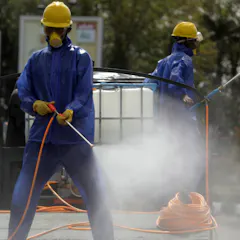
The government waited to put in place restrictions to stop the spread of the virus. Now, millions may soon be on the move for a religious celebration, which could make matters even worse.

The legislation before parliament over-compensates some and under-compensates others, but should leave us better off on the other side.
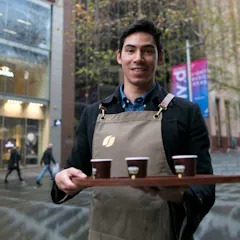
The legislation before parliament discriminates against employers who take on temporary migrants, impoverishes Australian residents and will hold back the fight against coronavirus.
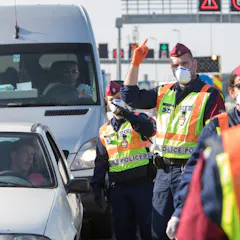
National emergencies allow for the purest expressions of sovereign power, testing the government’s commitment to human rights. Some leaders are failing the coronavirus test, experts say.
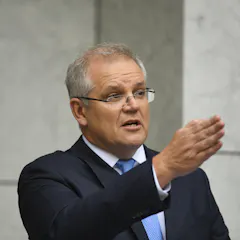
Nearly two-thirds of people (61%) were satisfied with Scott Morrison’s performance as prime minister, up a massive 20 points from the last Newspoll.
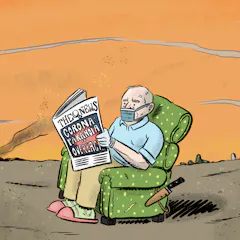
The usual pretence that right-wing commentators are on the side of their audience falls away in times of crisis. They are on the side of business - particularly their own.

You can’t ask a child to sit still for 45 minutes and focus on their breath. But mindfulness activities can be adapted for children – and they might come in handy during these stressful times.
New research shows that, contrary to popular belief, young people are anxious about the impact of coronavirus on their own lives and on their communities.
From humble beginnings, poet Bruce Dawe became a genial voice, capturing everyday humanity with wry focus. For many Australians, he provided a first taste of verse.

How did a punchline about bad middle-aged fashion become a trendy must-have for women of all ages?
New research shows that when it comes to our health, we still value expertise above all else.
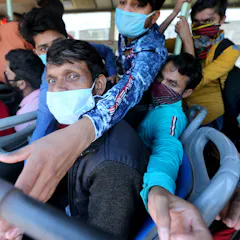
The government has announced direct cash transfers to poorer households, but major challenges remain in providing for the 500 million employed in the informal economy.
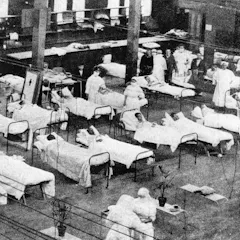
COVID-19 presents a social as well as a medical crisis, and we will need many different kinds of expertise to survive it
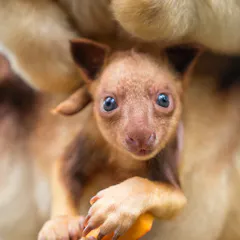
Chimbu is a baby tree kangaroo, and he is the latest success in a complex web of international conservation.

Rarely do we think about what super is for, and even more rarely do we think about whether it is capable of achieving those aims.
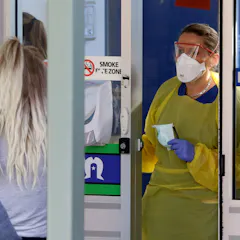
Panic buying and hoarding of personal protective equipment such as masks accelerates consumption of a finite supply.
Authors
-

Election Analyst (Psephologist) at The Conversation; and Honorary Associate, School of Mathematics and Statistics, The University of Melbourne
-
Research fellow, Faculty of Architecture, Building and Planning, The University of Melbourne
-
Guest Research Fellow, School of Computing and Information Systems, The University of Melbourne
-
Professor of Sociology of Law and Deviance, Università di Bologna; University of Essex; The University of Melbourne
-
McKenzie Research Fellow, The University of Melbourne
-
Research assistant, Movember Institute of Men's Health, The University of Melbourne
-
Professor of Education Futures, The University of Melbourne
-
Senior Research Associate, School of Agriculture, Food and Ecosystem Sciences, The University of Melbourne
-
Senior Lecturer, Centre for Advancing Journalism, The University of Melbourne
-
Research Fellow, Centre for Youth Mental Health, The University of Melbourne
-
Deputy Vice-Chancellor (Global, Culture and Engagement), The University of Melbourne
-
Emeritus professor, History, The University of Melbourne
-
Associate Professor and Head, Behavioural Neuropharmacology Laboratory, The University of Melbourne
-
Lecturer in History, The University of Melbourne
-
Associate Professor, Centre for Youth Mental Health, The University of Melbourne