

A coal mine in the Hunter Valley region has sparked debate among politicians, environmental advocates and local residents.
The University of Melbourne

The University of Melbourne is a global leader in higher education. Across our campuses we convene brilliant minds from different disciplines and sectors to come together to address important questions and tackle grand challenges. In a disrupted world, that capacity has never been more important.
Our vision is to equip our students with a distinctive, future-facing education personalised around their ambitions and needs, enriched by global perspectives and embedded in a richly collaborative research culture. As active citizens and future leaders, our students represent our greatest contribution to the world, and are at the heart of everything we do.
We serve society by engaging with our communities and ensuring education and research are inspired from the outset by need and for the benefit of society, while remaining committed to allowing academic freedom to flourish. In this, we remain true to our purpose and fulfil our mission as a public-spirited organisation, dedicated to the principles of fairness, equality and excellence in everything we do.
We strive for an environment that is inclusive and celebrates diversity.
Beyond our campuses we imagine an Australia that is ambitious, forward thinking and increasing its reputation and influence globally. We are committed to playing a part in achieving this – building on our advantageous location in one of the world’s most exciting cities and across the state of Victoria, in a region rapidly becoming a hub for innovative education, research and collaboration.
Links
Articles

There is no single right age when children can spend time out with friends unsupervised. This can make it difficult to judge whether they’re ready.

NDIS eligibility criteria isn’t tightening until January 2028, and no one is being moved off the scheme yet. So what’s actually changing?

As hundreds of thousands more EVs hit Australian roads, is our charging infrastructure up to scratch?
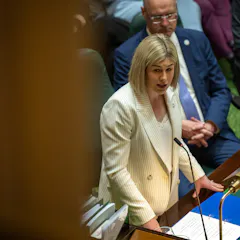
With the Victorian state election two months away, the Labor government has improved in the polls, but remain behind the Coalition.
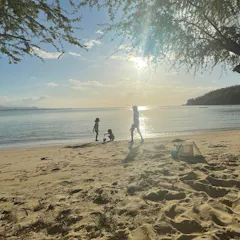
AI is helping communities own and build vital tools for their minority languages – all without external funding.

The clam fills a crucial gap in our records of what the reef was like before industrial-era global warming.
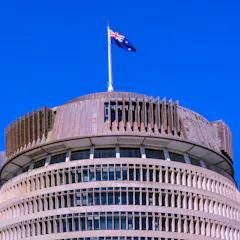
Despite gains for the Greens and slumps for Labour and National, the overall left-right balance remains largely unchanged.

Trump’s net approval is below what any past president since Harry Truman had at this point in their term.

According to a new survey, almost 50% of Australian workers say they are overeducated. But there are more reasons to study than getting a job.
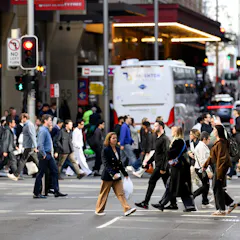
The jobless rate hasn’t been this high since November 2021. But this is why it’s unlikely to stop the Reserve Bank from lifting interest rates next Tuesday.
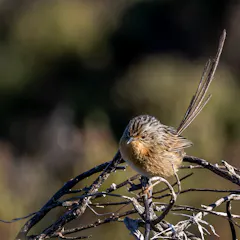
The future of a proposed rocket-launch facility in South Australia is uncertain. But tensions between space exploration and conservation remain.

This is unlikely to be the last time an AI agent hacks a government system.

Psychologist Steve Stewart-Williams’ third book about evolutionary psychology is A Billion Years of Sex Differences: How Evolution Shaped the Minds of Men and Women.

Cytomegalovirus, or CMV, can pass from mother to baby in pregnancy and cause hearing loss, cerebral palsy or other lifelong disabilities. But it can be prevented.
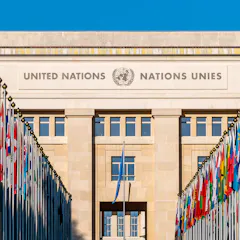
Rules of war are being shredded by combatants with virtually no accountability. It’s one of several key issues for the UN’s new leader to tackle.

The high cost of housing is also keeping half of young adults up to age 29 living with their parents.
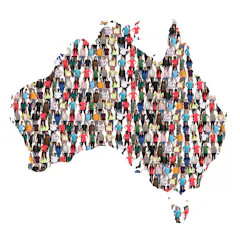
Almost 50% of workers in the latest HILDA survey feel overeducated – which can make people more likely to feel bored at work, underpaid or more likely to quit.

Wednesday’s opening hearing was short and technical. But the commission signalled it is willing to act fast and extend its inquiry to the very top.

In inquiries and reviews, governments endlessly ask Indigenous communities what should be done, but rarely act on it. It’s time that changed.
Authors
-

Election Analyst (Psephologist) at The Conversation; and Honorary Associate, School of Mathematics and Statistics, The University of Melbourne
-
Professor of Sociology of Law and Deviance, Università di Bologna; University of Essex; The University of Melbourne
-
Professor of Law, The University of Melbourne
-
PhD Candidate, Creative Writing, The University of Melbourne
-
Senior Research Associate, School of Agriculture, Food and Ecosystem Sciences, The University of Melbourne
-
Paleontologist, The University of Melbourne
-
Professor of Law (consumer protections and credit law), The University of Melbourne
-
Joanna Mendelssohn is a Friend of The Conversation.
Honorary Senior Fellow, School of Culture and Communication, The University of Melbourne
-
Emeritus Professor of Creative Writing, The University of Melbourne
-
Lecturer in World Literature (including Australian literature), The University of Melbourne
-
Deputy Vice-Chancellor (Global, Culture and Engagement), The University of Melbourne
-
Professor of Psychology, The University of Melbourne
-
Emeritus professor, History, The University of Melbourne
-
Professor of Health Economics, The University of Melbourne
-
Associate Professor and Head, Behavioural Neuropharmacology Laboratory, The University of Melbourne