

A Terra está ultrapassando o limite de 1,5°C estabelecido no Acordo de Paris, além do qual os cientistas preveem danos catastróficos aos sistemas que sustentam a vida em nosso planeta.
The University of Melbourne

The University of Melbourne is a global leader in higher education. Across our campuses we convene brilliant minds from different disciplines and sectors to come together to address important questions and tackle grand challenges. In a disrupted world, that capacity has never been more important.
Our vision is to equip our students with a distinctive, future-facing education personalised around their ambitions and needs, enriched by global perspectives and embedded in a richly collaborative research culture. As active citizens and future leaders, our students represent our greatest contribution to the world, and are at the heart of everything we do.
We serve society by engaging with our communities and ensuring education and research are inspired from the outset by need and for the benefit of society, while remaining committed to allowing academic freedom to flourish. In this, we remain true to our purpose and fulfil our mission as a public-spirited organisation, dedicated to the principles of fairness, equality and excellence in everything we do.
We strive for an environment that is inclusive and celebrates diversity.
Beyond our campuses we imagine an Australia that is ambitious, forward thinking and increasing its reputation and influence globally. We are committed to playing a part in achieving this – building on our advantageous location in one of the world’s most exciting cities and across the state of Victoria, in a region rapidly becoming a hub for innovative education, research and collaboration.
Links
Articles
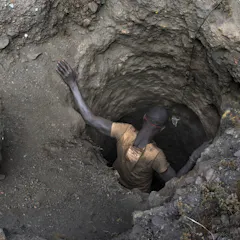
Peu connue, Lubumbashi a pourtant permis d'électrifier le monde, servi à fabriquer l’arme nucléaire et dicté la transition énergétique, enjeu géopolitique majeur.

The choices people make in the dating and job markets can have a big impact on society. So, do Australians believe everyone has equal access?
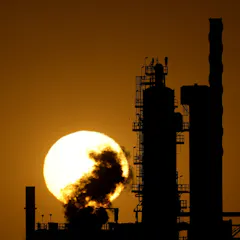
Earth is crossing the 1.5°C limit outlined in the Paris Agreement, beyond which scientists predict catastrophic harm to systems supporting life on our planet.

The songs we love are very personal, whether they’re meaningful, pleasure-inducing or bangers. How do you choose what you should listen to?
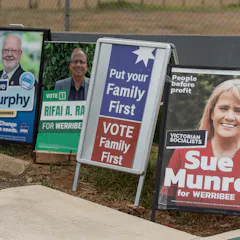
Voters punished the Allan Labor government in Werribee, but did not fully embrace the Liberals, either.
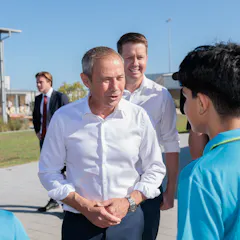
Labor is in a strong position ahead of the WA election, while federal Labor has also received some better news from the latest polls.

Reading, writes Edwina Preston, is a way of journeying on the wings of others without moving from the armchair (or bed). Here are some books to transport us.

Around half of young Australians have engaged in strangulation during sex. But it’s dangerous, even with consent.
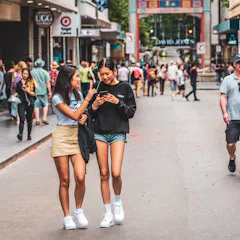
Migrants, especially those who speak English as a second language, are disproportionately targeted by mis- and disinformation. Research shows what might help.

Why ‘sensitive dependence on initial conditions’ makes predicting the future so hard.

Trees and greenspace can drive down urban temperatures – but they must be able to draw water from the soil to achieve these massive cooling effects.

A$95 billion worth of USAID programs have been brought to a screeching halt. It’s a devastating decision for developing nations, but also for US foreign policy.
Graffiti removal forms part of the visual culture of contemporary cities. The knowledge and aesthetic contributions of “buffers” have gone unnoticed for too long.

The upside to this war of words? More competition is boosting consumer choice, including with OpenAI’s release over the weekend of a new AI model, o3-mini.
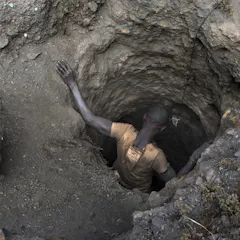
Lubumbashi is little known, but its minerals electrified the world, created atom bombs and are key to greener energy, the defining geopolitical issue of our time.

A sophisticated machine called the LM-3032 Tape Restorator is helping give new life to decaying, decades-old cassettes.
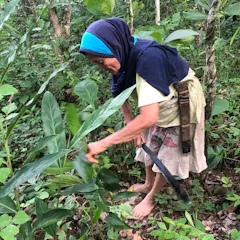
Kebijakan yang terarah sangat penting untuk memperkuat suara perempuan dalam perhutanan sosial, memastikan keputusan yang adil dan manfaat yang merata.
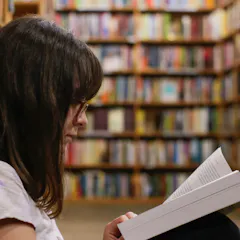
Analysing over 25 years of VCE lists revealed a rising proportion of works addressing social justice, identity, postcolonial perspectives and environmental themes.
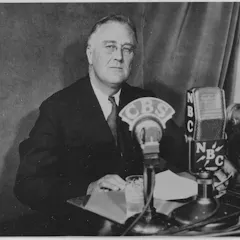
Section 891 has never been used. But it gives the US president sweeping powers, which could have profound effects on existing global tax agreements if used.
Authors
-

Election Analyst (Psephologist) at The Conversation; and Honorary Associate, School of Mathematics and Statistics, The University of Melbourne
-
Guest Research Fellow, School of Computing and Information Systems, The University of Melbourne
-
Professor of Sociology of Law and Deviance, Università di Bologna; University of Essex; The University of Melbourne
-
McKenzie Research Fellow, The University of Melbourne
-
PhD Candidate, Creative Writing, The University of Melbourne
-
Senior Research Associate, School of Agriculture, Food and Ecosystem Sciences, The University of Melbourne
-
Paleontologist, The University of Melbourne
-
Professor of Law (consumer protections and credit law), The University of Melbourne
-
Emeritus Professor of Creative Writing, The University of Melbourne
-
Lecturer in World Literature (including Australian literature), The University of Melbourne
-
Deputy Vice-Chancellor (Global, Culture and Engagement), The University of Melbourne
-
Professor of Psychology, The University of Melbourne
-
Emeritus professor, History, The University of Melbourne
-
Professor of Health Economics, The University of Melbourne
-
Associate Professor and Head, Behavioural Neuropharmacology Laboratory, The University of Melbourne