

A nationwide crackdown in July led to 3,000 arrests. But large scam operators seem to have been left untouched.
The University of Melbourne

The University of Melbourne is a global leader in higher education. Across our campuses we convene brilliant minds from different disciplines and sectors to come together to address important questions and tackle grand challenges. In a disrupted world, that capacity has never been more important.
Our vision is to equip our students with a distinctive, future-facing education personalised around their ambitions and needs, enriched by global perspectives and embedded in a richly collaborative research culture. As active citizens and future leaders, our students represent our greatest contribution to the world, and are at the heart of everything we do.
We serve society by engaging with our communities and ensuring education and research are inspired from the outset by need and for the benefit of society, while remaining committed to allowing academic freedom to flourish. In this, we remain true to our purpose and fulfil our mission as a public-spirited organisation, dedicated to the principles of fairness, equality and excellence in everything we do.
We strive for an environment that is inclusive and celebrates diversity.
Beyond our campuses we imagine an Australia that is ambitious, forward thinking and increasing its reputation and influence globally. We are committed to playing a part in achieving this – building on our advantageous location in one of the world’s most exciting cities and across the state of Victoria, in a region rapidly becoming a hub for innovative education, research and collaboration.
Links
Articles

What do the next few months hold, weather-wise? For clues, we can look to the oceans around Australia.
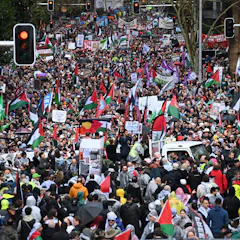
Crowd size estimates are part science, part art. When numbers differ, it’s not necessarily because someone is being dishonest.
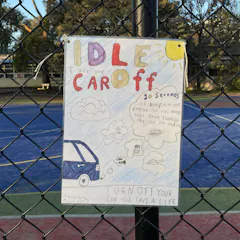
When parents leave their cars idling outside schools, pollution levels spike. The solution could be as simple as teaching children how to ask for change.
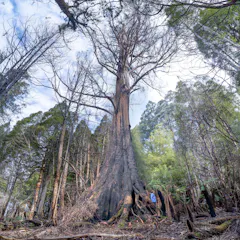
Research on Tasmania’s large old trees has given designers good reason to reflect on the many things about trees that humans don’t value enough. Here’s the top five.

The count in the Tasmanian election is over, with voters delivering a hung parliament with largely the same make-up as the last, albeit with some new characters.
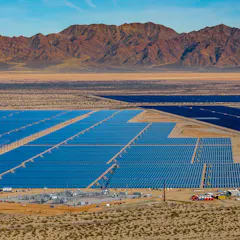
We need to reduce the costs of getting to net zero. Better emissions-reduction incentives and faster approvals processes for renewable energy would be a good start.
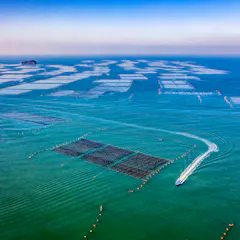
Farming seaweed, changing ocean chemistry, breeding corals and restoring mangroves could help fight climate change – if assessed and managed responsibly.
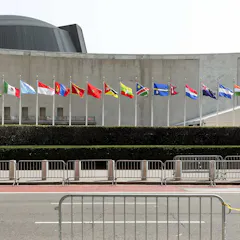
Multilateralism without the US has its limitations, but it still holds the potential for tangible, incremental progress on global challenges.

Listen to Andrew Dodd on The Conversation Weekly podcast on the long, transactional relationship between Donald Trump and Rupert Murdoch.

As the preferences are distributed in the island state, Labor look likely to take half the seats in the northern electorate, despite a lower primary vote.

Starting a business is difficult for anyone, let alone in a new country.
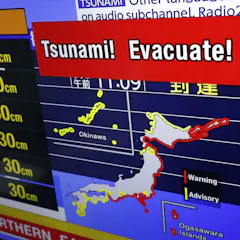
It’s far better to evacuate early and orderly than do it late in a panic. That’s why authorities around the Pacific are taking no chances as a tsunami threat looms.
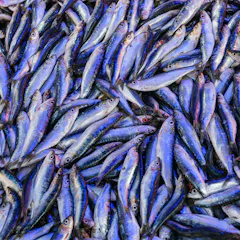
Fermented fish sauce was a staple of the Roman diet, but its origins were even more ancient.
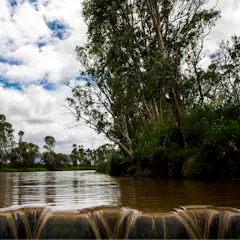
Restoring the basin to health requires more than just more water. Coordinated local efforts to restore rivers and the surrounding land are desperately needed.
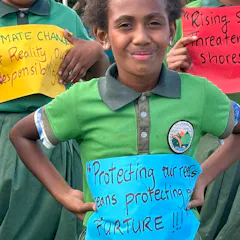
Countries have wide-ranging obligations to adequately tackle climate change, the International Court of Justice has found. Those who don’t could be legally liable.

The fatal jet ski accident in Sydney this week reminds us how dangerous these personal watercraft can be.
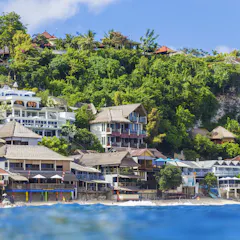
The Bingin Beach settlement has proven sustainable for more than 50 years, and has become an integral part of the local heritage.

Climate change is already hitting hard in Fiji. But when communities respond collectively, they can find new livelihoods.

In Never Let Me Go, Kazuo Ishiguro summons our liberal sentiments only to turn them against us.
Authors
-

Election Analyst (Psephologist) at The Conversation; and Honorary Associate, School of Mathematics and Statistics, The University of Melbourne
-
Professor of Sociology of Law and Deviance, Università di Bologna; University of Essex; The University of Melbourne
-
McKenzie Research Fellow, The University of Melbourne
-
PhD Candidate, Creative Writing, The University of Melbourne
-
Senior Research Associate, School of Agriculture, Food and Ecosystem Sciences, The University of Melbourne
-
Paleontologist, The University of Melbourne
-
Professor of Law (consumer protections and credit law), The University of Melbourne
-
Joanna Mendelssohn is a Friend of The Conversation.
Honorary Senior Fellow, School of Culture and Communication, The University of Melbourne
-
Emeritus Professor of Creative Writing, The University of Melbourne
-
Lecturer in World Literature (including Australian literature), The University of Melbourne
-
Deputy Vice-Chancellor (Global, Culture and Engagement), The University of Melbourne
-
Professor of Psychology, The University of Melbourne
-
Emeritus professor, History, The University of Melbourne
-
Professor of Health Economics, The University of Melbourne
-
Associate Professor and Head, Behavioural Neuropharmacology Laboratory, The University of Melbourne