

Commercial mining of the deep sea could begin soon. But these metals and minerals are not scarce. Mining will be harmful and the economic benefits are overstated.
The University of Melbourne

The University of Melbourne is a global leader in higher education. Across our campuses we convene brilliant minds from different disciplines and sectors to come together to address important questions and tackle grand challenges. In a disrupted world, that capacity has never been more important.
Our vision is to equip our students with a distinctive, future-facing education personalised around their ambitions and needs, enriched by global perspectives and embedded in a richly collaborative research culture. As active citizens and future leaders, our students represent our greatest contribution to the world, and are at the heart of everything we do.
We serve society by engaging with our communities and ensuring education and research are inspired from the outset by need and for the benefit of society, while remaining committed to allowing academic freedom to flourish. In this, we remain true to our purpose and fulfil our mission as a public-spirited organisation, dedicated to the principles of fairness, equality and excellence in everything we do.
We strive for an environment that is inclusive and celebrates diversity.
Beyond our campuses we imagine an Australia that is ambitious, forward thinking and increasing its reputation and influence globally. We are committed to playing a part in achieving this – building on our advantageous location in one of the world’s most exciting cities and across the state of Victoria, in a region rapidly becoming a hub for innovative education, research and collaboration.
Links
Articles
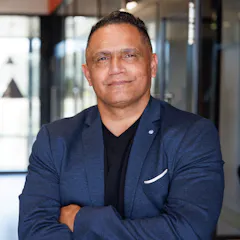
Australia’s new lung cancer screen program further disadvantages Aboriginal and Torres Strait Islander peoples, who are already at increased risk of lung cancer.
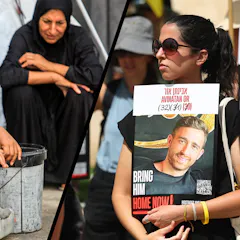
Survivor testimonies hope for understanding, empathy – and change. From the Yoorrook Commission to Gaza and Israel, they build a case for justice in a shared future.
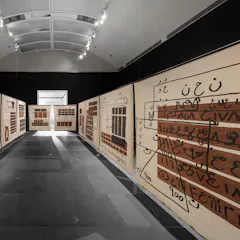
Creative Australia has reinstated Khaled Sabsabi and Michael Dagostino as the creative team for the 2026 Venice Biennale – after facing much criticism.

CC BY42.9 MB (download)
Banyak pihak mulai mempertanyakan arti penting persaingan di dunia perguruan tinggi dalam beberapa waktu terakhir. Ketika dunia kerja semakin tak pasti dan arah pendidikan kerap berubah, menjaga fokus…
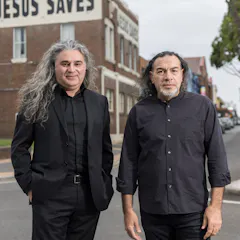
Khaled Sabsabi has been reinstated as Australia representative for the Venice Biennale. A review offers a damning but restrained post-mortem.

Even if you suspect a fake, here’s what to consider before accusing someone of using AI to create art, music or writing.

Memories are constantly revised in acts of recollection. They are moulded by new information, beliefs and emotions, and other people’s versions of events.
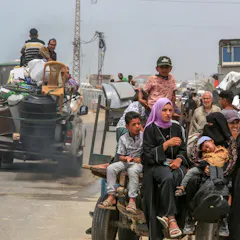
Buoyed by the truce with Iran, President Trump is pushing for a ceasefire between Israel and Hamas. But it could entail unacceptable conditions for the Palestinians.

Early voting has begun in the island state’s snap election - but the pollsters can’t decide which party might win.

A new study involving more than 150 industry experts identifies how to turn ‘good intentions’ on emissions into better ways to design, build and maintain our cities.

In Alice Pung’s family, love was imbued with anxiety and fear. But in books, adults had reasoned discussions and talked to children as if their thoughts mattered.
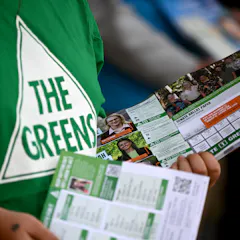
While the lion’s share of Greens preferences went to Labor, 75% of One Nation put Coalition ahead.
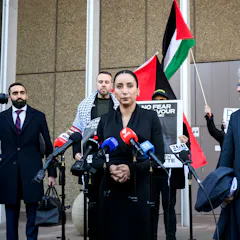
The way the case was handled has done substantial damage to the ABC’s reputation, not just for impartiality but for its capacity to stand up for its staff.

A proposed shake-up of the global shipping industry would encourage the use of clean fuels and penalise companies that stick to cheaper, more polluting fuels.
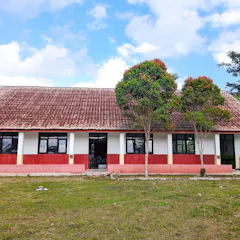
Alih-alih mengatasi ketimpangan, Sekolah Rakyat justru berpotensi mencabut anak dari komunitas inklusif dan belum tentu bermanfaat bagi masyarakat miskin. Mengapa?

Screening for gestational diabetes will continue. But who gets extra testing, and when, will change.

A “blueprint” for defence cooperation or an “affront” to Australian sovereignty? Expert opinion is mixed on the benefits and risks of AUKUS.
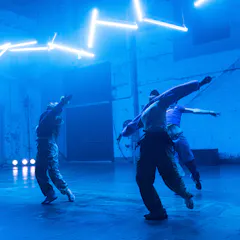
In three works presented at the festival, protagonists throw their bodies into the fight and dance with depth and urgency.
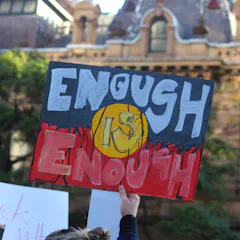
Indigenous people are again grieving the deaths of loved ones in custody. Would they have occurred if the royal commission recommendations had been fully implemented?
Authors
-

Election Analyst (Psephologist) at The Conversation; and Honorary Associate, School of Mathematics and Statistics, The University of Melbourne
-
Professor of Sociology of Law and Deviance, Università di Bologna; University of Essex; The University of Melbourne
-
McKenzie Research Fellow, The University of Melbourne
-
PhD Candidate, Creative Writing, The University of Melbourne
-
Senior Research Associate, School of Agriculture, Food and Ecosystem Sciences, The University of Melbourne
-
Paleontologist, The University of Melbourne
-
Professor of Law (consumer protections and credit law), The University of Melbourne
-
Joanna Mendelssohn is a Friend of The Conversation.
Honorary Senior Fellow, School of Culture and Communication, The University of Melbourne
-
Emeritus Professor of Creative Writing, The University of Melbourne
-
Lecturer in World Literature (including Australian literature), The University of Melbourne
-
Deputy Vice-Chancellor (Global, Culture and Engagement), The University of Melbourne
-
Professor of Psychology, The University of Melbourne
-
Emeritus professor, History, The University of Melbourne
-
Professor of Health Economics, The University of Melbourne
-
Associate Professor and Head, Behavioural Neuropharmacology Laboratory, The University of Melbourne