

As expectativas eram baixas para a última cúpula climática da ONU. Mas a especialista em direito climático Jacqueline Peel, que participou das negociações, explica o progresso que foi feito.
The University of Melbourne

The University of Melbourne is a global leader in higher education. Across our campuses we convene brilliant minds from different disciplines and sectors to come together to address important questions and tackle grand challenges. In a disrupted world, that capacity has never been more important.
Our vision is to equip our students with a distinctive, future-facing education personalised around their ambitions and needs, enriched by global perspectives and embedded in a richly collaborative research culture. As active citizens and future leaders, our students represent our greatest contribution to the world, and are at the heart of everything we do.
We serve society by engaging with our communities and ensuring education and research are inspired from the outset by need and for the benefit of society, while remaining committed to allowing academic freedom to flourish. In this, we remain true to our purpose and fulfil our mission as a public-spirited organisation, dedicated to the principles of fairness, equality and excellence in everything we do.
We strive for an environment that is inclusive and celebrates diversity.
Beyond our campuses we imagine an Australia that is ambitious, forward thinking and increasing its reputation and influence globally. We are committed to playing a part in achieving this – building on our advantageous location in one of the world’s most exciting cities and across the state of Victoria, in a region rapidly becoming a hub for innovative education, research and collaboration.
Links
Articles

The new system may essentially give countries and companies permission to keep polluting.

Expectations were low for the latest UN climate summit. But climate law expert Jacqueline Peel – who was at the talks – explains what progress was made.

Heart-related diseases are the leading cause of death for women worldwide. But bystanders are less likely to intervene to perform CPR on a woman than a man.

We can already tinker with human DNA to treat diseases. But being able to edit RNA allows for even more precision – and fewer risks.

Principles could centre on helping members manage their money in retirement, ensuring fairness across the system, and requiring funds to maintain an active duty of care to members.

Targeted policies are vital to amplify women’s voices in social forestry, ensuring fair decisions and equitable benefits.

The proposed bill reduces the risk of corruption but other problems remain - including that it favours the major parties.

The highly influential broadcaster, for years feared by the nation’s politicians, has been charged with several sexual offences.

Canberra has reinstated funding for 42 refugees and asylum seekers in the country, but given their deteriorating physical and mental health, it should be doing much more.

We found those who accepted their emotions, without judgement, felt more positive during the wait. This strategy also worked after students got their results, regardless or what they were.

This is the second time the SA Labor government has gained a seat from the opposition at a byelection.

A least eight early self-experimenters died from their research.
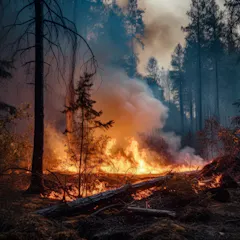
Removing enough carbon to offset emissions would require vast tracts of inhabited land.

There is evidence more time outside can help slow the progression of shortsightedness in children, due to the role sunlight plays in eye growth.

With stretched resources and insatiable demand for content, Australian media will have a difficult job covering the next federal election. But they must strive for “proactive impartiality”.

The stench of a rare corpse flower make us retch. But you’re not the target – the plant wants to lure carrion beetles and flesh flies

Many Autistic people struggle through air travel or avoid it altogether. But travellers told us small measures and supports can make a big difference.

Three groups of cicadas have emerged together this year for the first time since the fall of the Roman Empire. The reason is pure mathematics.

A new study reveals the most complex numeric connection ever made between two khipus. It could help lead us to even more clues about ancient Andean society.
Authors
-

Election Analyst (Psephologist) at The Conversation; and Honorary Associate, School of Mathematics and Statistics, The University of Melbourne
-
Guest Research Fellow, School of Computing and Information Systems, The University of Melbourne
-
Professor of Sociology of Law and Deviance, Università di Bologna; University of Essex; The University of Melbourne
-
McKenzie Research Fellow, The University of Melbourne
-
PhD Candidate, Creative Writing, The University of Melbourne
-
Senior Research Associate, School of Agriculture, Food and Ecosystem Sciences, The University of Melbourne
-
Paleontologist, The University of Melbourne
-
Professor of Law (consumer protections and credit law), The University of Melbourne
-
Emeritus Professor of Creative Writing, The University of Melbourne
-
Lecturer in World Literature (including Australian literature), The University of Melbourne
-
Deputy Vice-Chancellor (Global, Culture and Engagement), The University of Melbourne
-
Professor of Psychology, The University of Melbourne
-
Emeritus professor, History, The University of Melbourne
-
Professor of Health Economics, The University of Melbourne
-
Associate Professor and Head, Behavioural Neuropharmacology Laboratory, The University of Melbourne